
Work is more honorable than living on benefits
Without collective progress in education, ethics, and responsibility, there will be no respect left!
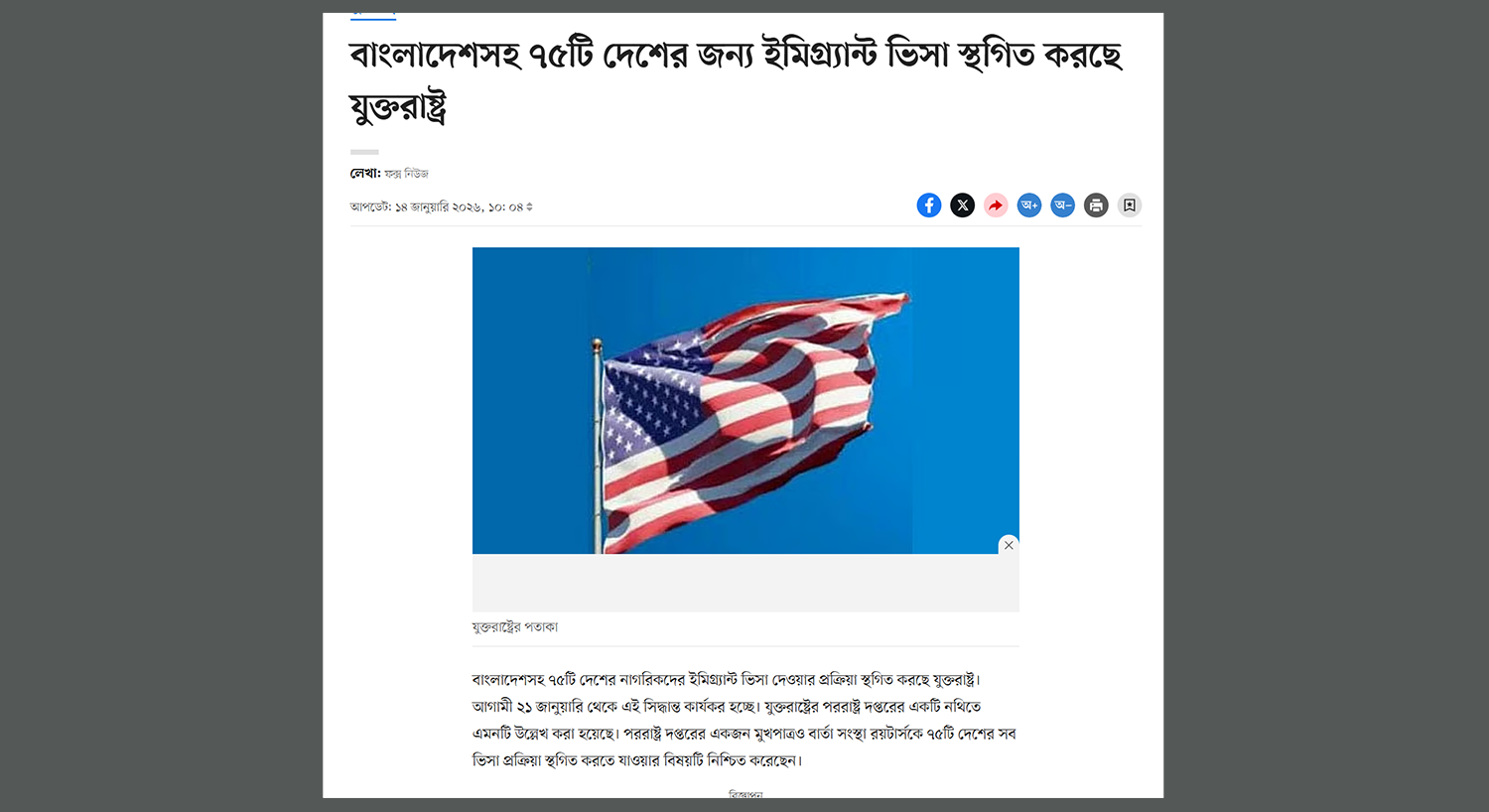
The United States has recently suspended immigrant visas for 75 countries, and Bangladesh is on that list. One of the main reasons cited is that immigrant families from certain countries have become excessively dependent on government welfare programs. According to statistics, about 54% of Bangladeshi immigrants living in the U.S. receive some form of social benefit.
I am personally affected by this decision. My parents and sister are all U.S. citizens. Through them, I might one day have had the opportunity to go to the United States on an immigrant visa – but for now, that path has been closed.
The United States maintains an extensive social safety net for its citizens and lawful residents. The government pays the health insurance premiums of low‑income individuals, provides unemployment benefits, disability benefits, and pensions for the elderly. Low‑income families receive special debit cards for purchasing food, and additional funds for other essential items. They also receive government assistance for electricity, gas, internet, housing, and more. As a result, even without income, no one is left in a situation where they might starve.
But the question is – where does all this money come from? It comes from the people who work long hours every day and pay taxes. Imagine if the U.S. population consisted only of Bangladeshis – then 46% would work 12–16 hours a day and pay high taxes, while the remaining 54% would live comfortably on social benefits. Reality is not exactly like this, but Bangladeshis are indeed among the top 20 national groups receiving welfare. Some people genuinely need these benefits – that is why welfare states exist. But do 54% of people truly need them? It’s unbelievable. Would you accept it if 54% of the families in your village depended on the hard work of the remaining 46%? What would you say about those who are capable of working but choose not to, relying instead on benefits?
Suppose you are unemployed and the government is giving you unemployment benefits. But instead of trying to find a job, you depend on that money year after year – would taxpayers accept that? In many families, the disability benefits claimed for children, parents, or spouses are so high that people no longer feel the need to work extra. There are even allegations that some claim millions in the name of ‘caring’ for parents who actually live back in Bangladesh. And this isn’t seen only among Bangladeshis – immigrants from many other countries do the same.
Now think about this: your neighbor goes out at dawn in freezing cold to look for work and returns home at midnight; meanwhile, you spend years sitting at home living comfortably on government assistance. Is that socially acceptable?
On the other hand, many of the so‑called leaders of the Bangladeshi community in the U.S. spend the entire year busy with BNP–Awami League politics. When someone arrives from Bangladesh, they focus on whom to insult and whom to flatter. Another group brings dancers, singers, and actors from Bangladesh under the banner of “Bangladesh Mela,” essentially running personal businesses. Yet they ignore the important work they could have done – such as securing recognition for Bangla language tutorials in schools (many smaller languages have recognition, but Bangla does not), improving employment opportunities for Bangladeshis, or raising awareness to discourage unnecessary welfare dependency. They do none of this.
The result? The same pattern is visible in Europe, Australia, and even here in Uganda where I live. We work day and night, while many Bangladeshis live comfortably on social benefits. This tendency spans all classes – ordinary people, bureaucrats, laborers, politicians, clerics, imams, priests – no one is exempt. Some even falsely declare their wives as divorced to claim benefits in her name. In countries like Saudi Arabia and South Africa, some Bangladeshis have even become involved in heinous crimes such as kidnapping fellow Bangladeshis for ransom and murder.
In the end, the consequences are severe. The doors of the world are gradually closing for Bangladeshis. Even when traveling on a tourist visa, Bangladeshis are often placed in separate lines and subjected to extra searches – an insulting experience. Many ordinary countries now hesitate repeatedly before issuing visas, conducting extensive checks.
Without collective improvement in education, ethics, and a sense of responsibility, it will be impossible to escape this situation.
Related Posts
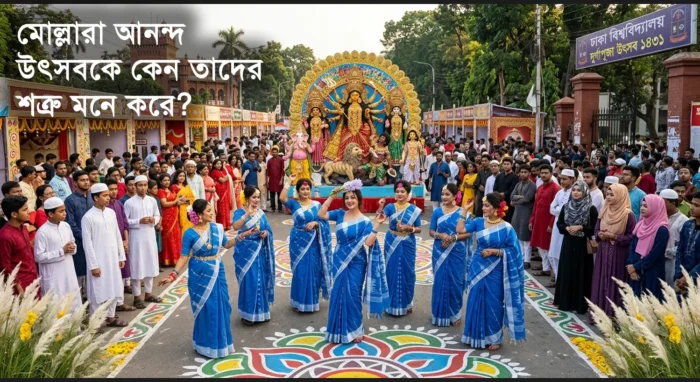
Why do Islamist clerics consider Bengali cultural festivals their enemy?
This year, unlike many previous years, the major Hindu religious festival Durga Puja in BangladeshRead More
ইসলামিস্ট মোল্লারা কেন বাঙালিদের আনন্দ উৎসবকে তাদের শত্রু মনে করে?
এবার বাংলাদেশে অন্যবারের তুলনায় বেশ শান্তিপূর্ণ, উৎসবমুখর পরিবেশে হিন্দু ধর্মের বড় ধর্মীয় উৎসব দূর্গাপূজা হয়েRead More
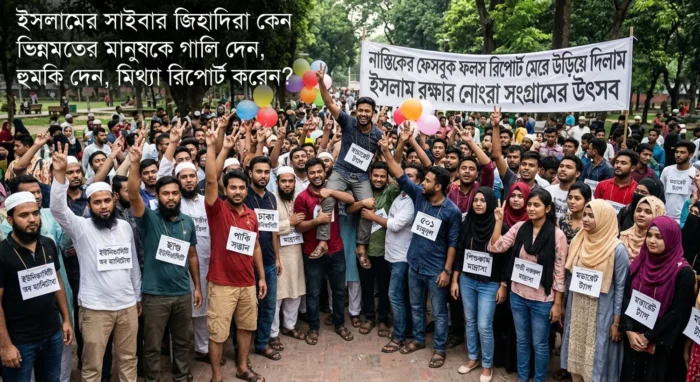
Why do Islamist cyber‑jihadis insult, threaten, and file false reports against people with different opinions?
Maulana Azhari once advised Islamists that sharing his Facebook posts is also an Islamic act;Read More
Comments are Closed