
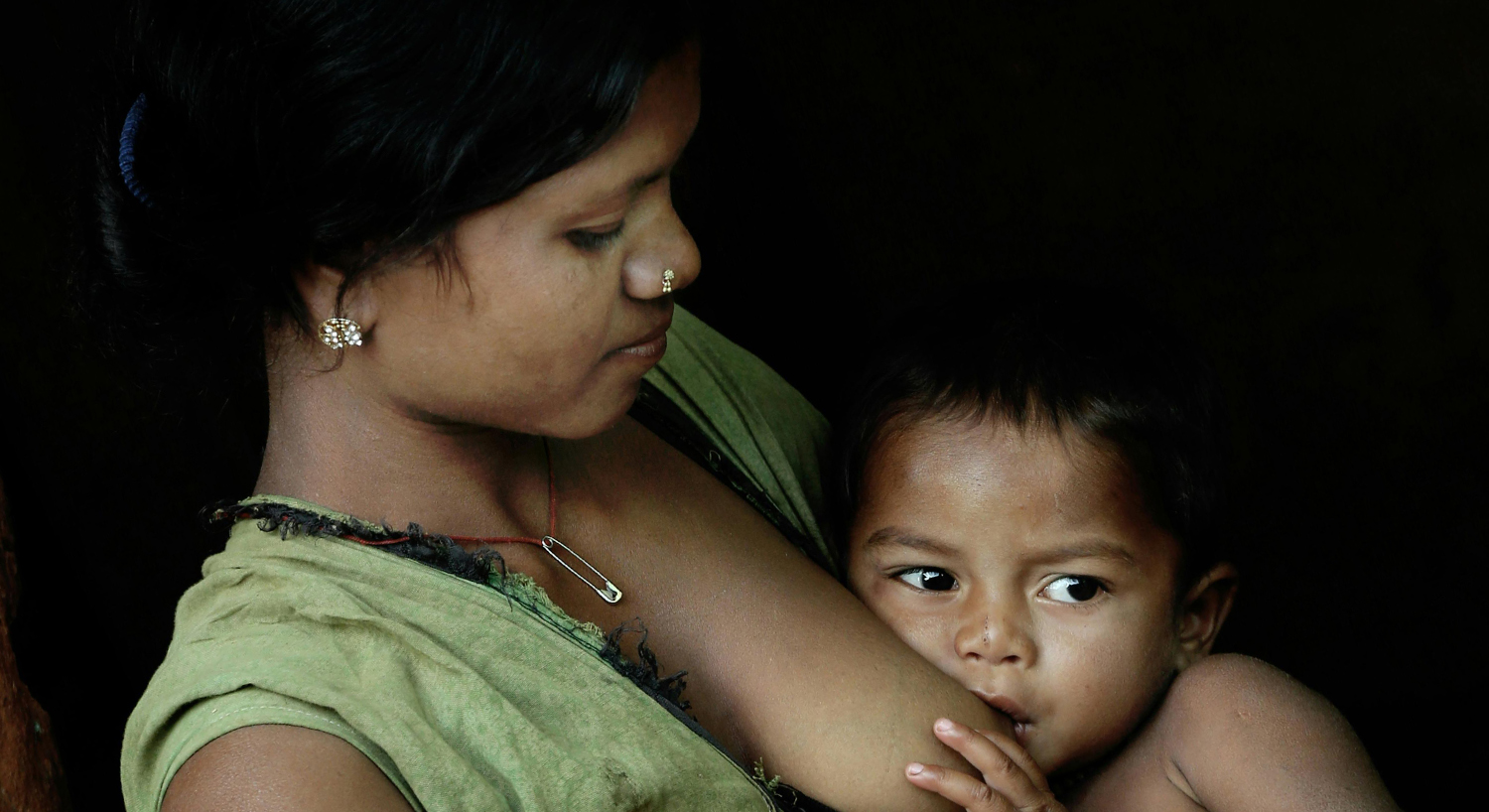
When morality kills
When Society Becomes the Killer: Morality Must Be Rooted in Humanity, Not Social Shame
In Bangladesh, India, Pakistan, and much of South Asia, the concept of “honor” or izzat is so deeply and distortively ingrained that if any family member – especially a girl – does something the society considers “shameful,” the family believes their social standing will be destroyed. Out of this fear, many families end up killing their own children or pushing them toward suicide – what is commonly known as “honor killing.” This is a situation where social shame becomes a direct cause of death.
Imagine a 17‑year‑old girl in a Pakistani village who wants to elope with the boy she loves. The family finds out. The news spreads through the community – “the girl is ruined,” “the family’s honor is gone,” “keeping such a girl alive will disgrace the entire family.”
Under this pressure – gossip, fear, humiliation – the girl’s father or brother decides she must be killed to “protect the family’s honor.” This is not fiction; hundreds of women are killed this way in Pakistan every year. In India, girls are similarly murdered for inter-caste or inter-religious relationships. Bangladesh sees such cases too, though they are less frequently reported. The root cause of these killings is not personal morality but social shame and collective pressure.
In Bangladesh, no one can even estimate how many newborn babies are killed or how many women take their own lives due to pregnancy outside marriage. Many infants become prey to animals in forests and fields, some are found in drains or toilets, some abandoned on streets or in dustbins. Can a society that produces such outcomes be called ideal? Regardless of how a child is born, both the child and the mother have a full right to live with dignity.
In Bangladesh, India, and Pakistan, pregnancy outside marriage is treated as a grave social crime.
Imagine a college student who becomes pregnant by mistake. She knows:
- Her family may beat her
- Society will label her “illegitimate,” “immoral,” “a mother of a bastard”
- Her chances of marriage, education, and employment may collapse
- Her family will feel unable to face the community
This fear, shame, and humiliation crush her mentally.
In many cases, girls end their own lives because they believe death is easier than society’s judgment. Here, the cause is not personal failure but a brutal culture of shame. The moral responsibility for these deaths lies with society. But because society is not a single individual, no one is punished.
- When society elevates shame above morality,
- When human life is placed below social honor,
- When families value society’s opinion more than their children’s safety,
Then social shame becomes a direct cause of death.
Every parent has a fundamental responsibility to raise children in a way that helps them understand that society’s opinion is not the ultimate moral standard. Social values change over time, vary by region, and differ across class, religion, and gender -even within the same society. Children must learn that in life’s important decisions, the priority is not social approval but reason, humanity, and personal safety. And if they ever make a mistake or face danger, parents should be their safest refuge. In South Asian families, this sense of safety is weak – parents are often seen as rulers, not guardians. Yet research shows that when children can approach parents without fear, risky behavior decreases, mental health improves, and resilience increases.
Consider a girl who engages in sexual activity with a boy her age while still underage. In Bangladesh, India, and Pakistan, once such news spreads, the girl faces immediate social punishment. But this punishment has no moral basis; it is a product of patriarchy, where the burden of sexual behavior falls disproportionately on girls. The boy often escapes blame because society treats his actions as “normal.” Yet it is society’s failure that children receive no proper education about the risks of underage sexual activity. A society that maintains silence, hides information, and spreads superstition about sexuality has no moral right to judge. The girl’s first task should be to reject society’s irrational judgment, and the parents’ first duty is to stand by their child – because morality must be rooted in humanity, not social shame.
If sexual activity at any age leads to a medical emergency – such as severe bleeding, infection, or other complications – access to medical care must be the first priority. But in South Asia, people look for someone to blame before seeking treatment. Even when a girl is critically ill, society focuses on judging her character. This is not only inhumane but also harmful to public health. Delayed treatment increases the risk of death, and many girls hesitate to seek help due to fear and shame. Parents must create an environment where children know they can always come to them first. The child’s life – not society’s judgment – must come first.
Pregnancy outside marriage creates immense pressure on girls in South Asia, destroying countless lives. Many girls take their own lives, some undergo unsafe abortions, some kill their newborns, and some abandon them. These are not personal failures – they are societal failures. If society refuses to support a single mother and labels a child “illegitimate,” then that society fails the test of humanity. No child is “illegitimate” – a child’s birth circumstances do not determine their dignity. The state must ensure every child’s safety, and society must support parents. South Asia must learn that human dignity is defined by humanity, not lineage.
The region’s greatest deficiency is the lack of proper sex education. Research shows that countries with comprehensive sex education from early grades have lower rates of teenage pregnancy, sexually transmitted infections, rape, and sexual violence. Information makes people responsible; ignorance pushes them toward danger. South Asian societies increase risk by maintaining silence around sexuality. Children must learn how their bodies work, what the risks of sexual activity are, what consent means, and where to seek help. To reduce crimes like rape, fear of punishment is not enough; people need empathy, humanity, and awareness of the lifelong impact of sexual violence.
Bangladesh, India, and Pakistan all recognize the need for change but fear it. Change threatens old power structures. But if society cannot change for the sake of human need, safety, and dignity, then ignoring society becomes necessary – because eventually society is forced to change. History shows that human needs transform society, not social fear.
Related Posts
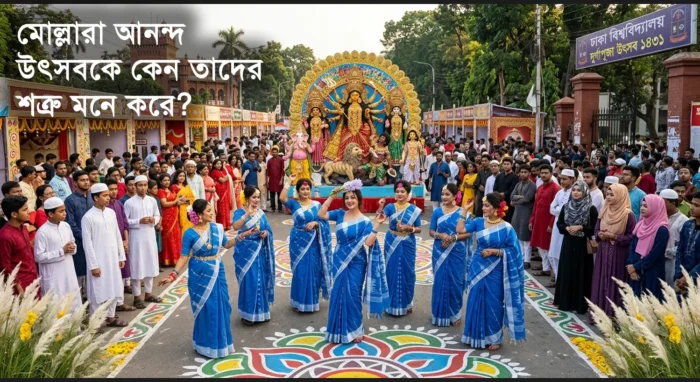
Why do Islamist clerics consider Bengali cultural festivals their enemy?
This year, unlike many previous years, the major Hindu religious festival Durga Puja in BangladeshRead More
ইসলামিস্ট মোল্লারা কেন বাঙালিদের আনন্দ উৎসবকে তাদের শত্রু মনে করে?
এবার বাংলাদেশে অন্যবারের তুলনায় বেশ শান্তিপূর্ণ, উৎসবমুখর পরিবেশে হিন্দু ধর্মের বড় ধর্মীয় উৎসব দূর্গাপূজা হয়েRead More
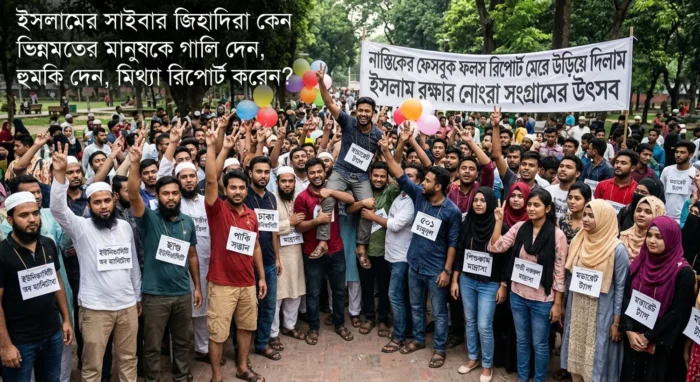
Why do Islamist cyber‑jihadis insult, threaten, and file false reports against people with different opinions?
Maulana Azhari once advised Islamists that sharing his Facebook posts is also an Islamic act;Read More
Comments are Closed