
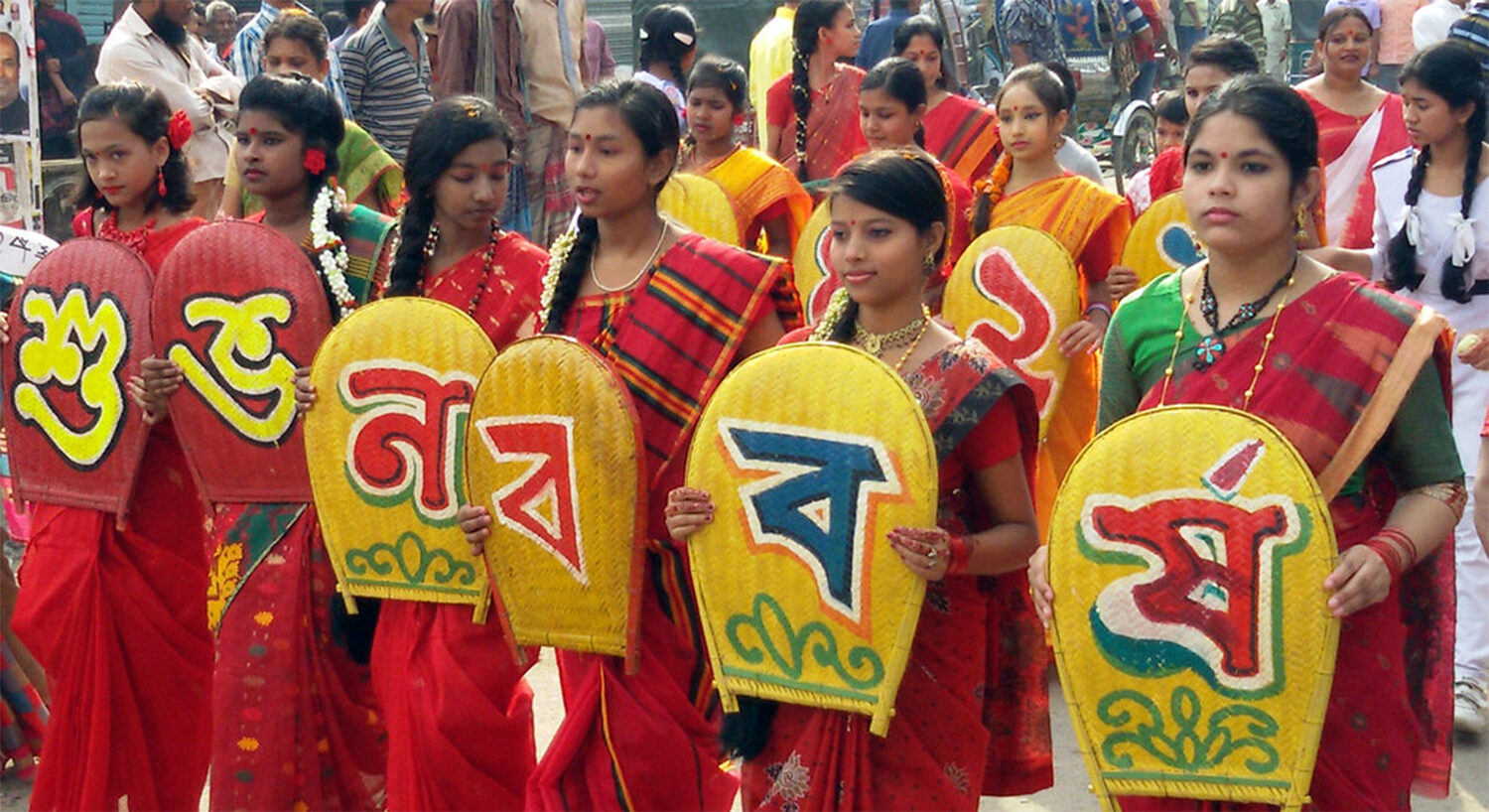
Pohela Boishakh
There Is No Religious Connection with the Universal Bengali Festival of Pohela Boishakh
There is no religious element attached to the Bengali calendar, and it was not introduced by Emperor Akbar either. Akbar merely carried out some administrative reforms for tax collection purposes. The Bengali calendar has been practiced for over a thousand years as an agrarian (harvest-based) calendar. It is not limited to this region alone—Pohela Boishakh or its equivalents are celebrated under different names and in different forms in Nepal, India, Myanmar, Laos, Cambodia, parts of China, Thailand, Singapore, Malaysia, Indonesia, and many other countries.
Many rigid or orthodox individuals label Pohela Boishakh as religiously forbidden or as a form of “bad culture.” One of their arguments is that the name “Boishakh” originates from the Hindu term “Vishakha,” and therefore it is religiously prohibited. Interestingly, the very word they commonly use—“oposanskriti” (bad culture)—is itself a relatively modern Bengali term, coined by Dr. Humayun Azad, a thinker who did not believe in religious practices at all. So, there is apparently no problem using a word invented by a non-religious intellectual, but there is a problem with words that entered the Bengali language centuries ago and have since become integral to it.
Language is dynamic. Words continuously move from one language to another. What matters is not the original source of a word, but the fact that once it becomes part of a language, it loses any communal or sectarian attachment. How the word “Boishakh” originated or how words like “Som” (Monday) and “Mangal” (Tuesday) came into being is less important than the fact that they are now entrenched in Bengali. When you say “Mangalbar” (Tuesday), do you consciously think of the planet Mars? Would you rename your town if it is called Kaliganj or Gazipur? Would you stop identifying with places or institutions that bear such names? Tagging centuries-old Bengali words with communal labels by tracing their etymology is childish at best. Many Arabic words permanently originated from pagan cultures—if you do not know who pagans were, you may look it up.
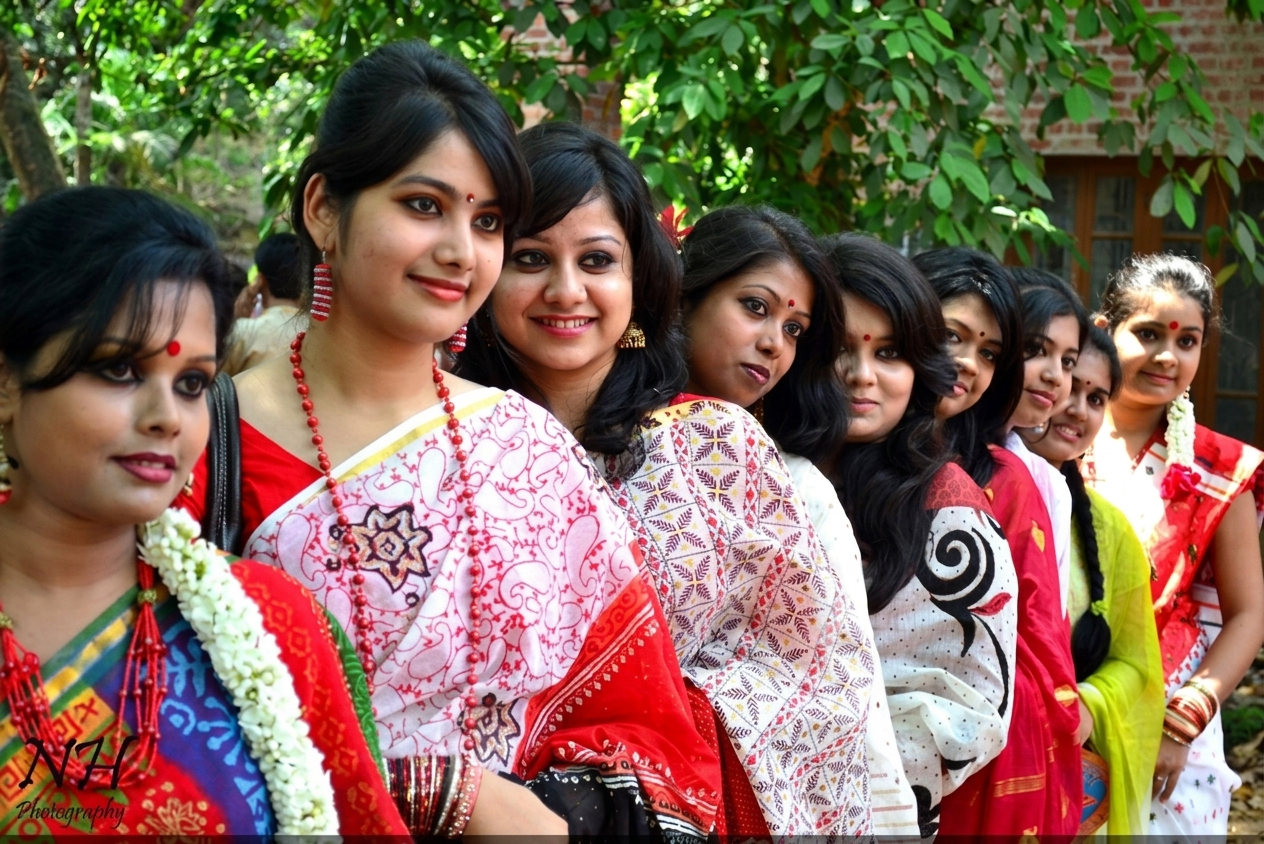
They also raise endless objections to Rabindranath Tagore’s song “Esho He Boishakh.” Poets use metaphors. When someone says, “May your life be like a flower,” does that mean you will literally become a flower? When Tagore says, “Butterfly, where did you get such colorful wings?” no one assumes a literal transaction. These lines express wishes, hopes, and imagery—not religious prayers. To claim that Tagore was invoking a deity by saying “Esho He Boishakh” has no credible reference. Random blog posts are not valid sources. Any claim requires scholarly credibility. Please read more, examine authoritative analyses, and apply common sense instead of blindly believing what someone writes online.
Is there any religious ritual that a particular religious group performs on Pohela Boishakh? I personally have never seen one. Certain rituals may be associated with Chaitra Sankranti, but Pohela Boishakh itself remains a festival of the Bengali people as a whole. Whether someone joins the Mongol Shobhajatra or eats panta ilish (fermented rice with hilsa) or not does not diminish the universality of the festival.
Historically, this region followed the Hijri calendar imposed during Mughal rule. But the Hijri calendar is lunar-based, whereas agriculture depends on seasons governed by the solar calendar. The Hijri year is around 10–11 days shorter than the solar year, so over time, harvest periods and tax schedules became misaligned. Collecting taxes during winter when crops had just been sown was impractical. Faced with such realities, Emperor Akbar reorganized and formalized the already existing Bengali calendar for administrative convenience.
Does a culture become anti-religious simply because it does not originate from the Arab region? Pohela Boishakh is celebrated in various forms across Asia—Songkran in Thailand, Sangrai in Bangladesh’s hill tracts, and similar observances elsewhere. These names—Sankranti, Sangrai, Songkran—likely originate from a common ancient root. Cultures migrate, merge, and transform. Despite differing religious majorities in these regions, people celebrate their new year together. So where exactly is the problem with celebrating the Bengali New Year?
Language and culture shape a people’s national identity; religion does not define this aspect. In Germany, regardless of religion, people who share the German language and culture are Germans. Similarly, we are Bengalis because of our language and culture. Pohela Boishakh is an inseparable part of that heritage. A Muslim may pray at a mosque on their birthday, a Hindu may pray at a temple—but no one claims that birthdays are communal occasions. Likewise, celebrating Pohela Boishakh does not require anyone to perform a specific religious ritual. One may pray according to their own faith on the first day of the year; doing so does not strip the festival of its universal character.
I have never witnessed any universally practiced religious ritual on Pohela Boishakh. In Dhaka, people gather in Ramna Park, stroll, chat, and enjoy time with family and friends. There are no religious rites—only human connection. It is a grand reunion where people forget divisions and stand together. The large turnout in recent years has clearly countered the claims of extremists. The country hosts plays, films, folk performances, concerts, and fairs. Women wear saris—the timeless attire of Bengali women—hardly something obscene. Most celebrations are family-oriented. Calling this “licentiousness” is baseless.
If one wishes, they can object to anything. Such reactions depend on worldview, education, humanity, civility, and social awareness.
Perhaps I know less; that may be why I do not see any wrongdoing here. Those who object may claim to know more. But in my view, the Bengali nation deserves at least one truly universal festival that Bengalis everywhere can celebrate together. So far, Pohela Boishakh is that festival. Almost every nation celebrates its New Year with enthusiasm—why should only ours be made problematic?
Read More – Why do Hardline Mullahs Consider the Pohela Boishakh Festival Their Enemy?
[Photo: Labib Ittihadul, CC BY 2.0]
Related Posts
Why do Islamist clerics consider Bengali cultural festivals their enemy?
This year, unlike many previous years, the major Hindu religious festival Durga Puja in BangladeshRead More
ইসলামিস্ট মোল্লারা কেন বাঙালিদের আনন্দ উৎসবকে তাদের শত্রু মনে করে?
এবার বাংলাদেশে অন্যবারের তুলনায় বেশ শান্তিপূর্ণ, উৎসবমুখর পরিবেশে হিন্দু ধর্মের বড় ধর্মীয় উৎসব দূর্গাপূজা হয়েRead More
Why do Islamist cyber‑jihadis insult, threaten, and file false reports against people with different opinions?
Maulana Azhari once advised Islamists that sharing his Facebook posts is also an Islamic act;Read More
Comments are Closed