
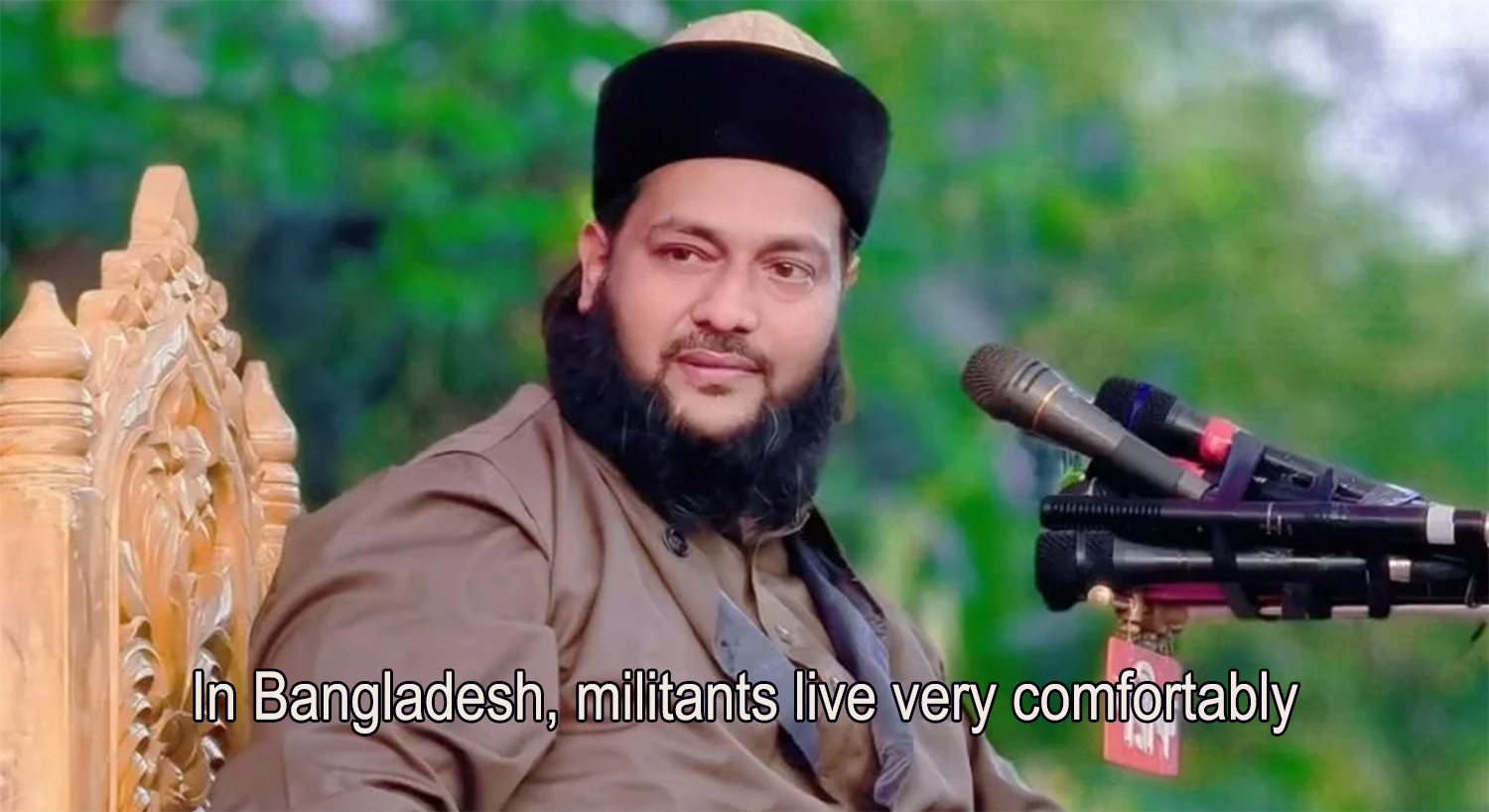
In Bangladesh, militants live very comfortably
Can you judge Allah and Muhammad before judging their followers?
A vast portion of the country’s population still believes that extremist mindsets, the unruly behavior of the frenzied “Tawhidi” mobs, or violence against women have no connection whatsoever with “true Islam.” Yet the reality is that girls who move around without a scarf, or who wear jeans and T‑shirts, are routinely subjected to eve‑teasing, insults, and various forms of harassment; still, that same large population insists that those who harass them simply “do not know Islam.” The height of this self‑deception was seen when Arnob, a young man who sexually harassed a woman on the Dhaka University campus, was welcomed with garlands and a turban – an honor bestowed by the country’s self‑proclaimed “Grand Mufti,” the fake or nominal PhD‑holder Enayetullah Abbasi, popularly known as “Helicopter Huzur.” Now the question is: if they claim Abbasi does not know or follow Islam, then who does? And why is he called “Helicopter Huzur”? The answer is well known – he himself demands that organizers must transport him by helicopter if they want him to attend a religious gathering. The enormous cost of this luxury is funded by small madrasa children who stand on the streets under the scorching sun, rain, and cold, collecting donations from people – money that is then used to ensure the lavish travel of a single preacher.
The logic of Abbasi and his followers is very simple – “He who owns the land makes the law.” Meaning, since Allah created the earth and everything on it, the law must also be His; and that law is the Qur’an and Hadith. Modern state laws, human rights, and rationality are unacceptable to them. In Islam, images of living beings are forbidden, music is forbidden – yet they cannot provide any rational explanation for these prohibitions. In their words, “It is written in the Holy Qur’an,” meaning Allah has declared it haram, therefore it is haram – no one has the right to question it. They are not even wrong, because they simply repeat what is written in the Qur’an and Hadith. But if you refuse to accept those interpretations or rulings, then in their eyes you are no longer a Muslim – you are a kafir, an apostate. And according to classical Islamic jurisprudence, the punishment for apostasy is death. In this way, by claiming exclusive authority over religious interpretation, they establish fear, obedience, and silence in society.
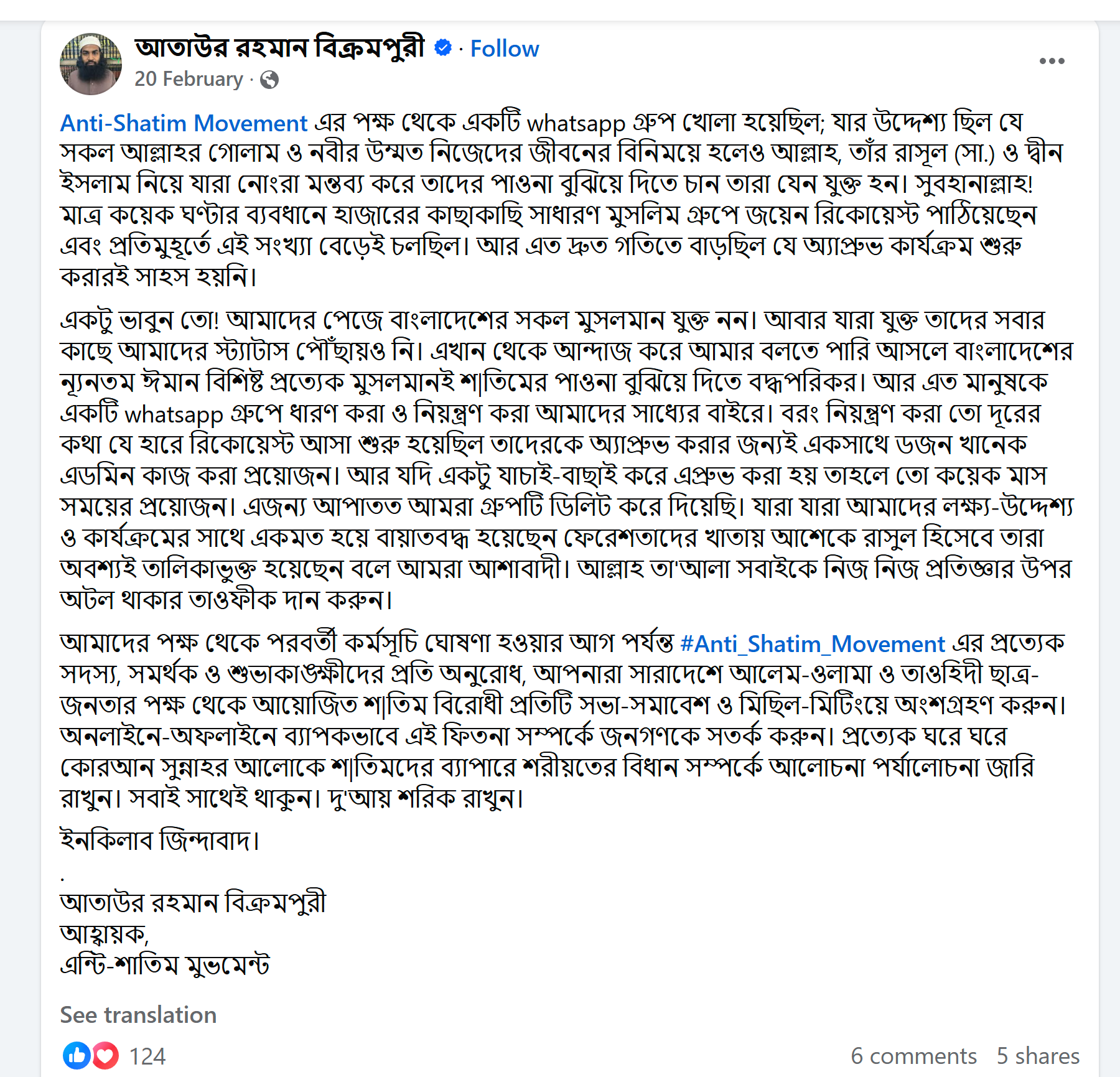
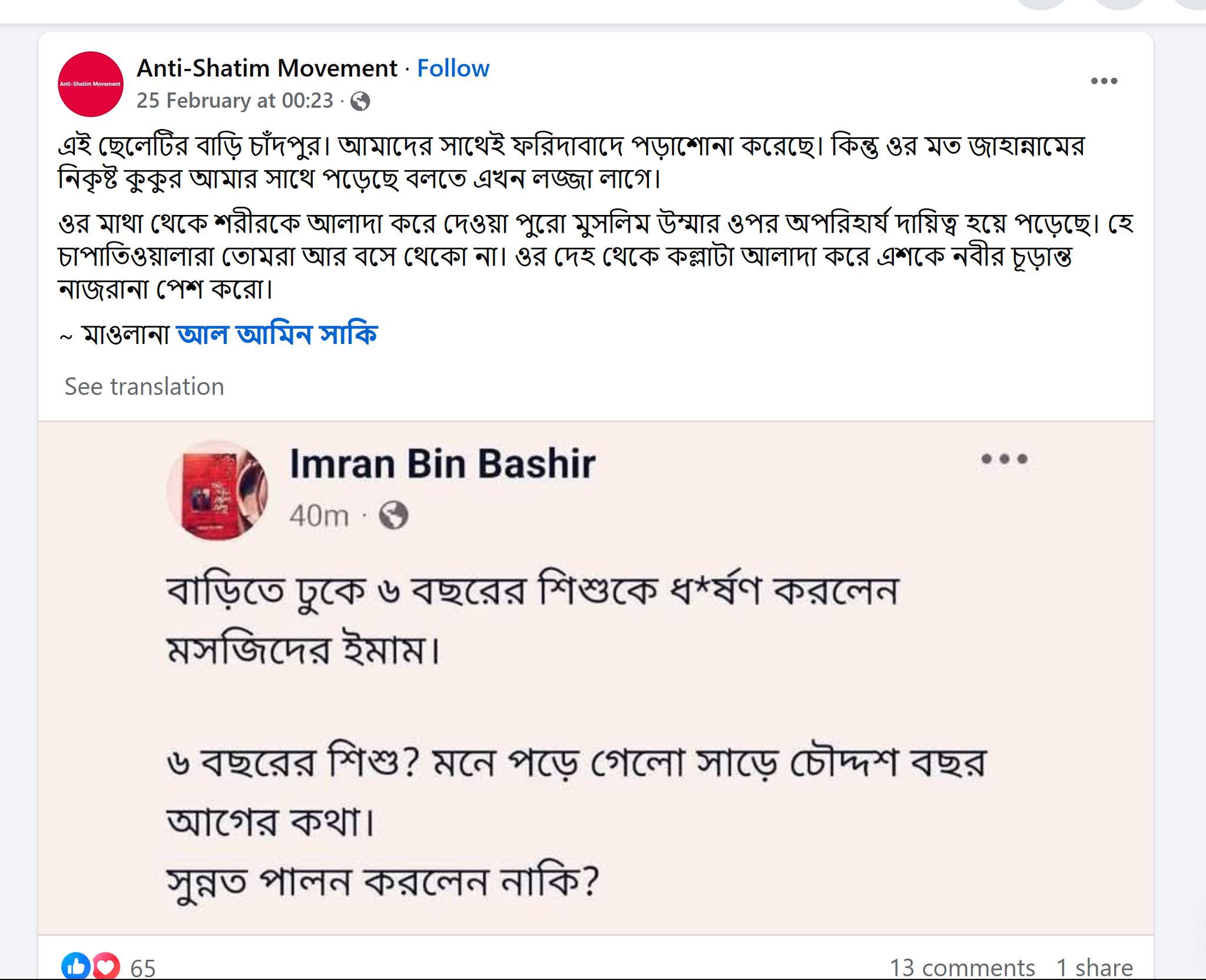
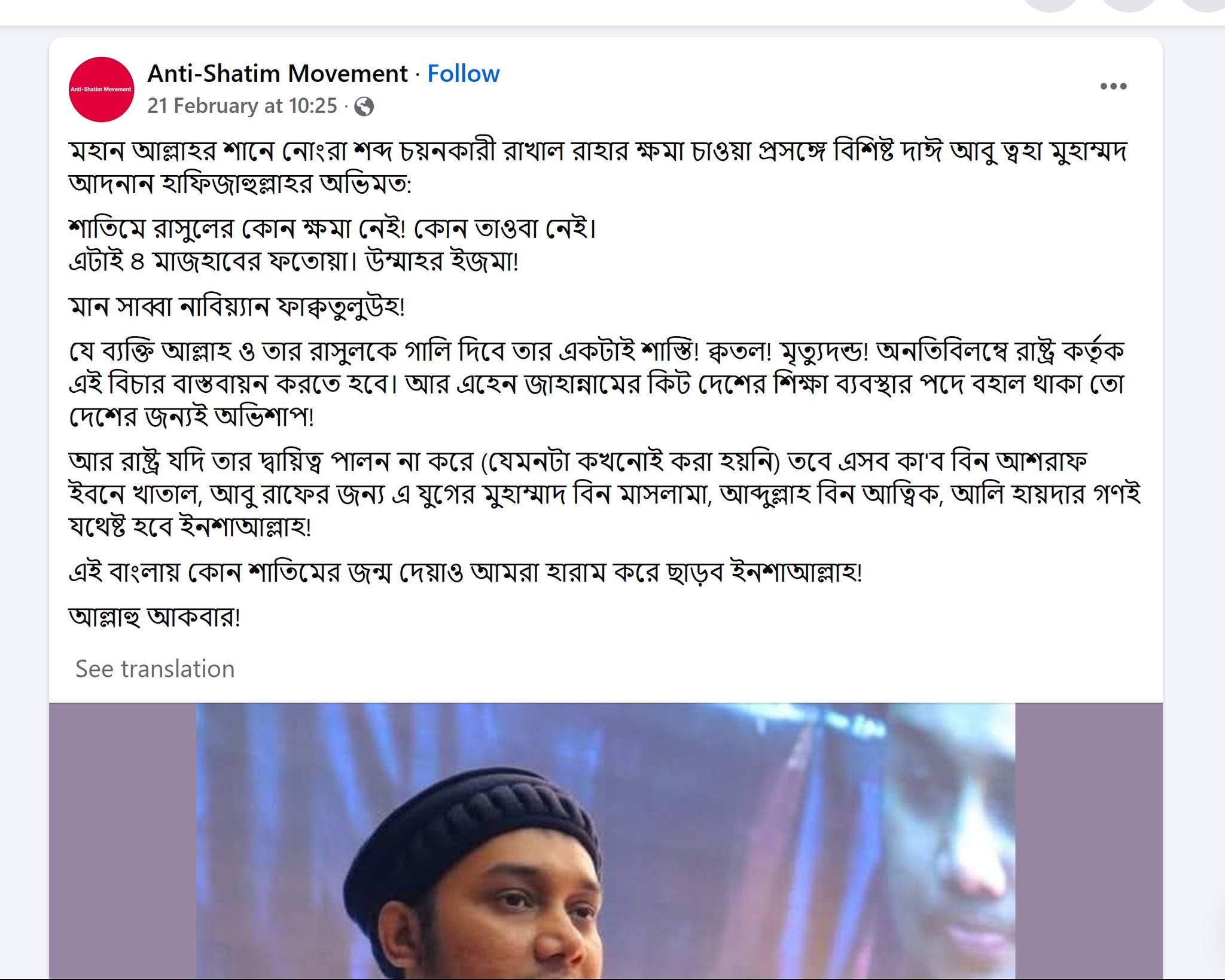
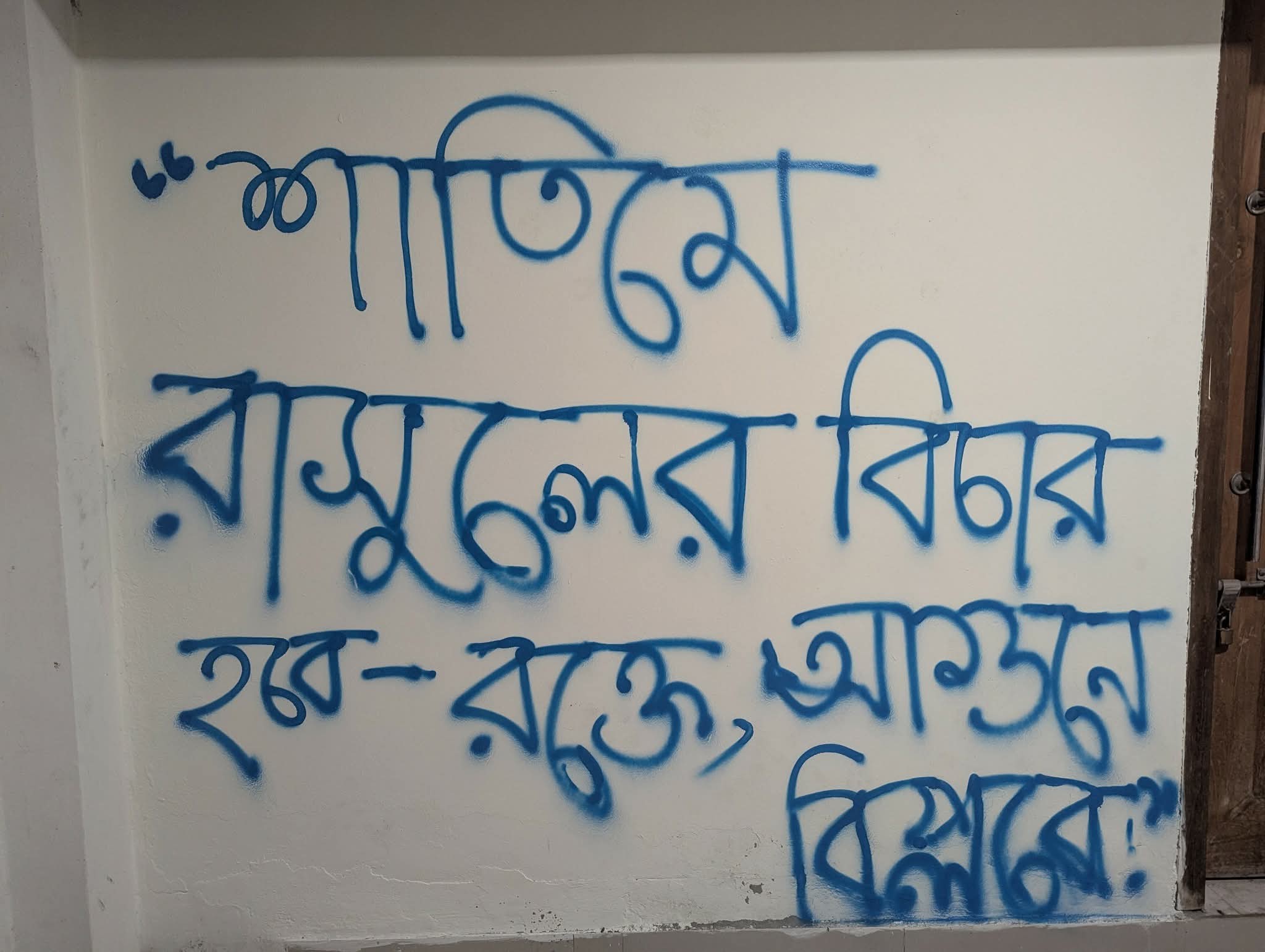
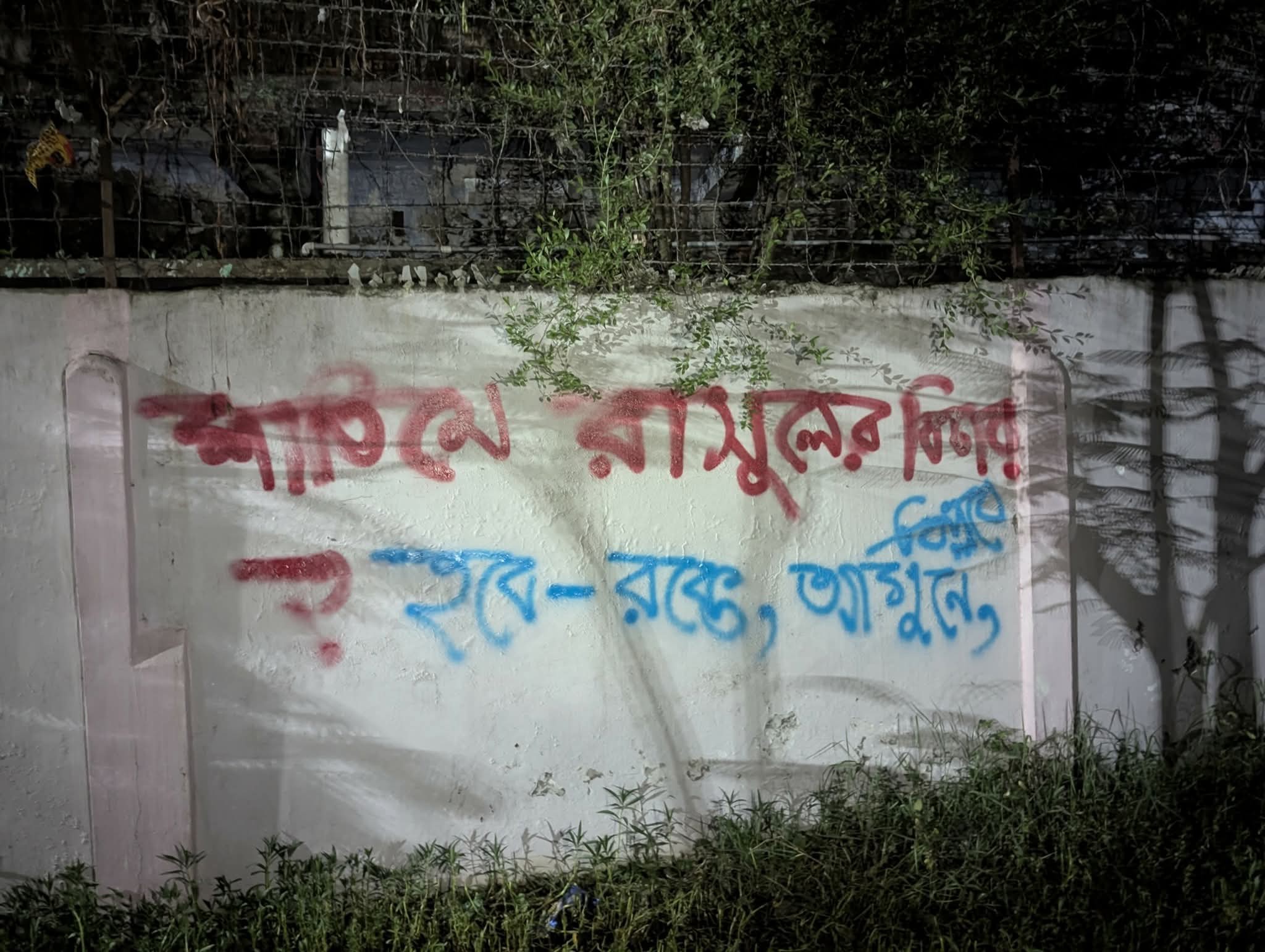
In Islamic jurisprudence, “insulting the Prophet” (Shatime Rasul) is defined as an offense in which even minor criticism of Prophet Muhammad, questioning any of his actions, or not accepting him as the greatest human being automatically labels a person as a “blasphemer.” According to classical Islamic rulings, killing such a person is considered a religious duty for every Muslim. Strikingly, if someone has misconceptions, questions, or criticisms about Allah, there is room for repentance; but in the case of the Prophet, even the slightest doubt or disrespect is unforgivable. Even if someone repents and seeks forgiveness, it does not free them from the label of “blasphemer.” Although there are countless differences among Islamic schools of thought on various issues, on this one matter – the death penalty for blasphemy – the four major madhhabs, early jurists, and classical jurisprudential texts are almost unanimous. There is no “if,” “but,” “however,” or “therefore” – the ruling is direct, final, and unquestionable. This severity demonstrates how easily religious law can radicalize people. Extremists operating under the name “Tawhidi Janata” in Bangladesh use this ruling as justification to kill people, burn homes, and loot property. They have even thrown people into burning fires by forming violent mobs. Countless freethinkers, science writers, and dissenters have had to flee the country to save their lives – no one keeps track of their numbers.
In the traditional interpretation of Islamic scripture, women have never been viewed as independent individuals equal to men; rather, the repeated notion is that they were created to serve men, bear children, and manage household responsibilities. Based on this perspective, strict veiling, prohibition on using perfume outside the home, and forbidding women from speaking to unrelated men in a soft or normal tone are presented as the rulings of “authentic” Islam. It is even propagated that if a woman attracts the attention of an unrelated man – let alone intentionally – even if someone merely feels a hint of affection, attraction, or emotion, the responsibility falls on the woman. The idea is promoted as though a woman’s very existence is a potential source of male desire, and controlling that potential is her religious duty. In this way, a structure has been created that restricts a woman’s freedom, personality, emotions, and human dignity, turning her into a silent, controlled, guilt‑ridden being – a structure that has been upheld in society for generations in the name of religious law.

In the primary texts of Islamic Sharia, there is no separate or direct punishment prescribed for rape; rather, rape is judged within the framework of adultery or zina, where the female victim must prove that she was forced into zina – and the standard of proof is four adult, just male witnesses who directly observed the incident. Since this is practically impossible, if she fails to provide such proof, the complaining woman herself becomes accused of adultery, the punishment for which ranges from flogging to, if married, being buried up to the chest and stoned to death. For this reason, in many Islamic countries, raped women fear seeking justice. No matter how eternal, humane, or just you may consider Islam to be, Islam does not recognize any morality, humanity, or rationality outside the Qur’an and Hadith; even if your personal conscience considers something humane, if it does not align with Islamic rulings, you have no right to speak against it as a Muslim – doing so makes you an apostate punishable by death. In the structure of Islam, questions, doubts, or dissent are not acceptable; only by accepting everything without question can a person retain their identity as a Muslim.
People often say, “All religions preach peace” – but history and reality have repeatedly proven this claim false. Throughout human civilization, whenever religion has merged with state power, society has experienced oppression, violence, division, and bloodshed; religious rule has never brought lasting peace. Like Islam, almost every religious structure contains elements of barbarism, misogyny, intolerance, suppression of dissent, and the legitimization of violence in the name of “holiness.” As long as Europe remained under the control of the Church, the light of knowledge, science, and humanism could not reach it; the long nightmare of the Dark Ages was the result of that religious rule. The countries that are the most peaceful, humane, and egalitarian in today’s world share common traits: public disinterest in religion, weakened religious authority, and the prioritization of human values over religious commandments. In other words, where the influence of religion is low, people are more free, safe, and peaceful – this is the harsh but clear lesson of history.
To verify the history of Islam, there is no independent archaeological, anthropological, or historical evidence outside the Qur’an, Hadith, and Sira; thus, while abundant evidence exists for ancient civilizations such as the Pharaohs of Egypt, the pyramids, Sumerian civilization, Greece, or the Roman Empire, there is no third neutral source to shed light on the origins of Islam or the life of Muhammad. Therefore, whether someone named Muhammad actually existed, and if he did, what his system of governance was like – these can only be known through the Qur’an, Hadith, and Sira. And even when these uniquely Islamic sources are examined from a neutral perspective, the Prophet Muhammad does not appear as a compassionate, modern, scientific, just ruler or a champion of human rights; rather, a completely different character emerges.
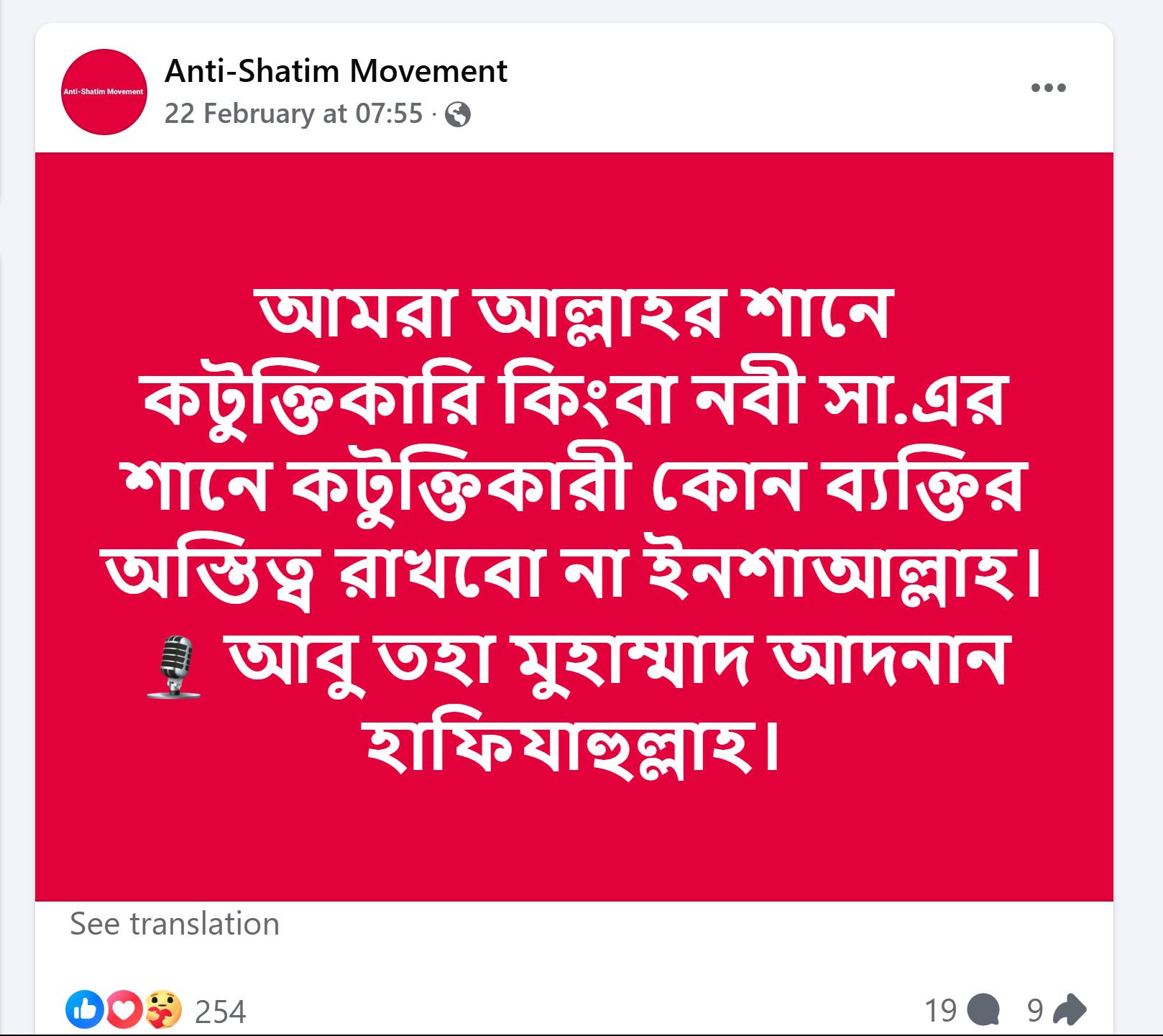
Prophet Muhammad married a dozen women, had multiple concubines, and engaged in the buying and selling of female slaves. He married Aisha when she was six years old and consummated the marriage when she was nine. He married the wife of his adopted son. He divorced some of his wives because they developed vitiligo or because he realized they would not bear children. He killed Jews and also had his critics killed. The Qur’an, Hadith, and Sira contain numerous references to these actions. These same sources also prescribe killing anyone who criticizes him. Yet when these facts – found directly in the Qur’an and Hadith – are cited, people assume the speaker is showing hatred toward the Prophet, Islam, or Allah, and therefore must be punished. Religious opportunists incite ordinary people by claiming that the person has insulted Islam or slandered Prophet Muhammad. Influential religious figures issue fatwas, and ordinary people, provoked by them, unleash violence. Sometimes extremists carry out secret attacks and kill people; sometimes victims are beaten to death, tied to trees, or burned alive. Mob lynching, public humiliation, forcing someone to wear a garland of shoes and parade through the village, or making them hold their ears and beg for forgiveness – such inhumane incidents also occur.


You cannot dismiss the interpretations of Islamic scholars, because if you believe that Allah created everything, then the Qur’an is also His word – and that word is the ultimate truth. And if you say “This is not real Islam,” then at that very moment you place yourself outside Islam. Therefore, if questions are to be asked, they should not be directed at blind followers first – but at Allah and Prophet Muhammad, in whose names these rulings were established. Why did they create rules that contradict today’s concepts of human values, equality, justice, and women’s rights? Why were such laws instituted that legitimize violence, hatred, division, and oppression in society? And the biggest question – do humans have the moral freedom to judge the decisions of Allah and the Prophet, or is even the right to question surrendered entirely to religious authority? These questions show that criticism should not be aimed at individual followers, but at the original sources from which these ideas and rulings originate.
Can you place Allah and Prophet Muhammad in the witness stand and judge their decisions?
Related Posts

Why do Islamist clerics consider Bengali cultural festivals their enemy?
This year, unlike many previous years, the major Hindu religious festival Durga Puja in BangladeshRead More
ইসলামিস্ট মোল্লারা কেন বাঙালিদের আনন্দ উৎসবকে তাদের শত্রু মনে করে?
এবার বাংলাদেশে অন্যবারের তুলনায় বেশ শান্তিপূর্ণ, উৎসবমুখর পরিবেশে হিন্দু ধর্মের বড় ধর্মীয় উৎসব দূর্গাপূজা হয়েRead More
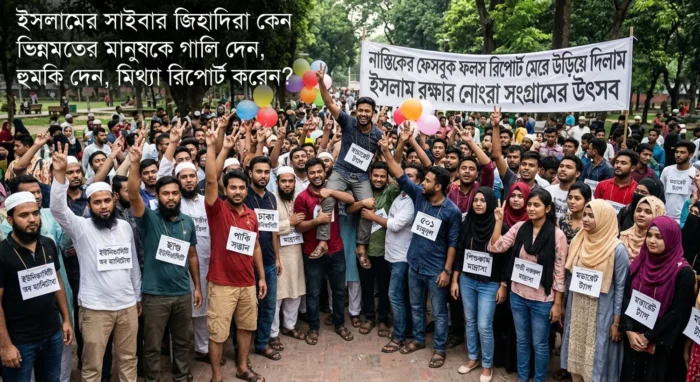
Why do Islamist cyber‑jihadis insult, threaten, and file false reports against people with different opinions?
Maulana Azhari once advised Islamists that sharing his Facebook posts is also an Islamic act;Read More
Comments are Closed