
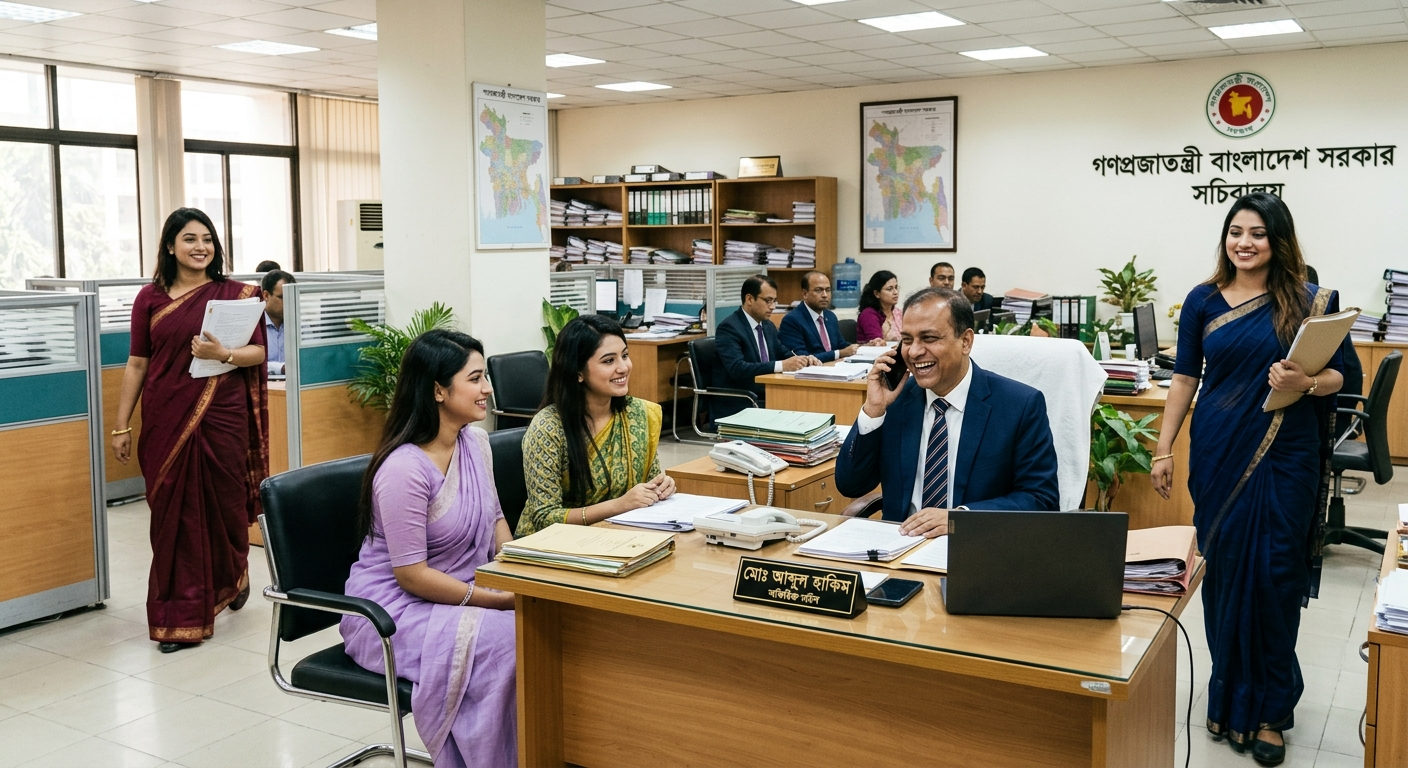
Bangladesh and Corruption
Bribery, Lobbying, and an Unaccountable State – Bangladesh
When walking into a government office is your greatest fear, the foundations of the state itself have cracked
In Bangladesh, a fever comes on before you even step into a government office. The uncertainty — who will you have to bribe, how do you do it, how much will it cost — becomes a citizen’s constant companion. And yet, the very purpose of the state was to serve its citizens.
I live abroad. In the past few years here, I have had to visit a government office only three or four times. Once to get my photo taken for a national ID and driving license, once for a road driving test, and once at the social office — because my name has three parts. “S M Saifur” — in a country built around first name, middle name, and last name, this structure confuses their systems. It took just one trip to fix that. Everything else — bank account, credit card, taxes, insurance — was handled online or over the phone. I even got a credit card from a bank with no branch in this city; the nearest one is 500 kilometres away.
Even when I do have business at a government office here, there is no fear. I know that if I show up at my appointment time, I will receive the service I am entitled to. That is what a functional state looks like.
The Bribery Ecosystem: Where the Abnormal Becomes Normal
At a government office in Bangladesh, there are only two paths — either you need a reference from someone influential, or you pay a bribe. This is not the exception; it has become the rule. I was a victim of it myself at the income tax office.
There was no problem with my income tax — the officers at that very office later admitted as much themselves. But they deliberately harassed me for over a year, purely for money. Even direct instructions from the NBR Chairman and Members could not stop them. Because in that system, giving and taking bribes is the normal order of things; following directives is not.
In that situation, I went three times to a senior brother from university who himself held a high-ranking position in the income tax department. He offered no help. Each time I saw him absorbed in his phone for hours on end, attending to his own affairs. The professional sense of duty to solve a citizen’s problem was simply absent. I was certain he was having an affair — no man could spend that much time on the phone with his wife; the gentleman was Hindu, so at least no divine sanction there. I used to wonder: with all those phone calls, when does he ever actually work? He seemed perpetually occupied with scheming to lure some other man’s wife or daughter into a romantic trap and drag her to bed.
It is precisely this system that gives birth to “lobbying” and back-channel influence. People know their work will not get done through normal channels. So they need a phone call from someone powerful. If you have the right connections, the bribe might be a little less — that itself passes for consolation. As a result, the primary occupation of ministers and secretaries becomes managing these influence channels. In Bangladesh, this has become a fully-fledged commercial industry.
The bribery ecosystem survives because there is no mechanism of accountability — officials know that failing to do their job will not cost them their salary or their promotion.
Two Countries, Two Experiences
Where does the difference lie? Not only in resources, and not merely in attitude — the difference is in the system. In a country where an official’s work is evaluated, the official works. In a country where there is no evaluation, bribery and influence-peddling are the only way forward.
✓ Where accountability exists
Show up at your appointment time and you receive the service. From credit cards to tax returns — everything is online. Even if the nearest branch is 500 kilometres away, you never need to visit an office to get things done.
✗ Where accountability is absent
Before you even walk into a government office, the questions are already forming — who do I bribe? How much? Even a direct instruction from the NBR Chairman achieves nothing if money has not changed hands.
The Logical Framework: Without Measurement, There Is No Improvement
In development work, I spent years working with the Logical Framework Approach (LFA). In this method, a matrix is built for every project — what is the goal, what are the indicators, what are the verification sources, and what assumptions underpin the plan. From this matrix alone, you can tell whether a project has succeeded or failed.
In our office, we changed the way we conducted recruitment exams. For Project Lead positions, candidates were given the project goals, objectives, and some background information. Their task was to prepare a PowerPoint presentation — open-book style. They could consult books, browse the internet, even speak to others.
The reasoning was simple — no one knows everything, but the ability to find out is what matters. All candidates’ presentations were reviewed together, and it became immediately clear who was capable of genuine thinking. Other candidates also learned where their own weaknesses lay.
Bangladesh’s government officials face no such evaluation process. A District Commissioner is appointed based on party loyalty. No one asks how much they know about the district, what their plans are, where their creativity lies. And if no one asks, there is no need to find answers.
A Roadmap for Reform: Promotion by Competence
If I were a policymaker, I would introduce two major changes.
Proposed Reform Framework
- Competency testing at the point of appointment: Deputy secretaries applying for District Commissioner positions must present to a panel on the district they wish to lead — what are its problems, what is the plan to address them, how will resources be deployed. The process will be transparent, and all participants will be able to see each other’s presentations.
- Logical Framework Matrix: After appointment, each official is handed a matrix — specific goals, measurable indicators, and defined timelines. The score on this matrix in the annual review will determine reward or reprimand.
- Promotion by competence, not seniority: If a deputy secretary demonstrates exceptional results in ability and performance, they should be able to advance directly to the rank of secretary. The notion that you must be “old” to become a secretary is not a measure of merit — it is simply lazy seniority management.
The Core Question: Is the Salary Being Earned?
Government letters close with the words “issued in the public interest.” But whether that public interest is actually being served — no one checks. Year after year, unaccountable employment rolls on. Occasionally, a minor punishment is handed out for failing to call a superior “sir” or for breaching protocol — but there is no punishment for failing to deliver services.
Unless government officials are made to earn their salaries through actual work and earn their promotions through demonstrated competence, it will never be possible to end bribery, corruption, and influence-peddling — not ever.
In a system where performance is never measured, performance never improves. This is the fundamental problem with public services in Bangladesh. The solution lies in the same place — building a culture of evaluation, establishing a framework of accountability, and ensuring that competence is rewarded.
Citizens will no longer dread stepping into a government office on the day they know — that serving them is the official’s job, it is the duty of the position, and there are consequences for failing to do it.
Related Posts
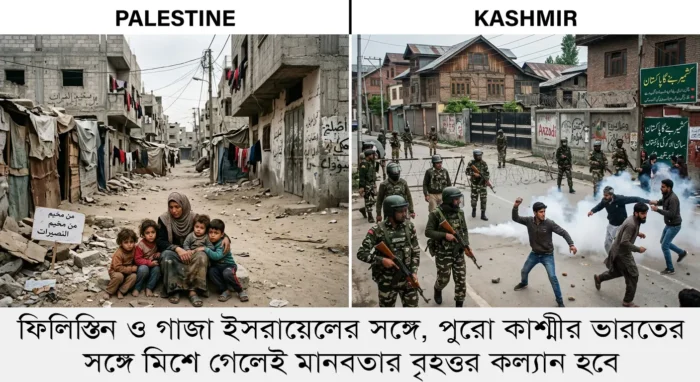
Palestine and Gaza merging with Israel, and all of Kashmir merging with India, would lead to greater humanitarian benefit
In modern politics, independence is often considered an almost inviolable value, where leaders aim toRead More
ফিলিস্তিন ও গাজা ইসরায়েলের সঙ্গে, পুরো কাশ্মীর ভারতের সঙ্গে মিশে গেলেই মানবতার বৃহত্তর কল্যান হবে
আধুনিক রাজনীতিতে স্বাধীনতাকে প্রায় অলঙ্ঘ্য মূল্য ধরা হয়, সেখানে নেতাদের লক্ষ থাকে দেশের নেতৃত্ব বাRead More

The Jewish claim to the land of Israel is actually connected to their historical roots
Have you heard the popular song from the 1970s ‘By the Rivers of Babylon …’?Read More
Comments are Closed