
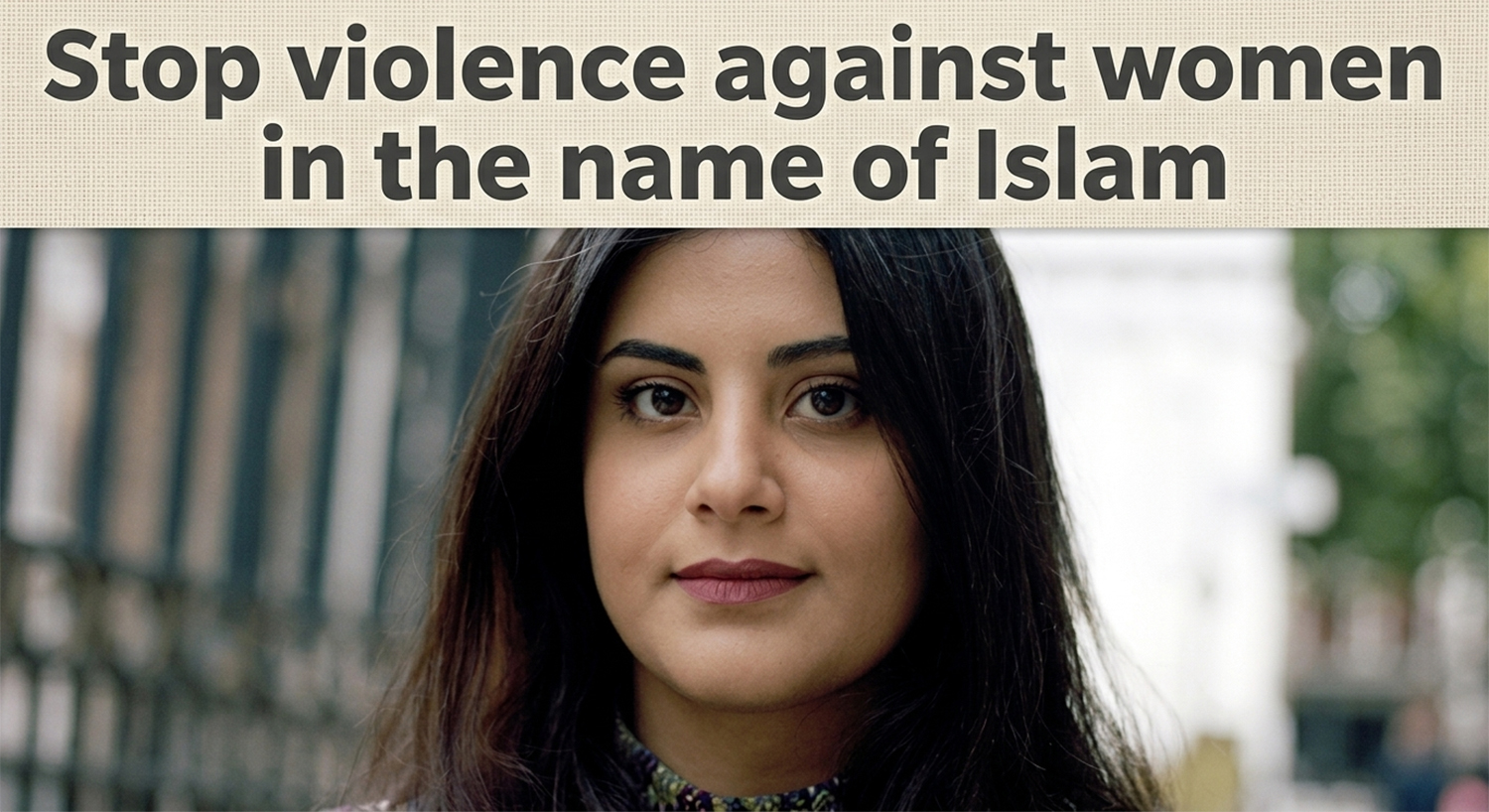
Ayyām al-Jāhiliyyah and Islam
Women in the birthplace of Islam: Did the Age of Ignorance (Ayyām al-Jāhiliyyah) exist only before Islam, or does it exist even today?
In Islamic narratives, it is often claimed that before the advent of Islam, the Arabian Peninsula was immersed in the ‘Ayyam al-Jahiliyyah’ — the ‘Age of Ignorance.’ Women were buried alive and had no social status. Islam, it is said, eradicated that darkness. However, this claim itself is misleading — I have written about it here; you may read it. Even if we accept the claim of ‘Ayyam al-Jahiliyyah’ as true, how much does present-day Saudi Arabia in 2026 — the birthplace of Islam — validate that claim? The question becomes unavoidable when we look at the state-supported systems that exist there.
Dar al-Re’aya: ‘Rehabilitation Centers’ or Women’s Prisons?
Within Saudi Arabia’s state system, institutions known as ‘Dar al-Re’aya’ have long remained outside public discussion. Recently, investigative reporting by The Guardian and information published by various human rights organizations have brought them into international focus.
These institutions were originally established in the 1960s to ‘rehabilitate’ women accused of crimes with the help of psychologists. In reality, however, they have become terrifying detention centers. ( source here )
These so-called ‘care homes’ are essentially prisons, where girls are sent upon the orders of male guardians — often for ‘disobedience’ or breaking family rules. In many cases, families abandon girls at police stations and sever ties, resulting in their automatic detention in these institutions. ( source here )
Women cannot leave these institutions without the consent of a male guardian. Those detained long-term are effectively dependent on their guardians’ mercy. ( source here )
What Happens Inside?
Former detainees have described these places as ‘hellish’ — weekly beatings, forced religious instruction, complete isolation from the outside world, and prolonged detention. Reports also include invasive body searches, “virginity testing,” and forced consumption of sleeping pills. ( source here )
Women lose their identities there — they are called by numbers instead of names. ( source here )
Amina’s Story
A 25-year-old woman named Amina sought refuge in a center in Buraidah after suffering domestic abuse. But the very next day, her father was summoned. Amina’s demands were minimal — no physical abuse, no forced marriage, and the freedom to work. Her father, however, insisted she not leave the house without a male guardian. Out of fear, Amina was forced to sign. After returning home and facing further abuse, she ultimately fled the country.
The Experiences of Layla and Shams
Another woman named Layla went to the police seeking help for domestic abuse. Instead, she was accused of ‘dishonoring the family’ and sent to Dar al-Re’aya.
Human rights activist Amani al-Ahmadi recounted that while she was still in school, she encountered women from Dar al-Re’aya. Students were shown graphic images of sexually transmitted diseases and warned — this is what happens if you disobey your family. It was a state-sponsored method of instilling fear to enforce male guardianship. ( source here )
Activist Sarah al-Yahya stated that her father threatened to send her to Dar al-Re’aya for protesting sexual abuse. “If your brother or father rapes you and you become pregnant, you will be sent away to protect the family’s honor.” ( source here )
Reporting Rape Is Nearly Impossible: A Brutal Legal Reality
In Saudi Arabia, proving rape requires either four or two male witnesses or a confession from the accused. Marital rape is not legally recognized at all. ( source here )
The practical consequences are devastating. If a victim reports rape without sufficient witnesses, she may instead be charged with ‘adultery.’ Reporting a crime thus becomes a risk of self-incrimination.
Women’s Rights Activists Under State Repression
Not only ordinary women, but also those who have spoken out against these conditions have faced severe repression.
Loujain al-Hathloul
Loujain al-Hathloul was detained in May 2018. For the first three months, she was held in complete isolation from family and legal counsel. During that time, she was reportedly beaten, waterboarded, electrocuted, sexually harassed, and threatened with rape and murder. ( source here )
Her family reported bruises on her thighs, trembling, and difficulty walking or sitting. She was offered release in exchange for denying the abuse — which she refused. ( source here )
The charges against her included campaigning for the right of women to drive, opposing the guardianship system, and communicating with international organizations like Amnesty International. ( source here )
Manahel al-Otaibi
Fitness influencer and activist Manahel al-Otaibi was arrested in November 2022. She was accused of posting about women’s rights and sharing photos without an abaya. She reportedly faced beatings, threats, and solitary confinement. ( source here )
In 2025, her sentence was reduced from 11 years to 5, with an additional five-year travel ban. ( source here )
Salma al-Shehab
Saudi PhD student Salma al-Shehab was sentenced to 27 years in prison for tweeting in support of women’s rights. She was released in February 2025 after serving four years. ( source here )
Conflict with International Law
These practices violate several fundamental principles of international human rights law.
CEDAW (Convention on the Elimination of All Forms of Discrimination Against Women): Organizations like MENA Rights Group have clearly stated that Saudi Arabia has failed to meet its obligations. ( source here )
Convention Against Torture (CAT): Electric shocks, waterboarding, and physical abuse directly violate this treaty.
Arbitrary detention: In many cases, no legal due process is followed. ( source here )
UN response: In March 2024, UN human rights experts wrote to the Saudi government questioning whether travel bans on activists comply with international standards. ( source here )
‘Vision 2030’ and Superficial Reforms
Saudi Crown Prince Mohammed bin Salman promotes reforms under ‘Vision 2030,’ such as allowing women to drive and attend concerts. However, the continued existence of Dar al-Re’aya directly contradicts these claims. In 2024, Saudi Arabia chaired the UN Commission on the Status of Women, yet ranked 126th out of 146 countries in the World Economic Forum’s Global Gender Gap Report. ( source here )
‘Ayyam al-Jahiliyyah’?
Women in the so-called ‘Age of Ignorance’ at least fought alongside their tribes or held property rights in some cases. In Saudi Arabia in 2026, a woman reporting rape may become an accused herself. Supporting women’s rights on social media can lead to decades in prison. Posting a photo without an abaya can result in terrorism charges. A woman may be confined for years until her guardian’s status changes.
Human rights activist Maryam al-Dosari states that a woman remains there until she fully submits to family and religious authority. ( source here )
If this is considered the end of Jahiliyyah, then it is time to question what Jahiliyyah truly was.
Main References:
The Guardian investigative report on Dar al-Re’aya (2025)
US State Department: 2024 Country Reports on Human Rights Practices — Saudi Arabia
Amnesty International: Saudi Arabia Annual Report (2025)
MENA Rights Group: Report to CEDAW on Discrimination against Women in Saudi Arabia
Human Rights Watch: Briefings on Saudi women’s guardianship system
ALQST for Human Rights: Girls’ and Women’s Care Institutions in Saudi Arabia
New Lines Magazine: “Saudi Arabia’s Houses of Horror for Disobedient Women” (2021)
Tom Lantos Human Rights Commission: Case of Loujain al-Hathloul
Wikipedia: Rape in Saudi Arabia (legal framework)
Related Posts
Operation Entebbe – the story of one night, and the Islamic execution suffered by Nazrul Islam and Sweety Akter
What can a state do to save the lives of its citizens abroad? Are thereRead More
অপারেশান এন্টেবে – এক রাতের গল্প এবং নজরুল ইসলাম ও সুইটি আক্তারের ইসলামি হত্যার শিকার হওয়া!
একটি রাষ্ট্র বিদেশে তার নাগরিকদের জীবন বাঁচাতে কী করতে পারে? এর কোন টেক্সটবুক উদাহরণ আছে?Read More
A random page from Muhammad’s self‑made book Qur’an and its unscientific statements
Sometimes I flip through random pages of Muhammad’s self‑made book Qur’an, and today this pageRead More
Comments are Closed