
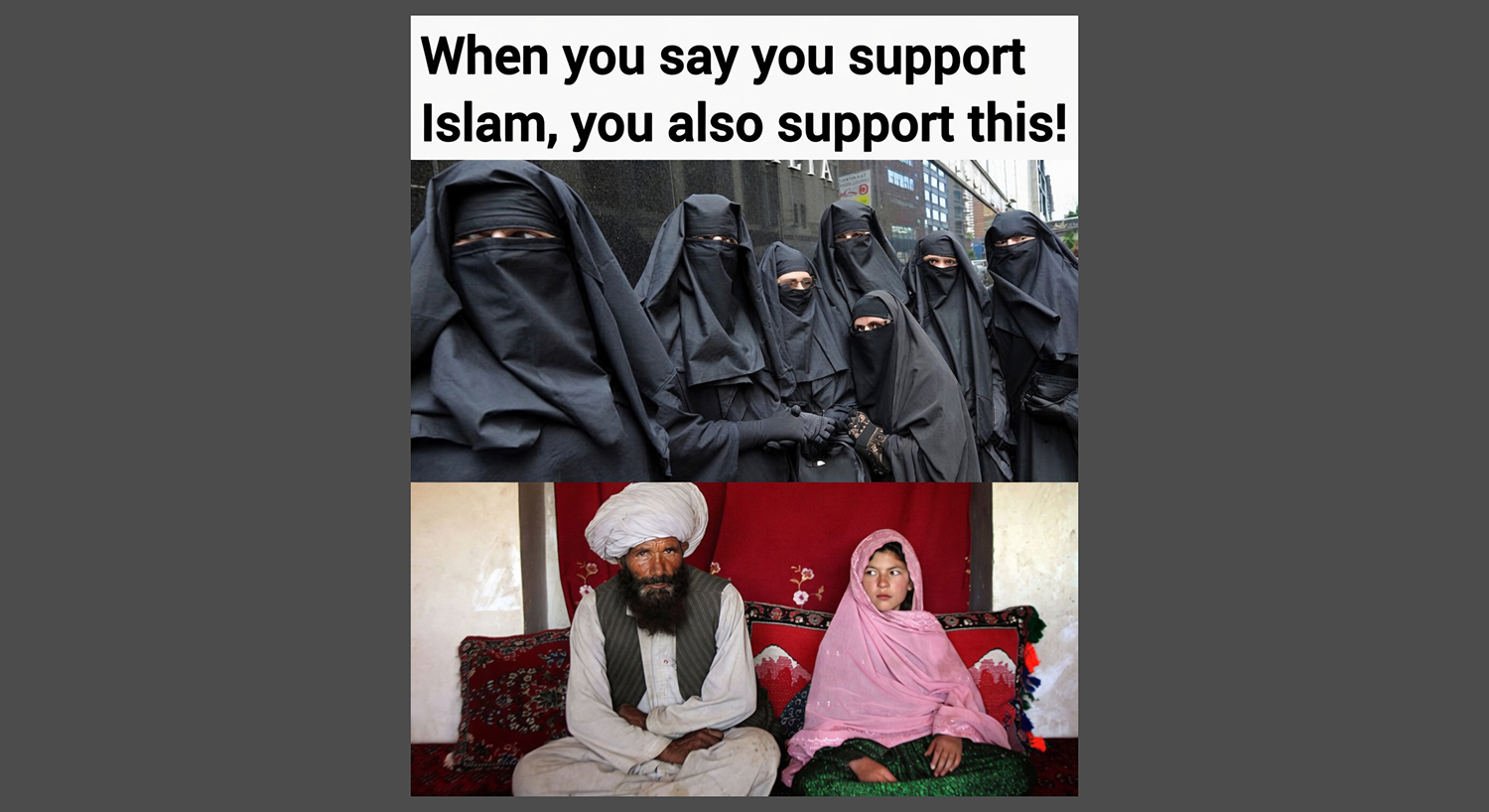
The success of Islam is not empirically verified
Islam: An Unverified, Failed Model? From a Startup Analogy to Reality
Every day, thousands of start-up ideas are born around the world. Some ideas are so attractive that they seem exactly what people need. But in reality, most of them fail. Why? No matter how good an idea is, it must go through validation, testing, iteration, and achieving market fit. If we look at the stages of a start-up, we get—
Idea → Research → Validation → Business Model → Prototype → MVP → Testing → Iteration → Funding → Team → Production → Launch → Scaling.
Successful cases like Google, Facebook, or OpenAI have survived and scaled through this process.
Now imagine an idea (let’s say Islam) that jumped directly from the idea stage to scaling, skipping all the intermediate steps. No research, no validation, no prototype or MVP—just spreading through hypocrisy, force, coercion, capture, violence, killing, massacres, and population explosion. According to critics of Islam, this is the story of its rise. In today’s modern world, where there are well-established agreements and laws created by humanity—such as UDHR, CEDAW, CRC—what is the place of an unproven idea or ideology?
Islam’s “Scaling Strategy”: Jihad and Population
The early spread of Islam occurred through war, conquest, and an intense desire for spoils of war. The use of women from defeated tribes as sexual slaves (concubines), looting, selling, and forced conversion—these are described in historical sources. During the Caliphate era, slavery and maintaining concubines were considered lawful. Accounts from the time of Umar mention strict rules about the clothing and conduct of slave women, which critics view as contradictory to women’s rights and completely incompatible with modern human rights.
The “Ideal” Caliphate? Historical Reality Says Otherwise!
Islamists often claim the Rashidun Caliphate or later periods as ideal. But neutral history tells a different story. Conflicts with Jewish tribes, their expulsion from the Arabian Peninsula, and incidents of killings are recorded in sources. What happened under the Ottoman Caliphate in Europe is another topic, but overall, “Islamic rule” is not comparable to the European Renaissance in terms of human rights, science, and women’s rights. The funding of Columbus’s expedition by Queen Isabella is often cited as a success of progressive Europe, raising questions about the contributions of Islamic caliphates.
Islamists often present Umar as an example of ideal governance. But accounts claim that he punished helpless slave women publicly, forbade them from wearing modest clothing, and imposed restrictive dress rules. Meanwhile, modest dress was considered a privilege of free believing women. Then who created the system of sexual slavery? Sexual slaves were exploited, warfare brought looting, and people were killed in the name of jihad. Was that governance truly ideal? While acts like searching for the poor at night are praised as humane, massacres and expulsions of Jews from Arabia are often overlooked. What a paradox of the Caliphate!
In modern times, the ISIS Caliphate of 2014 represents an extreme example of this pattern. The genocide against the Yazidi community, sexual enslavement of women and children, and mass executions—these have been recognized as genocide by the UN and international organizations. Coptic Christians were beheaded on the shores. Elderly Yazidi women and children were buried alive—because they were not considered marketable as slaves.
Modern Islamic Countries: The Grim Reality of Women, Children, and Human Rights
Where is the proof of Islam as the “best way of life”? Saudi Arabia, Iran, Pakistan, Afghanistan—these are examples where Islamic law is implemented. Are these ideal Islamic states?
In Saudi Arabia, poor domestic workers face abuse and often do not get justice. In the Middle East, slave markets have been reported. In Saudi Arabia, those who defy family decisions can face severe detention. In Iran, women have little freedom, and even minor protests can lead to execution. There, girls can be married at age 13, and an adoptive father can marry his daughter. In Pakistan, even expressing admiration for political figures in religious terms can lead to violence; blasphemy accusations have led to death sentences and mob killings. In Afghanistan, women have no freedom; they can be physically punished severely. Girls can be married without consent—silence is considered consent.
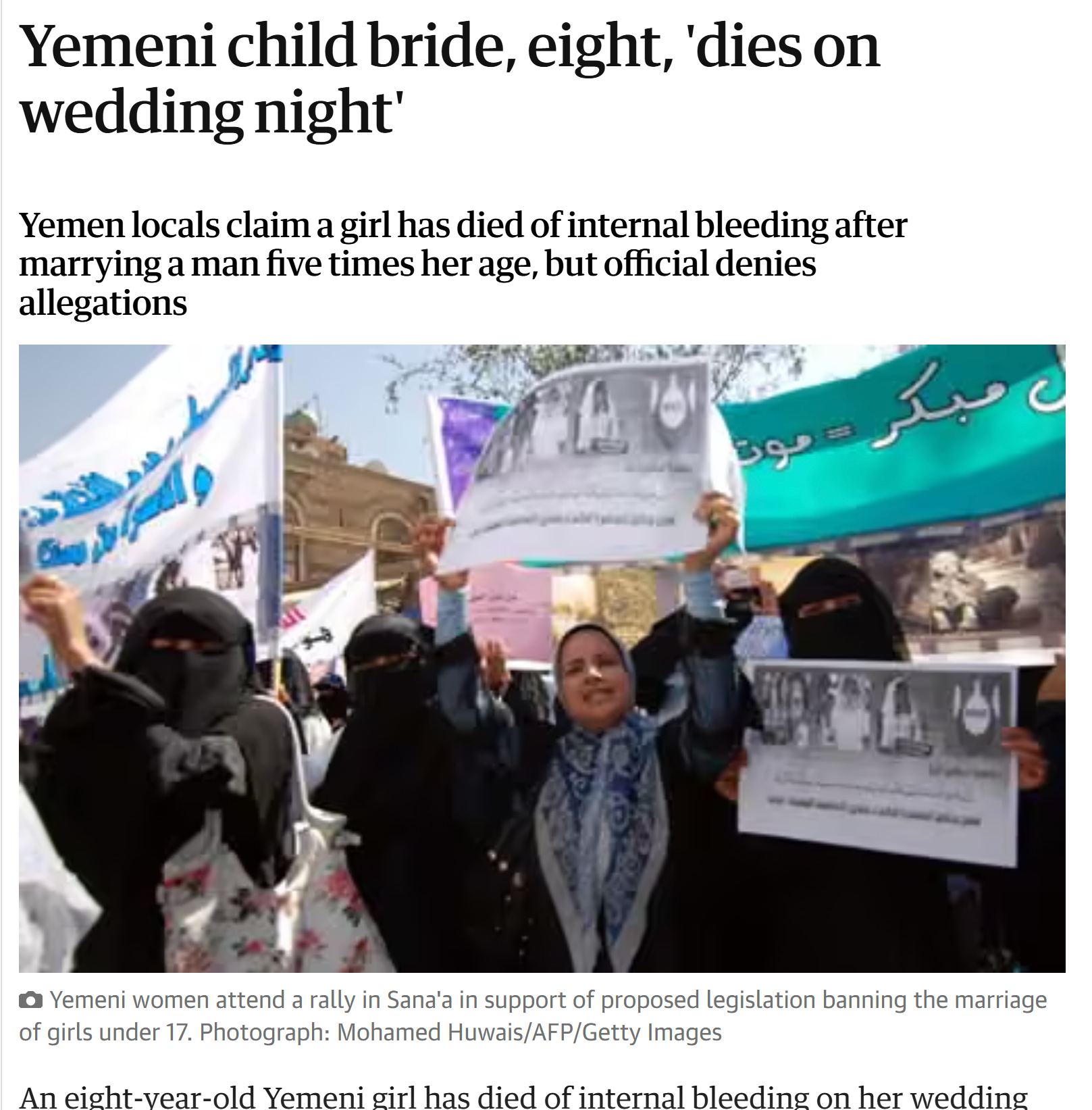
In Saudi Arabia, Iran, Pakistan, and Afghanistan, the value of a woman’s life is often considered half that of a man’s. Cases like acid attack victims in Iran highlight discriminatory rulings. Some religious figures have stated that rape accusations should not be made without male eyewitnesses. Others have interpreted religious texts to justify early marriage. Statements attributed to certain leaders have suggested disturbing allowances regarding minors. In Yemen, an 8-year-old girl reportedly died due to injuries from forced marriage. These incidents are presented by critics as examples tied to interpretations of Islamic ideology.
And the Observable Reality…
According to the Global Peace Index, the most peaceful countries (Iceland, Ireland, New Zealand, etc.) are mostly secular or less religious. On the other hand, among the least peaceful are countries like Afghanistan, Yemen, Syria, and Sudan—many of which are Muslim-majority nations with strict Islamic governance.
The Question That Remains…
For 1400 years, Islam has not demonstrated a neutral, successful, and humane model that can be universally emulated. Rather, where strict Islamic law is enforced, the conditions of women, minorities, and freedom of speech tend to deteriorate. Expanding through population growth or migration is one thing, but sustaining an idea through freedom, equality, and reason is another.
If an idea scales without validation and only through force, is its success genuine, or is it imposed? The era of placing Islam beyond criticism is over. People now demand evidence—proof of peace, equality, and humanity. Otherwise, it risks being seen as a failed model. Where is the model of peace, prosperity, and humanity in Islam?
This criticism is not about hatred, but about the pursuit of truth. If followers of Islam can answer these with real evidence, that will be the true test.
Related Posts
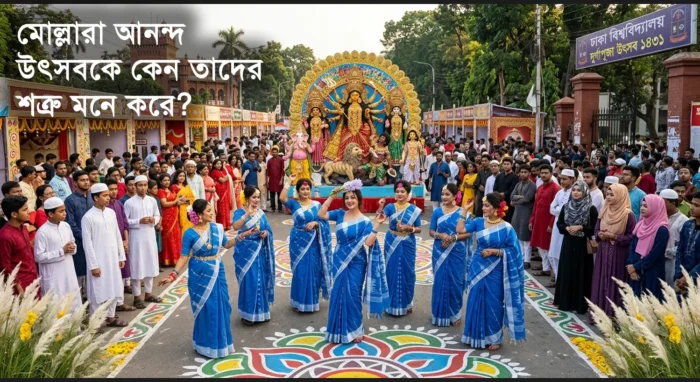
Why do Islamist clerics consider Bengali cultural festivals their enemy?
This year, unlike many previous years, the major Hindu religious festival Durga Puja in BangladeshRead More
ইসলামিস্ট মোল্লারা কেন বাঙালিদের আনন্দ উৎসবকে তাদের শত্রু মনে করে?
এবার বাংলাদেশে অন্যবারের তুলনায় বেশ শান্তিপূর্ণ, উৎসবমুখর পরিবেশে হিন্দু ধর্মের বড় ধর্মীয় উৎসব দূর্গাপূজা হয়েRead More
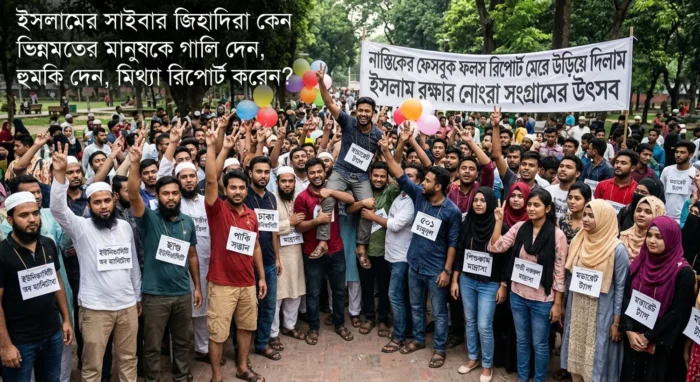
Why do Islamist cyber‑jihadis insult, threaten, and file false reports against people with different opinions?
Maulana Azhari once advised Islamists that sharing his Facebook posts is also an Islamic act;Read More
Comments are Closed