
Muhammad’s Economics is Wrong
The crisis of medieval war‑dependent economies: Prophet Muhammad’s economic model is inhumane and unacceptable
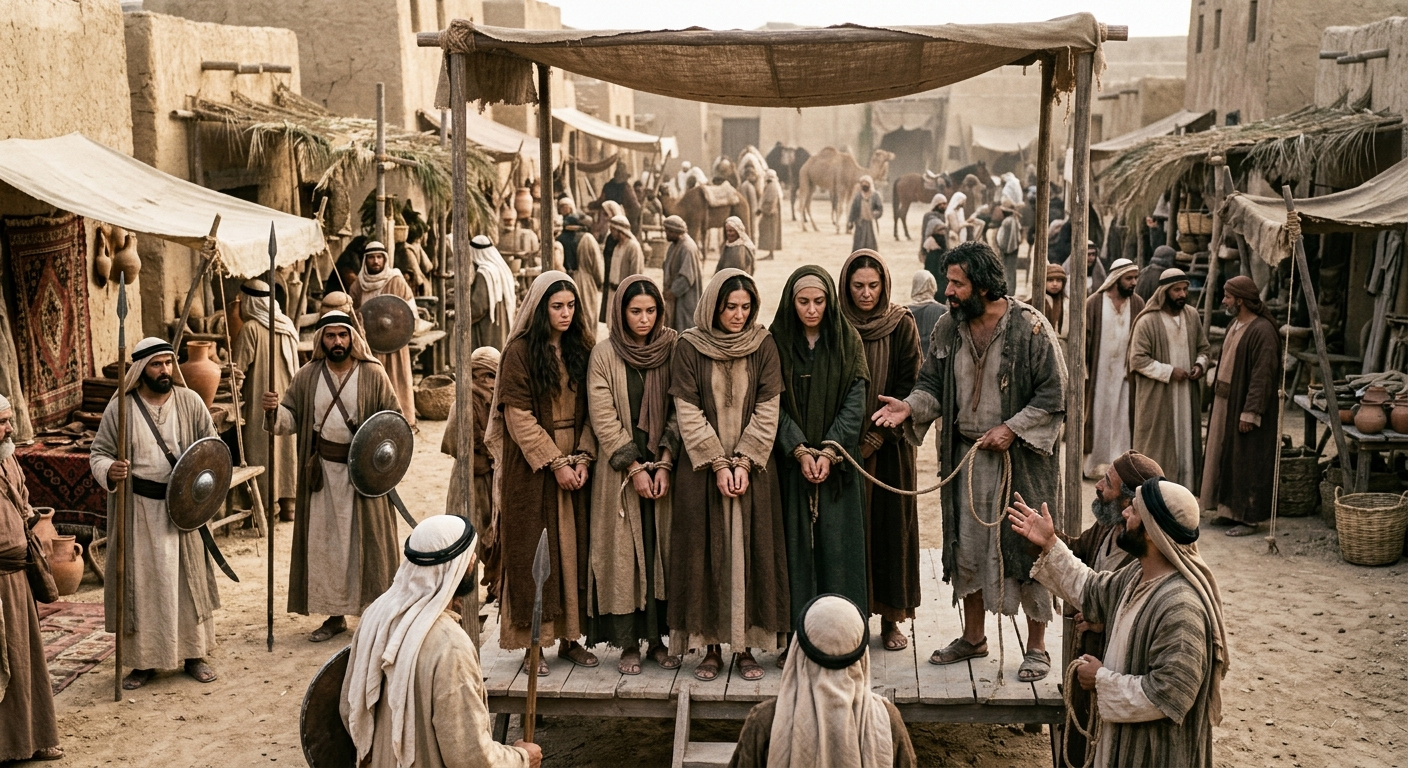
In medieval state systems — under the rule of Prophet Muhammad, the Byzantine, Roman, Mongol, or Islamic Caliphates — three sources of revenue were extremely common: war booty, the slave trade, and special taxes imposed on conquered populations. In light of modern economic theory, the structural weaknesses, inhumanity, and shortsighted policies of these models become clearly visible.
War-Booty-Based Revenue Model: Zero-Sum Economics
Theoretical Problem
The foundation of modern economics is Positive-Sum Growth — meaning that through production, innovation, and exchange, total wealth increases. But war booty (ghanimah) is a purely Zero-Sum transaction — one side loses and the other gains, and no new wealth is created.
Historical Comparison
| Empire | Peak Period of War-Based Revenue | Cause of Decline |
|---|---|---|
| Roman Empire | 200 BCE – 200 CE | Slave supply ended when expansion stopped |
| Abbasid Caliphate | 750 – 930 CE | War booty income dropped when borders stabilized |
| Mongol Empire | 1200 – 1300 CE | Rapid fragmentation after expansion reached limits |
| Ghaznavid Empire | 998 – 1050 CE | State treasury collapsed when Indian raids stopped |
The Ghaznavid case study is particularly relevant. Mahmud of Ghazni conducted 17 Indian campaigns. Each campaign was essentially plunder-driven. After his death, when the raids stopped, Ghazni quickly became a third-rate kingdom — because the state had never developed any productive economic structure of its own.
The Jizya Tax of the Islamic Caliphate: A Revenue Paradox
Structural Inconsistency
Jizya was a special tax imposed on non-Muslim citizens (dhimmis), in exchange for which they received protection and the right to practice their religion. But this model contained a fundamental Revenue Paradox:
Jizya revenue = Non-Muslim population × tax rate

But when conversions increase → non-Muslim population decreases → jizya revenue decreases

Meanwhile state expenditure → continues to rise
Historical Evidence: The Umayyad Crisis (718 CE)
During the rule of Umayyad Caliph Umar ibn Abd al-Aziz, mass conversions in Egypt and Iraq caused jizya revenue to drop dramatically. Local governors then began collecting taxes even from new Muslims — which was a direct violation of religious policy. This proves that economic realities repeatedly forced ideological structures to compromise.
The Mughal Dilemma
Akbar abolished jizya (1564) — because he understood that alienating India’s vast Hindu peasant and merchant classes would collapse revenue. Aurangzeb reinstated it (1679) — and the result was Maratha rebellion, Sikh resistance, and rapid imperial decline.
Slave-Based Economies: Structural Limits to Productivity
Economic Theory
Nobel laureate economist Douglass North, in his theory of Institutional Economics, showed that slavery never encourages technological innovation — because:
- If a slave’s productivity increases, the benefit goes to the slave, not the owner
- Thus owners have no incentive to invest in technology
- The quality of labor remains stagnant
The Zanj Rebellion (869–883 CE): A Case Study
The rebellion of African slaves (Zanj) in Abbasid Iraq lasted 14 years. This rebellion:
- Destroyed the city of Basra
- Completely collapsed the agricultural infrastructure of southern Iraq
- Caused financial losses to the Abbasid treasury that took decades to recover
This proves that a slave-dependent economy is not only morally wrong but also structurally unstable.
Zakat in the Islamic Economic Structure: A Different Assessment
One important point must be honestly acknowledged in this discussion. Alongside the three elements above, zakat was a tool of a completely different nature in the Islamic economic system.
The Structure of Zakat
| Type of Wealth | Zakat Rate |
|---|---|
| Cash and gold/silver | 2.5% (above nisab) |
| Agricultural produce (irrigated) | 5% |
| Agricultural produce (rain-fed) | 10% |
| Mineral resources | 20% (khums) |
| Livestock | According to fixed scales |
Economic Logic of Zakat
From a modern perspective, zakat contains some effective redistribution principles:
- It activates idle capital (anti-hoarding)
- Transfers purchasing power to lower classes, creating demand
- Acts as a primitive form of social safety net
However, the limitations of zakat were also clear: it redistributed only among Muslims and did not create any structure for increasing production.
Comparative Picture: Which Model Survived?
History shows that the states which survived long-term moved away from war-based revenue and built productive structures:
The Abbasid Golden Age (8th–10th century) survived mainly because they:
- Adopted the Persian agricultural bureaucracy
- Made Baghdad a commercial hub
- Acquired technology through the translation movement
But whenever they became dependent on Turkish military slaves (ghilman) and war-booty income — decline became inevitable.
The Economic Model of Islam’s Prophet Muhammad Is Unrealistic
History is a ruthless examiner. Any medieval state — Islamic, European, or Asian — that depended on war booty, slavery, and discriminatory tax structures met the same fate.
The three essential conditions of a sustainable economy — free labor, technological innovation, and inclusive institutions — are not inventions of any ideology; they are economic truths proven by history.
Related Posts

Why do Islamist clerics consider Bengali cultural festivals their enemy?
This year, unlike many previous years, the major Hindu religious festival Durga Puja in BangladeshRead More
ইসলামিস্ট মোল্লারা কেন বাঙালিদের আনন্দ উৎসবকে তাদের শত্রু মনে করে?
এবার বাংলাদেশে অন্যবারের তুলনায় বেশ শান্তিপূর্ণ, উৎসবমুখর পরিবেশে হিন্দু ধর্মের বড় ধর্মীয় উৎসব দূর্গাপূজা হয়েRead More

Why do Islamist cyber‑jihadis insult, threaten, and file false reports against people with different opinions?
Maulana Azhari once advised Islamists that sharing his Facebook posts is also an Islamic act;Read More
Comments are Closed