
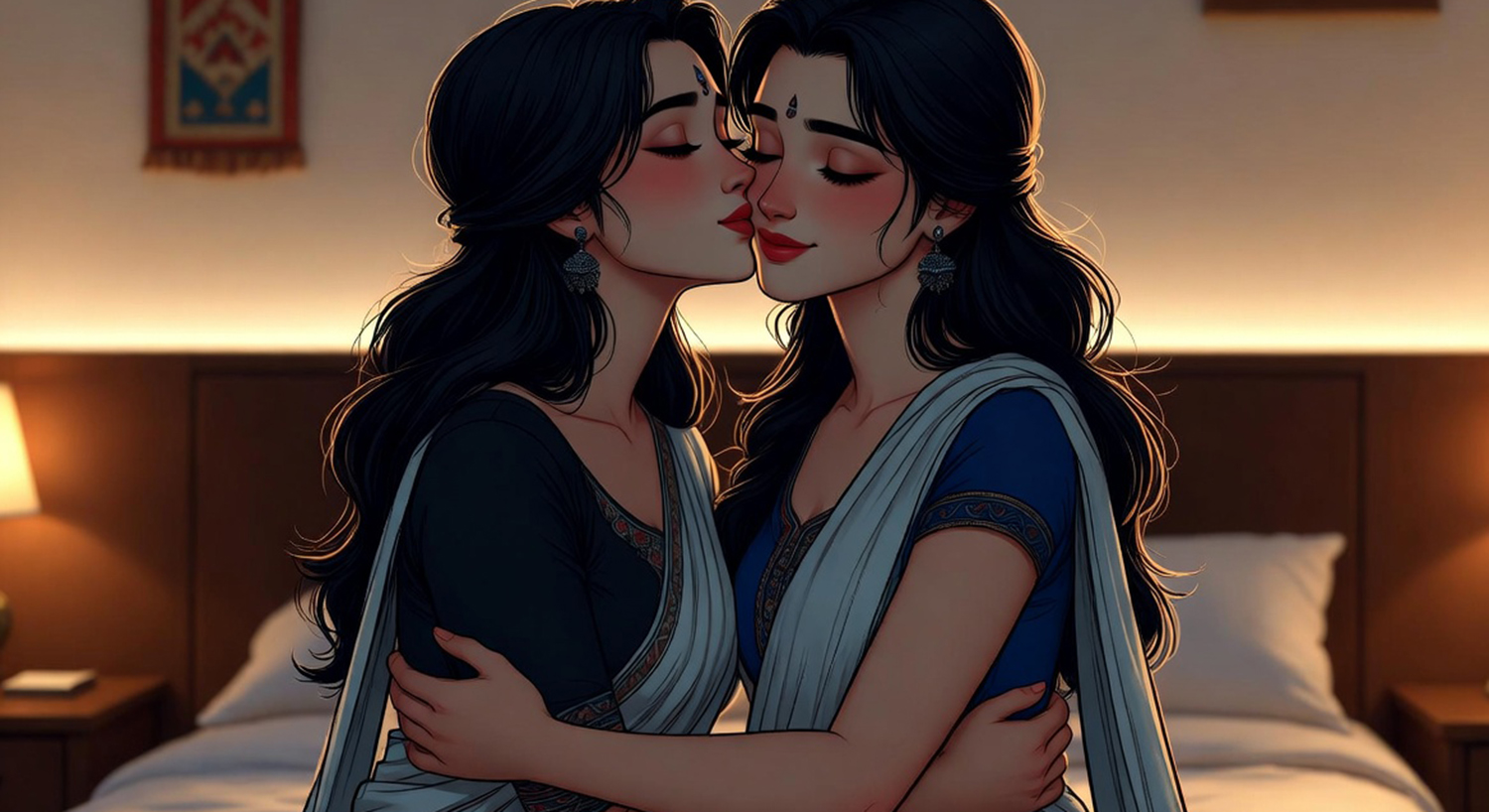
Same‑Sex Lovers and Bangladesh
May the rights of same‑sex lovers be established in Bangladesh too, and let no one meddle in people’s private lives
The Supreme Court of India granted legal recognition to homosexuality about five years ago. This was not an artificial or forced decision; rather, it was an acknowledgment of reality. Just like the countless diversities found in nature, homosexuality is also a natural trait. The sexual orientation a person is born with cannot be forcibly changed. A homosexual person can never be made attracted to the opposite sex, because their physical, psychological, and genetic makeup directs them toward that orientation. Yet in societies like Bangladesh, homosexuality is still considered abnormal due to religious ignorance, social backwardness, and the barbarity of the law. If two teenage girls fall in love, questions may arise about their age, but there is no rational basis to deny their love itself. Society cannot accept their love because people continue to suffer from a diseased mindset. Does anyone choose to step outside the mainstream intentionally? No—this is a trait given by nature.
In Bangladesh, there exists a kind of social discomfort or irritation surrounding homosexuality. Yet those who are homosexual are also members of our society. They too have equal rights to live with dignity, opportunities, and security. Homosexuality is primarily determined by biological factors. Hormones, genetic structure, and DNA influence the formation of sexual orientation. Many people mistakenly believe that it is the result of perverted tastes or bad habits. However, scientific research has proven that sexual orientation is almost entirely innate and natural. Only in 1–2% of cases can psychological issues cause changes in sexual orientation; in the vast majority of cases, it is biological. Whether we accept it or not, scientific truth does not change.
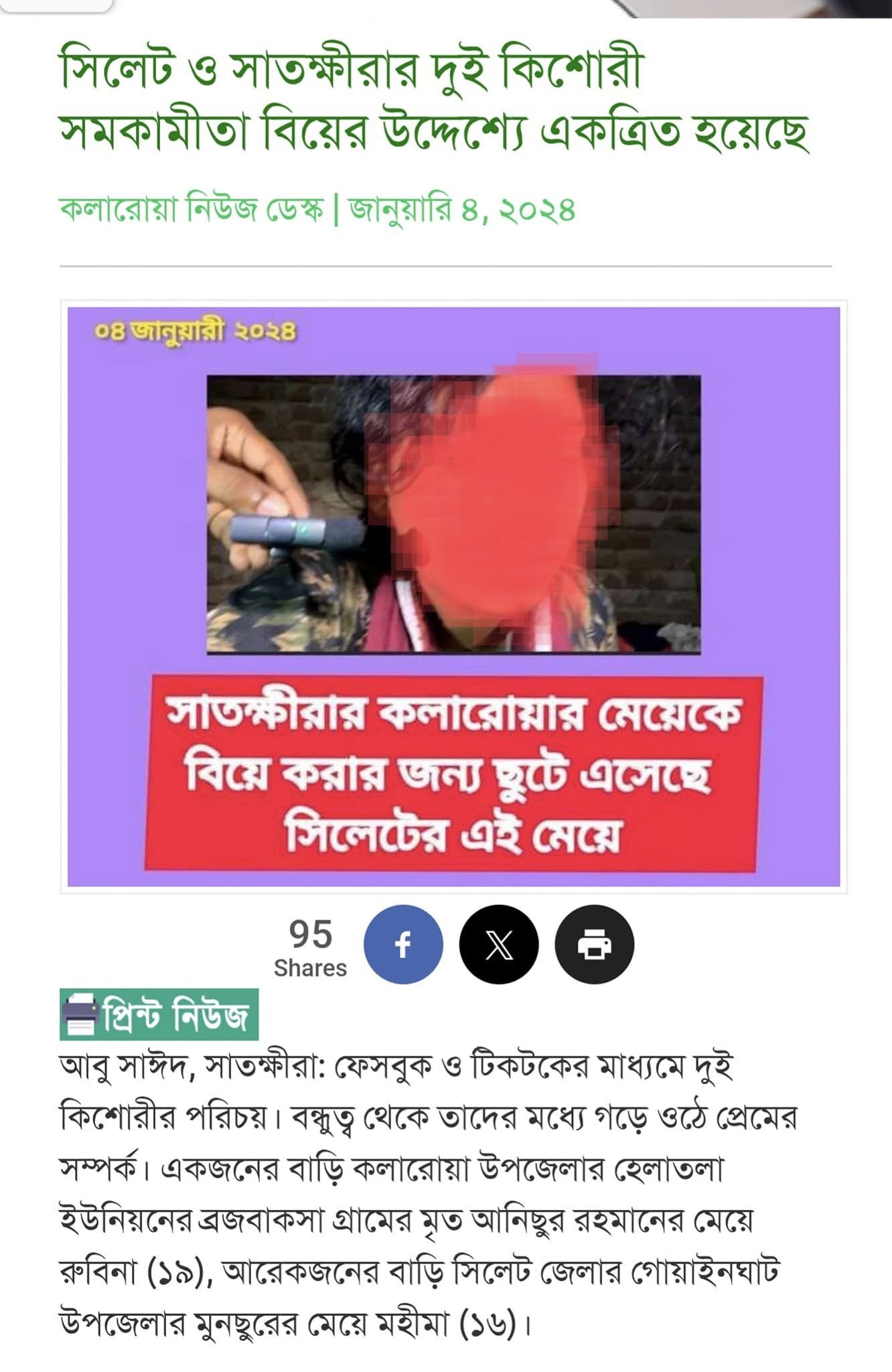
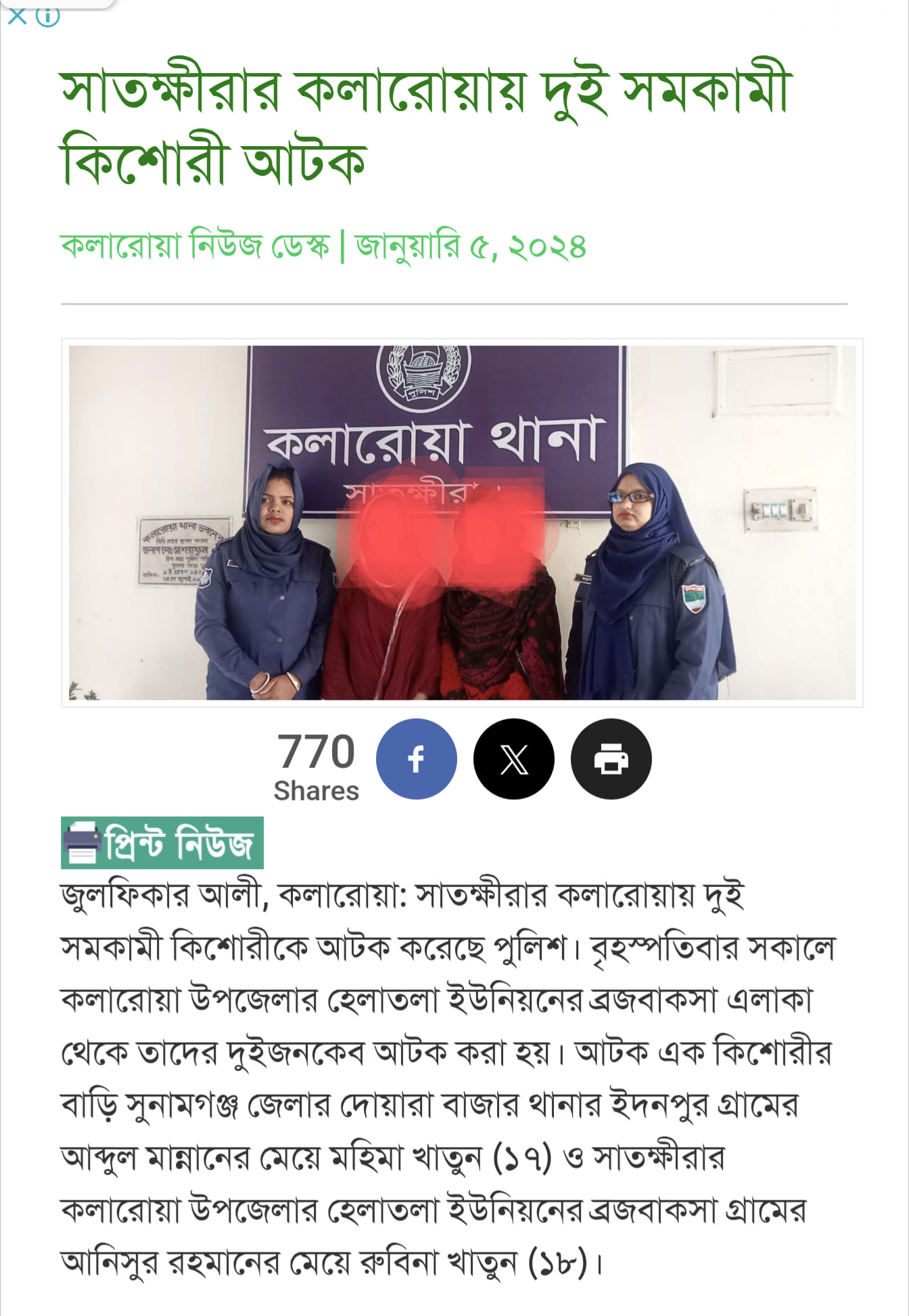
The reasons why same-sex loving individuals (people with same-gender attraction) are not granted any recognized rights in Bangladesh from the perspectives of Islam, society, and the law are deeply intertwined with the country’s religious, cultural, and legal frameworks. Bangladesh is a Muslim-majority country (around 90% Muslim), where Islamic values strongly influence society and law. From three perspectives, the issue can be explained as follows.
Homosexuality from the perspective of Islam:
Islam strictly considers same-sex sexual relations to be forbidden (haram). In the Holy Qur’an, Surah Al-A‘raf (7:80–84), Surah Hud (11:77–83), and other verses recount the story of Prophet Lut (A.S.). The people of his community engaged in same-sex relations and were subjected to Allah’s punishment. This is seen as a ‘sin against nature.’ Hadith literature (such as Sahih Bukhari and Tirmidhi) also mentions condemnation and punishment for such acts, including capital punishment. According to Islamic jurisprudence (Hanafi, Shafi‘i, and other schools), sexual activity is strictly confined to lawful marriage between a man and a woman. Islam is the state religion of Bangladesh (Article 2A of the Constitution), so religious leaders (imams, scholars) and ordinary Muslims consider homosexuality ‘anti-religious’ and ‘sinful.’ As a result, there is no religious recognition or rights—rather, it is something to be socially excluded. The rise of religious extremism has further hardened this perspective.
Homosexuality from society’s perspective:
Bangladeshi society is traditional, family-centric, and dominated by religious values. Marriage is viewed as the union of a man and a woman, a means of procreation and lineage preservation. Homosexuality is regarded as ‘abnormal,’ ‘a Western cultural intrusion,’ or ‘a threat to family honor.’ According to the World Values Survey, about 89% of Bangladeshis consider same-sex relationships ‘unjustifiable,’ and 77% are unwilling to accept such individuals as neighbors. Open discussion is taboo; homosexual individuals are often ostracized from their families, forced to hide from friends, and subjected to discrimination in employment, education, and housing. Religious and cultural pressure is intense in both rural and urban areas. Consequently, society grants no social rights (such as marriage, inheritance, healthcare) to homosexuals; instead, it increases harassment, violence, and abuse. With the growing influence of Islamic groups amid recent political instability, this social pressure has intensified further.
Homosexuality from the perspective of law:
Section 377 of the Bangladesh Penal Code of 1860 criminalizes ‘carnal intercourse against the order of nature.’ The punishment ranges from ten years to life imprisonment. This provision is inherited from British colonial law and remains in force. Same-sex sexual activity falls under its scope. Although the Constitution guarantees equality and human rights, there is no protection or anti-discrimination law based on sexual orientation. Same-sex marriage, relationships, or partnerships are not legally recognized. Courts remain largely silent on the issue, considering religious and social values. As a result, there are effectively no legal rights; instead, there is constant fear of police harassment, blackmail, and arrest.
Islamic religious prohibitions, traditional social values, and the legal framework collectively deny the rights of homosexual individuals. This is the outcome of conservative perspectives held by religion, family, and the state. Although international human rights organizations criticize this situation, no change has occurred in the Bangladeshi context. This reality forces homosexual individuals into secrecy and increases social and psychological pressure.
Homosexuality exists in the animal kingdom too
Homosexual and bisexual behavior has been directly observed many times in the animal kingdom. Dolphins, bison, bats, elephants, giraffes, lions, sheep, hyenas—numerous mammals exhibit same-sex behavior. Dolphins engage in multi-gender sexual interactions; about 30% of giraffes display homosexual behavior; 18–22% of sheep are bisexual. Homosexuality is observed among both male and female lions.
Among birds, around 25% of male black swans are homosexual; 31% of female albatrosses form same-sex pairs; 19% of male mallard ducks engage in homosexual behavior. Homosexual penguin pairs have incubated eggs and raised chicks. Vultures, ibises, and pigeons also show evidence of same-sex relationships.
Among primates, bonobo societies are matriarchal and about 60% of females are homosexual. In macaques, around 25% of females are homosexual, and same-sex behavior is also seen among males. Male homosexuality exists among orangutans.
Among reptiles, same-sex behavior has been observed in lizards and turtles. Even among insects, homosexuality exists. Around 20% of male grasshoppers are homosexual, and male homosexuality has been observed in fruit flies and bedbugs.
List of homosexual animals
Mammals
- 🐬 Dolphin – 3–5 dolphins of different sexes engage in sexual activity together; bisexual behavior
- 🦬 Bison – Homosexuality among both males and females
- 🦇 Bat – Male homosexuality in at least 20 species
- 🐘 Elephant – Male homosexuality in both Asian and African elephants
- 🦒 Giraffe – Homosexuality among both males and females; around 30% are homosexual
- 🐿️ Marmot – Female homosexuality
- 🦁 Lion – Homosexuality among both males and females; about 8%
- 🦡 Polecat – A small European mustelid; male homosexuality
- 🐑 Sheep – Around 18–22% are bisexual
- 🐆 Hyena – Female homosexuality
Birds
- 🦢 Black swan – About 25% of males are homosexual
- 🐦 Albatross – About 31% of females are homosexual
- 🪶 Ibis – Male homosexuality
- 🦆 Mallard duck – About 19% of males are homosexual
- 🐧 Penguin – Homosexual pairs have incubated eggs and raised chicks
- 🦅 Vulture – Homosexual and bisexual behavior
- 🕊️ Pigeon – Female homosexuality; eggs are laid but do not hatch
Primates
- 🐒 Bonobo – Matriarchal society; about 60% of females are homosexual
- 🐵 Macaque – About 25% of females are homosexual; male homosexuality also observed
- 🦧 Orangutan – Male homosexuality
Reptiles
- 🦎 Lizard – Female homosexuality
- 🐢 Turtle – Male homosexuality
Insects
- 🦗 Grasshopper – About 20% of males are homosexual
- 🪰 Fruit fly – Homosexual behavior
- 🪳 Bedbug – Male homosexuality
This is just another of nature’s many quirks
These examples make it clear that homosexuality is not limited to humans; it exists across many species in nature. It is not an abnormality, but a natural diversity. Since humans are intelligent beings, it is our responsibility to accept this diversity as normal. Insulting, abusing, or discriminating against homosexual people is contrary to human values. In civilized societies, there is no debate about homosexuality because they understand it as part of nature. But in backward societies like Bangladesh, homosexual people are still subjected to sensational ridicule.
Therefore, denying homosexuality means denying nature itself. The recognition granted by the Supreme Court of India to homosexuality is essentially an acknowledgment of humanity, science, and reality. In civilized societies, the rights of homosexual people are ensured; in uncivilized societies, they are mocked. We should accept the truth through the lens of science and show respect toward homosexual individuals—because they are part of our society too and deserve equal rights to live freely.
In Bangladesh, speaking or writing about the rights of homosexual people means inviting danger to one’s own life—because religious extremism, social hatred, and state indifference together subject homosexuals to severe persecution. Violence against them is incited in the name of extremist interpretations of Islam, while the country’s law and society fail to recognize them as human beings. In this environment, numerous attacks, abuses, and even murders have taken place. I myself am a victim of this violence—after writing in support of homosexual rights, I suffered permanent physical injuries in militant attacks. At one point, hundreds of Islamists publicly threatened to abduct me from a mosque and kill me; that was when I realized there was no safe place for me in the country. To save my life, I was forced to cross the border and flee to India; later, due to financial hardship, I returned home for a time, but eventually I sought refuge in another country to preserve my very existence.
Related Posts
Operation Entebbe – the story of one night, and the Islamic execution suffered by Nazrul Islam and Sweety Akter
What can a state do to save the lives of its citizens abroad? Are thereRead More
অপারেশান এন্টেবে – এক রাতের গল্প এবং নজরুল ইসলাম ও সুইটি আক্তারের ইসলামি হত্যার শিকার হওয়া!
একটি রাষ্ট্র বিদেশে তার নাগরিকদের জীবন বাঁচাতে কী করতে পারে? এর কোন টেক্সটবুক উদাহরণ আছে?Read More
A random page from Muhammad’s self‑made book Qur’an and its unscientific statements
Sometimes I flip through random pages of Muhammad’s self‑made book Qur’an, and today this pageRead More
Comments are Closed