
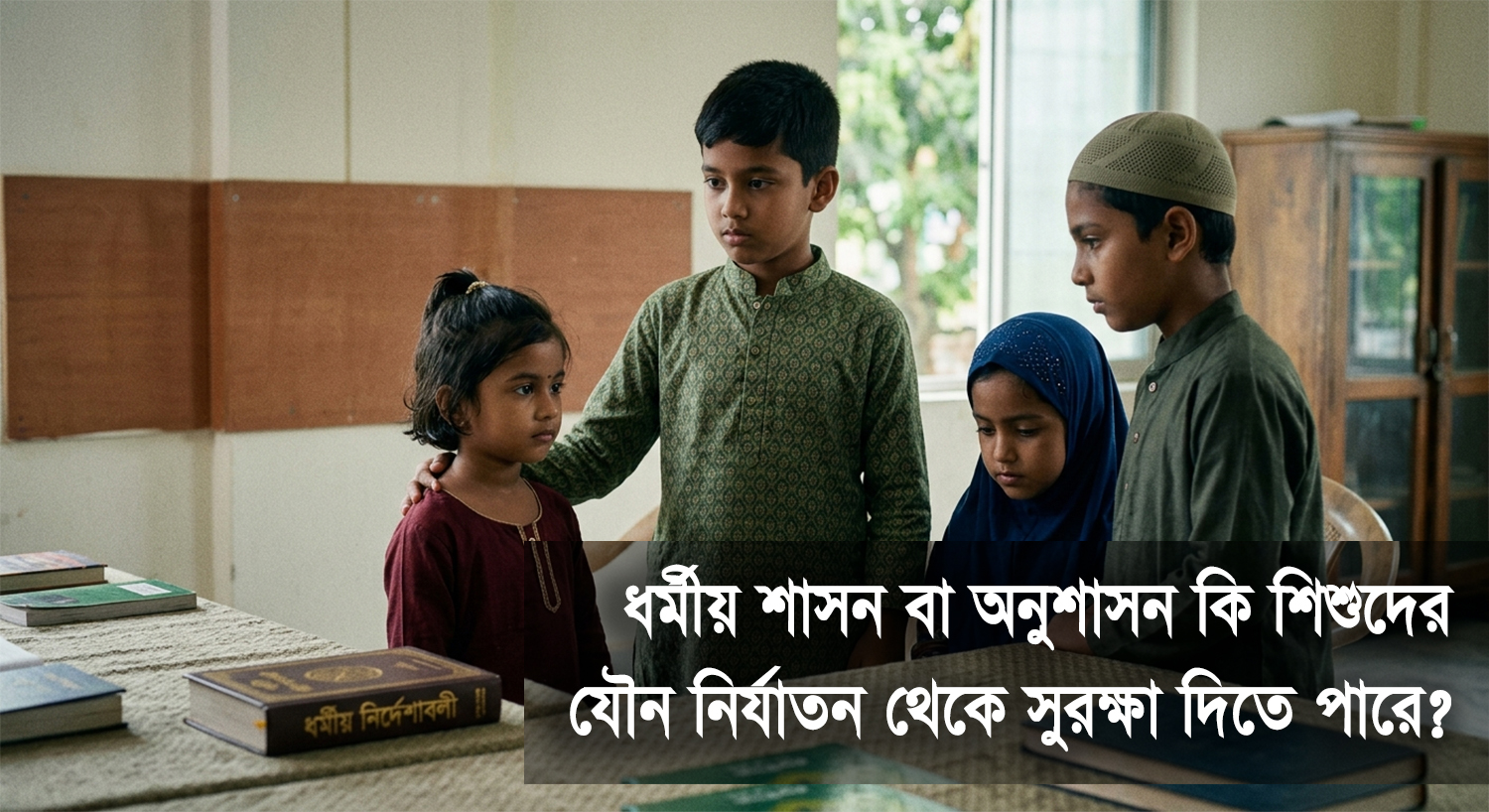
Religion and Child Abuse
Can religious governance or doctrines protect children from violence?
According to a report published by the United Nations, the countries that are the most effective in preventing sexual violence against children or the safest for children (highest scores) are –
- United Kingdom (82.7)
- Sweden (81.5)
- Canada (75.3)
- Australia (74.9)
- United States (73.7)
- Germany (73.1)
- South Korea (71.6)
- Italy (69.7)
- France (65.2)
- Japan (63.8 )
On the other hand, based on analysis of various data, the list of high-risk countries (a combined picture of different indicators):
- Pakistan — low protection score + high CSAM reports
- Bangladesh — high CSAM reports, underreporting problem
- India — highest number of CSAM reports in the world
- Philippines — known as a global hotspot for online child sexual abuse (2nd in CSAM reports)
- Indonesia — high CSAM reports + weak protection framework
- Iraq / Algeria — high CSAM reports, conflict-affected regions
Child sexual violence is widespread everywhere in the world, and no country is completely safe. According to UNICEF, 1 billion children globally experience some form of violence every year.
If you compare these two lists, you will see that the countries with strong laws, protection systems, and preventive measures for children are all religiously neutral; religion has no influence on their society or state laws. In most of these countries, the number of non-religious people is higher. They also rank at the top of the Global Peace Index, meaning their success comes from human-made welfare-oriented laws and their enforcement, not from religious laws or doctrines. The popular argument by clerics that women’s revealing clothing provokes rapists—this argument does not hold here, because in these countries there is complete freedom of dress, yet sexual violence against children is lower.
Now look at the next 7 countries; in all of them, religious extremism is prevalent, and without religious doctrines they cannot even imagine humanity, rule of law, or justice. Among them, 5 are Muslim-majority countries. India is also on this list, but its situation is not as dire; its large population and higher reporting rates (with no major underreporting issues) are reasons why it appears here.
Now if you look at which countries report the lowest levels of child sexual violence, you will find –
- Pakistan (families are threatened if police complaints are filed, social stigma)
- Bangladesh (discouragement at family, social, and police levels)
- Afghanistan (sexual violence against boys is widespread, reporting is almost impossible under Taliban rule, almost no reliable data)
- Iraq (almost no official data)
- Algeria (social taboo and religious shame)
- Indonesia (severe underreporting due to stigma)
- Philippines (talking about child abuse is socially discouraged)
- China (due to state censorship, real data is hard to obtain)
- Most Middle Eastern countries (Saudi Arabia, Qatar, Oman, Kuwait, UAE — family honor culture, unclear legal definitions, almost no data on children of foreign workers)
In Pakistan, Bangladesh, and Afghanistan, how many cases of sexual violence against children in madrasas and religious educational institutions are reported? On the other hand, look at the Middle East—under Sharia law, the definition of sexual abuse against children is not even clearly established. Foreign workers are not even allowed to report sexual violence against their children. “The countries where there is most risk is where we have the least information on the issue.” (Meaning where reporting is low, the risk is highest.) Low Data = High Risk.
All global indicators of law, justice, protection, peace, and prosperity show that religion-controlled societies and states are consistently at the bottom. On the other hand, the top positions are held by countries that implement secular, human-made laws and where people are free from religious extremism. In a country where child marriage and sexual relations with minors are socially accepted in the name of religion, even citing examples of pedophilia from religious figures, how can you expect children to be safe? When all conditions for producing pedophilia are maintained, how will you prevent sexual violence against children?
At the same time, you expect to implement this goal while allowing laws like Islamic law to prevail in many countries? That is not possible. In Islam, child marriage and sexual relations with minors are permitted—would the devout populations of those countries accept repealing such laws? In countries like Pakistan, Bangladesh, and Afghanistan, many forms of severe violence against children occur in madrasas and religious institutions, most of which remain unreported. In Middle Eastern countries governed by Sharia law, definitions of various forms of violence are not clearly established. In countries like Iran, girls can be married at the age of 13, and adoptive fathers can even marry their adopted daughters—such laws exist. In Iraq, girls as young as 9 can be married. In countries like Bangladesh, there is massive popular support among religious groups for child marriage! Will you be able to achieve this goal by 2030, or even by 2050, while allowing Islamic law to continue? Human rights, women’s rights, children’s rights, science, and Islam cannot operate simultaneously in parallel anywhere.
Data sources: International research, UNICEF, EIU, Interpol and Report 1, Report 2
Related Posts

Why do Islamist clerics consider Bengali cultural festivals their enemy?
This year, unlike many previous years, the major Hindu religious festival Durga Puja in BangladeshRead More
ইসলামিস্ট মোল্লারা কেন বাঙালিদের আনন্দ উৎসবকে তাদের শত্রু মনে করে?
এবার বাংলাদেশে অন্যবারের তুলনায় বেশ শান্তিপূর্ণ, উৎসবমুখর পরিবেশে হিন্দু ধর্মের বড় ধর্মীয় উৎসব দূর্গাপূজা হয়েRead More
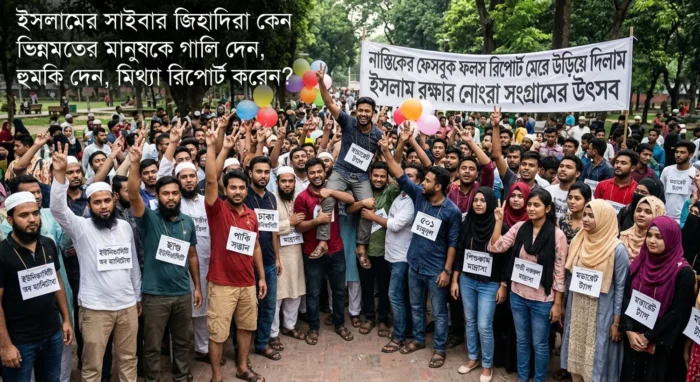
Why do Islamist cyber‑jihadis insult, threaten, and file false reports against people with different opinions?
Maulana Azhari once advised Islamists that sharing his Facebook posts is also an Islamic act;Read More
Comments are Closed