
Prophets of Politics
The Gods of Bangladeshi Politics and Their Final Fate
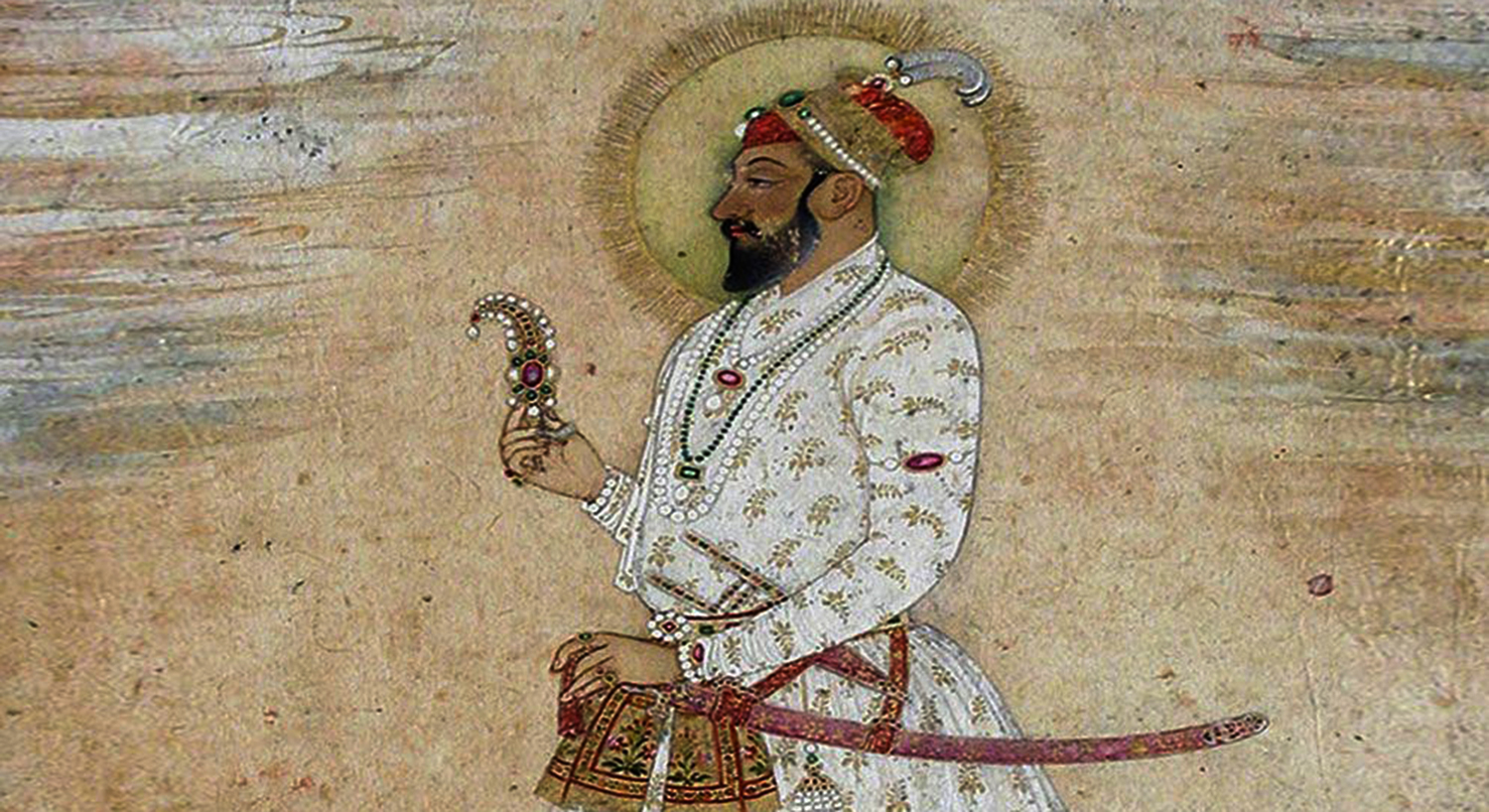
Just as Mir Jafar was a traitor because of his betrayal, Siraj‑ud‑Daulah too was an incompetent, foreign‑born, authoritarian, shortsighted, and foolish ruler. He and his predecessors came from another land and forcibly seized control of this region. The idea of Siraj as a patriotic icon is nothing but a myth. Politicians in this region keep such myths alive for their own interests, because they too hope to become such mythical icons one day. It is precisely this kind of unrealistic fantasy that keeps the people of this region from moving forward. They place many individuals on the pedestal of gods or prophets – when in reality, they are nothing of the sort. No one names their child “Mir Jafar” because it symbolizes treachery. Then why is “Siraj” not considered a symbol of foolishness, thuggery, incompetence, or idiocy?
During my master’s program, we took three 9‑credit courses with Dr. Niaz Ahmed Khan, the current Vice‑Chancellor of Dhaka University – Development Organization and Management, Philosophy and Forms of Development and Governance, and Public Management, Reform and Governance. He is one of the brightest minds in the country in these fields. He has taught batches of government bureaucrats and military officers. There is no doubt about his integrity or his vast scholarship. Even he questioned Siraj‑ud‑Daulah’s patriotism in class and did not consider Siraj’s foreign identity to be part of this land.
Malaysia’s Mahathir Mohamad said in his Dhaka University convocation speech that the right thing is not always the popular thing. Politicians, revolutionaries, rulers, and intellectuals of this region all want to do what is popular; they do not want to do what is right. To stay in power, they choose the path of popularity. But the decisions that may seem unpopular in the short term yet benefit the country in the long run – those they refuse to take. As a result, the political “gods” and “prophets” of this region ultimately prove to be failures.
For example, giving one terminal of Chattogram Port to foreign management is unpopular to many, but in the long run it would be the right decision.
After independence, Bangabandhu received an overwhelming mandate. Yet he failed to show foresight. Had he taken some difficult but correct decisions at that time, Bangladesh would not be drowning in despair today. Instead of becoming a visionary statesman, he preferred to remain a god‑ or prophet‑like figure to Awami League activists. In trying to appease the clerics, he indirectly pushed the country toward communalism. To Awami League supporters, his character remains mythical; they refuse to acknowledge his failures as a ruler.
Ershad was a dictator, shameless on the world stage, and institutionalized corruption. Yet he did carry out some essential reforms – there is no doubt about that. For example, creating 64 districts, introducing the Upazila Parishad system, and establishing High Court chambers in different divisions. But since Ershad and the Jatiya Party have become irrelevant, these matters are no longer discussed.
Khaleda Zia’s rule was average. She too used various tricks to stay in power. She buried the aspirations of the 1990 mass uprising. However, she did not try to become a god‑ or prophet‑like icon. She could be criticized; newspapers could publish satirical cartoons about her; her followers did not attack people for criticizing her. Yet in 1996 and 2006, she trampled democratic values to cling to power. Because of her, Sheikh Hasina stepped onto the path of authoritarianism. During her tenure, there were multiple assassination attempts on Sheikh Hasina – grenades planted in Kotalipara, the August 21 grenade attack, and many more.
Sheikh Hasina is the only ruler in Bangladesh’s history who, in 2001, handed over power on the designated day without any conspiracy to stay on. Because at that time she had not yet become a god or prophet; she was still a leader who could be criticized.
In 2009, Sheikh Hasina’s government came to power with the largest mandate in Bangladesh’s history. That overwhelming majority became a curse for the Awami League and for Sheikh Hasina. She then turned power into a permanent arrangement, destroyed democracy, established authoritarian rule, and – according to allegations – initiated enforced disappearances, crimes against humanity, and even genocide. Over time, she transformed into a god‑ or prophet‑like icon. A climate was created in which she could not be wrong, and no one could criticize her. In an underdeveloped society, criticizing gods or prophets is seen as blasphemy; similarly, the Awami League and the administration created an unwritten blasphemy law around Sheikh Hasina.
This transformation into a god‑prophet icon is what has made her and her party irrelevant today. Yet she could have brought countless positive changes to the country during this long period. Instead, to preserve her iconic image, she allowed limitless corruption and plunder within her party and government, becoming the “Mother of Mafia.” She empowered clerics and expanded communalism. History gave her an opportunity that no leader may ever receive again.
After the 2024 Monsoon Revolution, the entire steering wheel was in Tarique Rahman’s hands. His party members called him “Deshnayak.” But even when he had the opportunity to become a true national leader, he did not take it. He preferred to remain the head of the BNP. Had he set aside some personal and party ambitions, he could have created a positive trajectory for the country. Despite questions about his luxurious life abroad and sources of income, people would have welcomed his good initiatives. But he too wanted to become a god or prophet. Now they are in government; and from the signs, it seems his followers will not tolerate criticism of him either. The symptoms are clear. They are ignoring the sacrifices and struggles of 2024. Just like in 1991, they are once again walking the path of betrayal – this time to establish Tarique Rahman’s god‑prophet image.
When mortal humans turn into gods or prophets, that status exists only in the eyes of their followers. History does not forgive. One day history forces these gods and prophets to confront truth and reality, and it shatters their supposed greatness.
Related Posts

Ayisha and Arpita: A Story of Free Expression and Honesty Between Two Sisters, One Muslim and One Hindu
Ayisha and Arpita’s parents had dated for several years before marrying under Bangladesh’s Special MarriageRead More
আয়িশা ও অর্পিতা – মুসলিম ও হিন্দু দুই বোনের মুক্তবাক ও সততার গল্প
আয়িশা ও অর্পিতার বাবা-মা কয়েক বছর প্রেম করে বাংলাদেশের বিশেষ বিবাহ আইনে বিয়ে করেছিলেন। কেউRead More

Operation Entebbe – the story of one night, and the Islamic execution suffered by Nazrul Islam and Sweety Akter
What can a state do to save the lives of its citizens abroad? Are thereRead More
Comments are Closed