
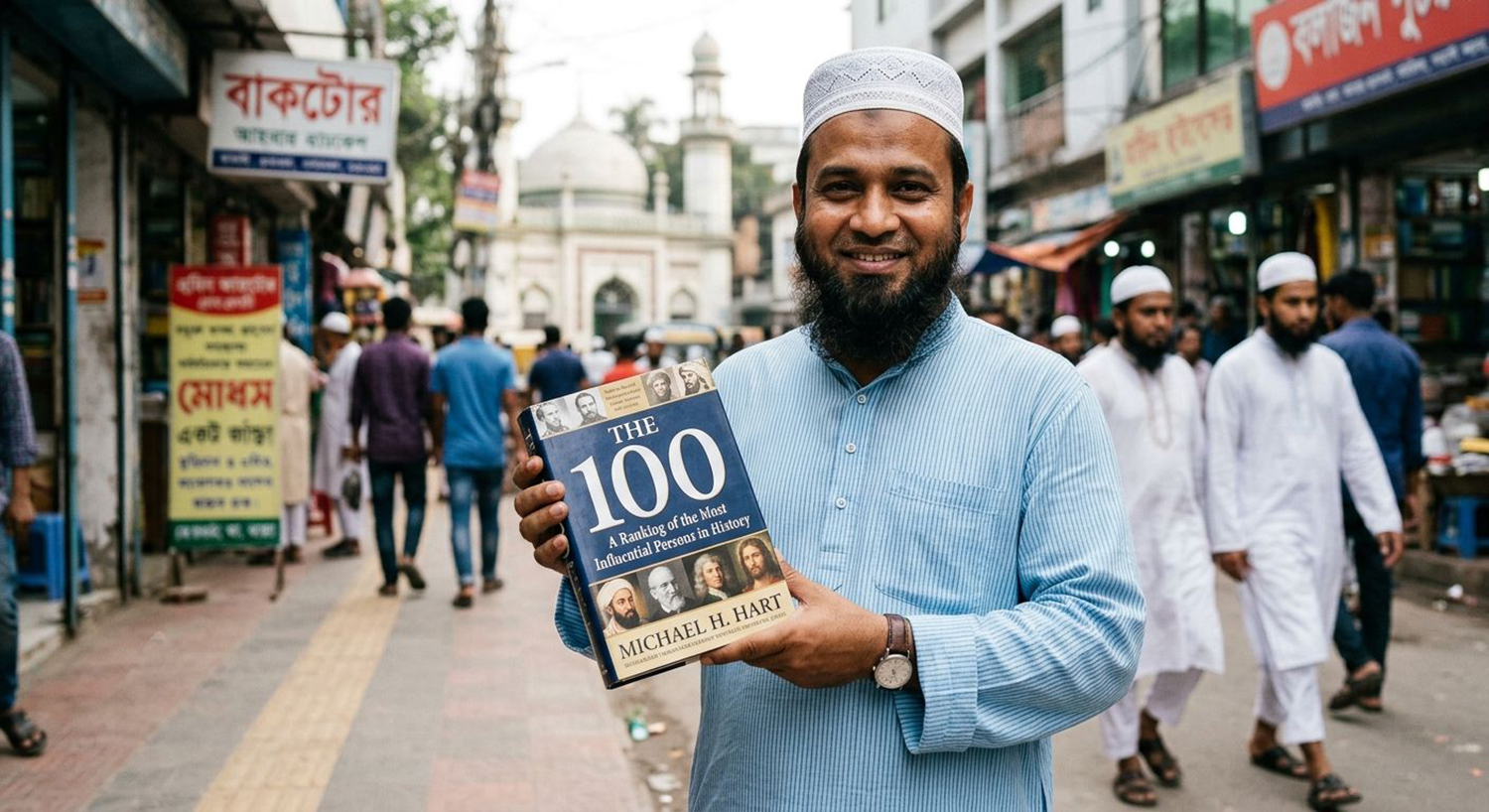
Muhammad in The 100
Prophet Muhammad was a very influential person, but not the best
Our devout Muslim brothers often say—look, in The 100 the author puts Prophet Muhammad at number one, so he is the greatest man in the world.
I sometimes meet 2–3 people from Cambodia. They are quite simple. I jokingly ask them, wasn’t your Pol Pot a very good man? They tell me no, he was a very bad man, he killed many people and piled up human skulls. Then I change the topic by bringing up Angkor Wat, the temple that was lost in the forest for hundreds of years and later rediscovered. I don’t know the name of any good social worker from Cambodia, but I know a brutal person like Pol Pot because he was influential. He made his name by creating a terrible history. Even if Pol Pot is not in The 100 book, many heroes and villains of history are.
It is true that Muhammad is number one in that book. The world-famous book The 100: A Ranking of the Most Influential Persons in History was written by American astrophysicist and historian Michael H. Hart. The Bengali translator titled it “Biographies of the 100 Greatest Men of the World” to boost sales among devout Muslims.
Hart himself clearly states in the preface that he did not create a list of “good” or “morally श्रेष्ठ” people. His main criterion was “influence”—that is, how much these individuals changed world history and the lives of millions. The book lists influential people, not good people. A corrupt local chairman may have more influence than an honest school headmaster—does that make the chairman the best person? Shamim Osman was once the most influential person in Narayanganj—does that mean he was the best person there?
The list includes great heroes like scientists and philosophers, as well as figures like Muhammad, Hitler, and Genghis Khan, who were involved in mass violence. Because of their enormous impact—positive or negative—controversial rulers like Adolf Hitler (39th) and Genghis Khan (29th) appear in the list. They were certainly not “great” or “good,” but they were influential.
There’s no denying that Prophet Muhammad was influential. Because of his influence, Muslims have grown from about 5% of the world’s population in 1900 to around 20% today through higher birth rates. What the quality of most of these 2 billion people is like can be seen just by reading the comment sections of my posts. Obscene abuse, threats of rape, threats of murder—these extremist fanatics are supposedly soldiers of gangster Muhammad, aren’t they? Even with knowledge, intelligence, common sense, reasoning, merit, and wisdom at rock bottom, they are ready to sacrifice their lives for Muhammad. Creating fake female accounts to defend Islam, sending friend requests just to send abusive messages—these are things they do. Is that a small matter? Muhammad and his Islam have made them into useless, foolish, uncultured, wild animals. That too is Muhammad’s influence.
In short, once again: The 100 is not a list of the best human beings in the world, but a record of the 100 most powerful and influential individuals—good and bad—who changed the course of history. Being influential and being the best are not the same. I say this repeatedly, yet devout Muslims keep bringing up this same argument again and again. Perhaps being a believer inevitably requires being foolish.
Related Posts
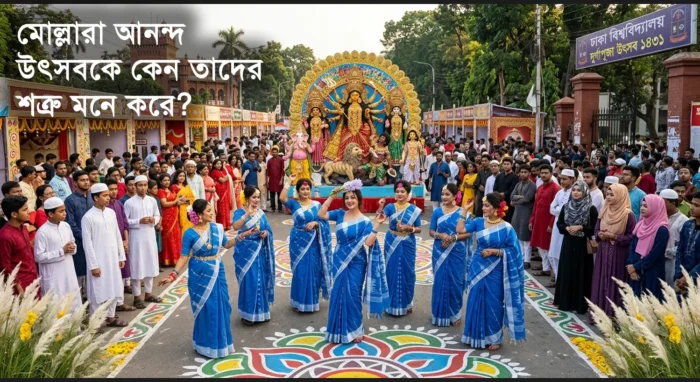
Why do Islamist clerics consider Bengali cultural festivals their enemy?
This year, unlike many previous years, the major Hindu religious festival Durga Puja in BangladeshRead More
ইসলামিস্ট মোল্লারা কেন বাঙালিদের আনন্দ উৎসবকে তাদের শত্রু মনে করে?
এবার বাংলাদেশে অন্যবারের তুলনায় বেশ শান্তিপূর্ণ, উৎসবমুখর পরিবেশে হিন্দু ধর্মের বড় ধর্মীয় উৎসব দূর্গাপূজা হয়েRead More
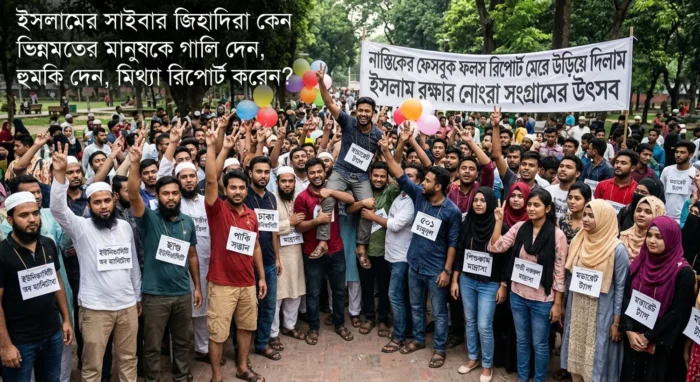
Why do Islamist cyber‑jihadis insult, threaten, and file false reports against people with different opinions?
Maulana Azhari once advised Islamists that sharing his Facebook posts is also an Islamic act;Read More
Comments are Closed