
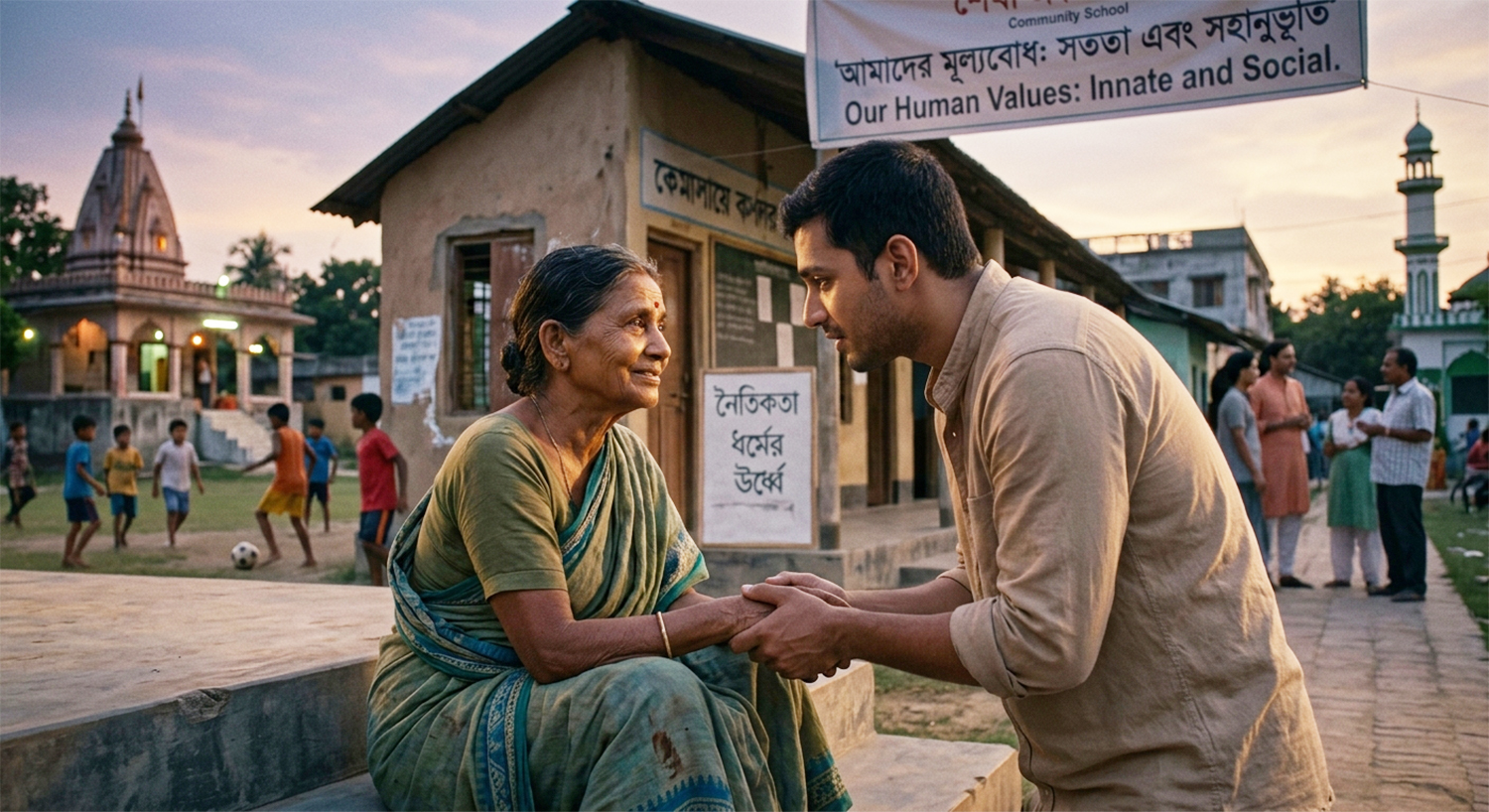
Mob Mentality or Honesty
In Bangladesh, even expressing gratitude toward someone can be very risky if religious elements are involved in the choice of words
A few days ago, I was talking with the respected editor of a Bengali newspaper from West Bengal. While speaking about a renowned Australia-based researcher, poet, and writer, he remarked that this person was akin to God. From his standpoint, he is absolutely right—someone becomes godlike in people’s eyes only when they possess immense greatness. If, while expressing someone’s contribution, love, or greatness—be it a father, mother, or anyone else—one compares them to God, what fault is there in that? Meer Akel’s Meer was once brutally abused on the internet for calling his mother God. Most of those abusers, incidentally, were from Bangladesh. “…Having pierced God’s throne ‘Arsh,’ I have risen—an eternal wonder, I, the creator of the universe! … I will imprint God’s chest with footprints”—despite writing such lines about piercing God’s backside and thrusting a spear through His head, poet Nazrul remains supremely revered by all, yet another person, for considering his mother equal to God, is condemned! You may know that in Pakistan, a devout Muslim was beaten to death after being branded a blasphemer simply for saying, “I love Imran Khan like a Prophet.”
In India, calling a person God does not really become an issue, but in Bangladesh, if you say Allah or Khoda about someone, there will be a tussle over your head. And yet, those who commit hundreds of misdeeds every day in the name of God or the Lord—these religiously fanatical terrorists have no words for them. Here, institutional religions have come to stand above humanity, humaneness, conscience, science, and human rights—the belief system that should be supreme. In other words, people, humanity, and human values have been overshadowed by institutional religions. But can this religion purify the human conscience? Can it awaken humanity? Can it ensure human rights? At least in the approximately 5,200 years of recorded religious history, such examples are hardly found on a large scale. Rather, it is far more necessary to teach children universal ethical education, human values, human rights, and respect for dissent—education that will be equal for all regardless of religion or caste. In countries such as Japan, Sweden, Denmark, Norway, and Germany, the majority of people now have no religion. The people of these countries are known to be the most humble, honest, and polite. Crime rates there are nearly zero. Even if you lose ten thousand taka on the street, the probability of getting it back is almost one hundred percent; even if a shop is left unattended, no one will take goods without paying—this is easy to imagine. You do not have to go far—such unattended roadside shops also exist in Mizoram, India, right next door to Bangladesh.
Religion is a person’s private belief; everyone should receive religious education and practice religion in their own way, without fear, intimidation, or coercion. But humanity, humaneness, conscience, and human rights are universal. A non-religious person’s sense of humanity and honesty may be greater than that of a religious person, and the opposite can also be true. But if someone obstructs human empathy, universal human rights, the concept of human rights, the Convention on the Rights of the Child, and individual and freedom of expression in the name of religion, then those religious views clearly become obsolete in this era.
The impulses that drive us toward self-interest have their roots in biological nature; what leads us toward sacrifice and asceticism is what we call humaneness—the religion of humanity. Extensive research has been conducted around the world to learn and apply this humaneness, this human religion. At present, the least corrupt, most civilized, and most peaceful countries have practiced it and achieved success. On the other hand, in countries like Bangladesh, crime, corruption, inhumanity, and the absence of humaneness continue to grow. Neither institutional education, nor religious education, nor literacy has been able to stem this tide. That means we must understand that there are deep flaws in the religion-influenced social system, child education, and the overall education system.
This (https://fb.watch/GW2Z0DhuJC/) person prays five times a day, yet it does not trouble his conscience to destroy an entire generation. From my recent personal experiences of harassment, I have seen that the person who leaves meetings to go pray when it is time for prayer returns from prayer only to demand his bribe, using fear, harassment, and humiliation as tools. The few people involved in this harassment syndicate are all the same. They openly say things like, “He will become good after performing Hajj.” In my long experience, I have observed: “Not all religious people are scoundrels, but all scoundrels are religious.” Almost all of them. Make a list of all the scoundrels you know around you—you will see that almost all of them are very religious. Religious education could not change them.
Across social media timelines circulate news of the rape of very young boys and girls in madrasas. There is no accurate statistic for this anywhere. Senior clerics do not hesitate to adulterate food, nor does their conscience tremble when they seize land and property. Religion offers various pretexts through which sins can be forgiven—and they all want to take advantage of these opportunities. Since they have faith, unlike non-believers, they do not even fear burning in the fires of hell for eternity. If almost all the students of a school continually fail, then the problem lies with the school itself—there is no scope to say the students are bad and the school is good. The expansion of religious education in the name of moral education has nowhere been proven to make people ethical on a large scale. Many believe that morality (honesty, compassion) is innate in humans and emerges from social values, which, although not necessarily in conflict with religion, are not dependent on religion.
Related Posts
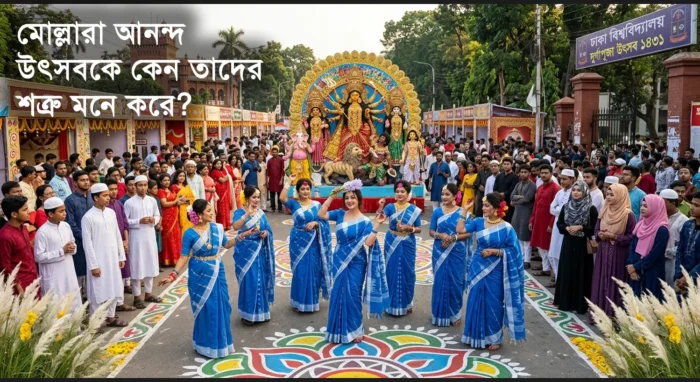
Why do Islamist clerics consider Bengali cultural festivals their enemy?
This year, unlike many previous years, the major Hindu religious festival Durga Puja in BangladeshRead More
ইসলামিস্ট মোল্লারা কেন বাঙালিদের আনন্দ উৎসবকে তাদের শত্রু মনে করে?
এবার বাংলাদেশে অন্যবারের তুলনায় বেশ শান্তিপূর্ণ, উৎসবমুখর পরিবেশে হিন্দু ধর্মের বড় ধর্মীয় উৎসব দূর্গাপূজা হয়েRead More
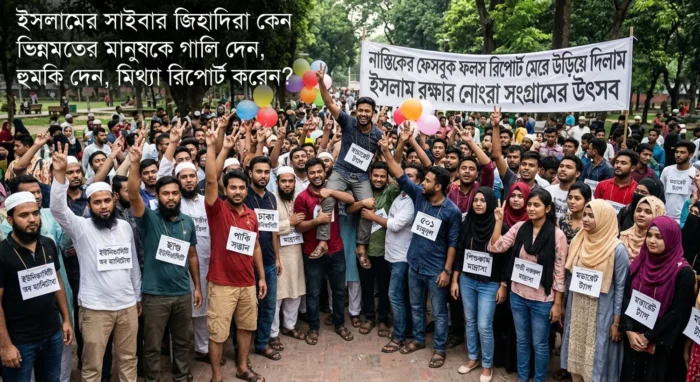
Why do Islamist cyber‑jihadis insult, threaten, and file false reports against people with different opinions?
Maulana Azhari once advised Islamists that sharing his Facebook posts is also an Islamic act;Read More
Comments are Closed