
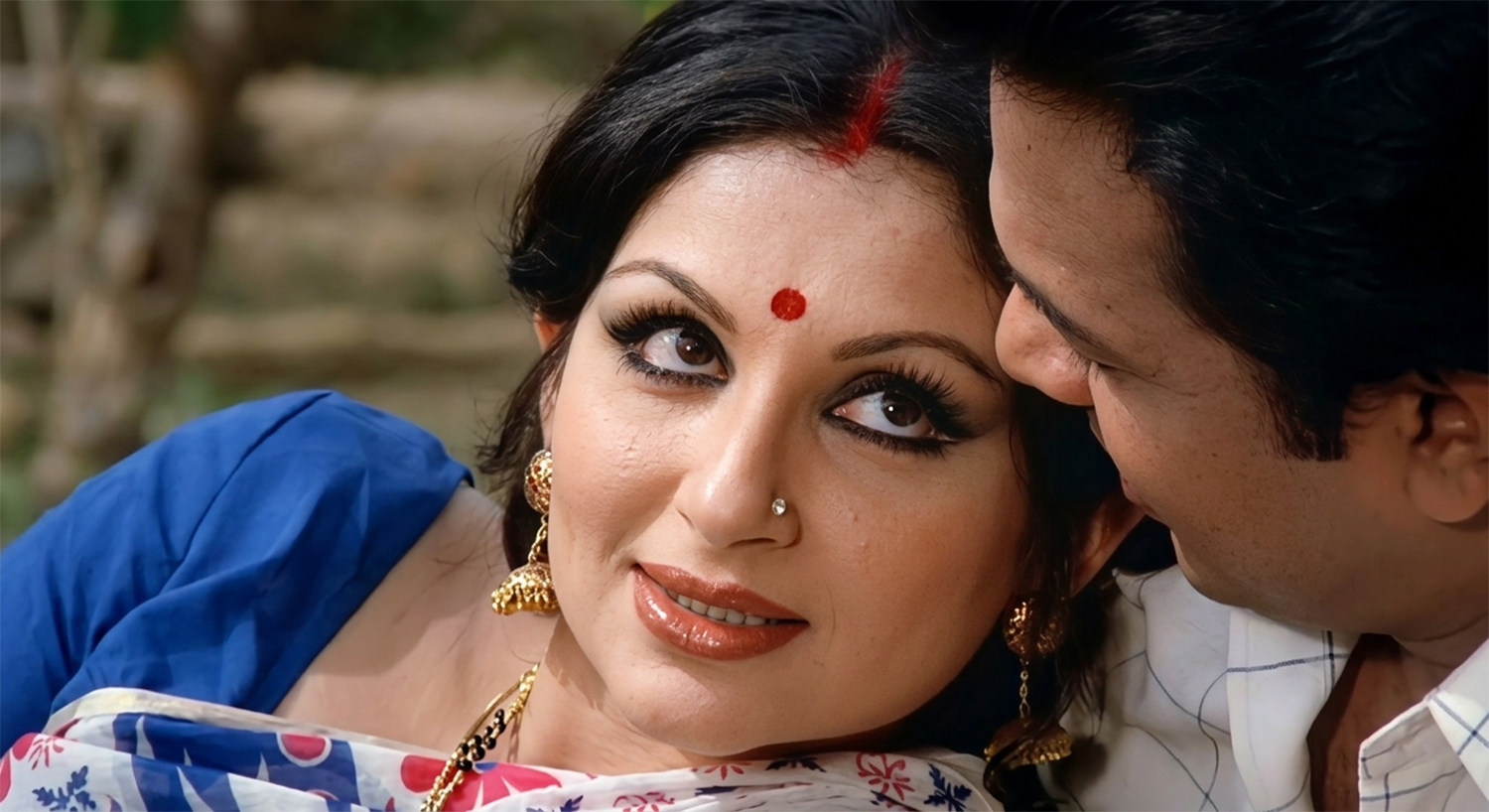
Love, Emotion and Science
Heart or brain? Where do the feelings of love actually play out?
If life were only about love and chemistry, why would my eyes be enchanted on a moonlit night?
This is a famous line by the late blogger Imon Jubayer.
Everything in the world is a play of physics. To break it down further—it’s a play of physics and chemistry. Then comes biology, then the body and emotions. Everything is the result of reactions, interactions, and processes from the macroscopic world down to microscopic molecules and atoms.
All forms of emotion, including love, are chemical reactions occurring in the brain. Yet love has been associated with the heart since ancient times. There was a time when people believed the heart controlled everything in the body. Even in religious texts, including the Quran and Hadith, similar ideas are mentioned. Islam used to say, and still says, that human knowledge, emotion, memory, and morality reside in the heart. Science says all of these are controlled by the brain. But why would that be accepted? For followers, the Prophet Muhammad is the final authority. So, to them, the blood-pumping heart remains the center of all knowledge. Verses such as Quran 11:5, 22:46, 7:179, 6:125 refer to the heart in the chest—please consult interpretations before debating. This is also strongly supported by hadith, for example—here, here. Listen to a scholar’s explanation—https://youtu.be/OvcHLpTu_gM
Let’s leave aside religious narratives. Science and modern understanding clearly establish that knowledge, consciousness, emotions, and memory are all controlled by the brain. Even though most misconceptions have faded, literature still holds on to the idea of the “heart” when describing love and emotions. Scientists have been trying for decades to answer the question, “What is love?” It turns out that the science behind love is far more complex than we often assume. So let us analyze the brain chemistry behind love.
Before that, let’s understand: “Why do we fall in love?”
From an evolutionary perspective, falling in love is essentially an adaptive strategy. Among mammals, sexual attraction and emotional bonding evolved primarily to ensure successful reproduction—but their role goes beyond producing offspring. Over time, love has strengthened pair bonding, allowing two parents to cooperate in raising children, increasing their chances of survival. At the same time, love triggers the release of chemicals like dopamine, oxytocin, and vasopressin in the brain, which enhance intimacy, security, and cooperation. Thus, love is not merely a sexual drive—it is an evolved biopsychological process that fosters social bonding, stability, and long-term cooperation.
⇉ Stage 1: Falling in love, having a crush, attraction
At this stage, the brain undergoes rapid, automatic, and evolutionarily ingrained responses. When there is potential attraction, physical signs like pupil dilation (mydriasis) occur due to activation of the sympathetic nervous system. Dopamine release increases, creating a sense of “reward prediction,” meaning the brain anticipates something pleasurable. The hypothalamus stimulates the release of sex hormones like testosterone and estrogen, intensifying initial attraction.
Cortisol levels rise at this stage, causing excitement, nervousness, and the familiar “butterflies in the stomach.” This hormone also helps overcome fear in new situations, making behavior more daring. At the same time, pheromonal and scent-related signals may play a role in partner selection. Serotonin levels drop, leading to obsessive thinking about the person of interest. The prefrontal cortex—responsible for logic and judgment—reduces activity, allowing attraction to persist without over-analysis. This is why poor decisions are common in early love. This stage is essentially infatuation, not true love.
⇉ Stage 2: Intense attraction, romantic love
At this stage, the relationship becomes more stable. Cortisol and serotonin return to normal levels, reducing emotional volatility. Oxytocin and vasopressin gradually increase—these hormones are essential for pair bonding, trust, security, and long-term connection. Released from the pituitary gland, they bind to receptors in the brain to create deep emotional attachment.
Dopamine rises again but now contributes to a steady sense of pleasure and connection. Norepinephrine increases energy, excitement, and alertness—leading to reduced appetite, less need for sleep, and constant thoughts about the loved one. Many researchers call this stage “romantic love” or “passionate love,” where biological processes guide individuals toward long-term partner selection.
⇉ Stage 3: True love
In this stage, the relationship becomes deep, stable, and mature. Oxytocin, vasopressin, and endorphins form the foundation of long-term bonding, security, empathy, and mutual dependence. Oxytocin is often more active in women, strengthening emotional connection, while vasopressin is relatively more active in men, promoting protection and responsibility. This aligns with evolutionary patterns of biparental care.
Activities like intimacy, childbirth, and breastfeeding trigger high oxytocin release, strengthening family bonds. Endorphins create a sense of calm, comfort, and long-term well-being. Dopamine and serotonin stabilize the relationship further, transforming it into “companionate love”—the foundation of lasting partnerships.
⇉ Stage 4: Heartbreak, pain, emotional suffering
The pain felt after a breakup is not just metaphorical—the brain processes physical and emotional pain using similar neural circuits. Regions like the anterior cingulate cortex and insula become active during heartbreak, making the pain feel physically real.
During this time, adrenaline (epinephrine) increases, causing anxiety, restlessness, insomnia, and loss of appetite. Dopamine withdrawal creates effects similar to addiction withdrawal, as love places the brain in a natural addictive state. This leads to obsessive thoughts, longing, sadness, and even symptoms of clinical depression. While this is a natural brain response, prolonged distress may require professional mental health support.
Human love, attraction, excitement, and security are all coordinated responses of brain chemistry and hormones. Dopamine creates a sense of reward, serotonin regulates stability, oxytocin and vasopressin build trust and bonding, while cortisol increases tension and excitement. The fluctuations of these chemicals determine when we feel attracted, when we form deep connections, and when we feel pain after loss. In essence, all the drama, emotion, joy, and suffering of love are part of a complex evolutionary biochemical process—one we experience as something deeply “felt in the heart.”
I began with a poetic line, so let’s end with a few lines from Nirendranath Chakraborty’s poetry
To touch a woman is a matter of devotion.
He who thinks he has touched a woman merely by touching her body is a fool.
One must touch a woman’s heart before touching her body;
Even a rapist can touch the body.
To receive a man’s love is also a matter of devotion.
She who thinks she has gained love just by giving her body is a fool;
One must touch a man’s trust before touching his body;
Even a prostitute offers her body.
Related Posts

Spiritual powers, occult rituals, black magic, Satan worship, jinn‑ghosts, ruqyah – Islam’s box of superstitions
At that time I was in class seven, the school was closed for a fewRead More
আধ্যাত্মিক শক্তি, তন্ত্র-মন্ত্র, কালো জাদু, শয়তানের পুজা, জিন-ভূত, রুকাইয়া – ইসলামের কুসংস্কারের ডিব্বা
তখন আমি ক্লাস সেভেনে পড়ি, গ্রীষ্মের ছুটিতে কিছুদিন স্কুল বন্ধ ছিল। জয়পুরহাটের কালাইয়ের এক প্রত্যন্তRead More

Zamzam water can be contaminated just like ordinary water. It is purified using technologies developed by non-Muslims before being distributed
Zamzam well water is regarded as highly sacred and religiously significant in the Muslim world.Read More
Comments are Closed