
Israel, Judaism and Islam
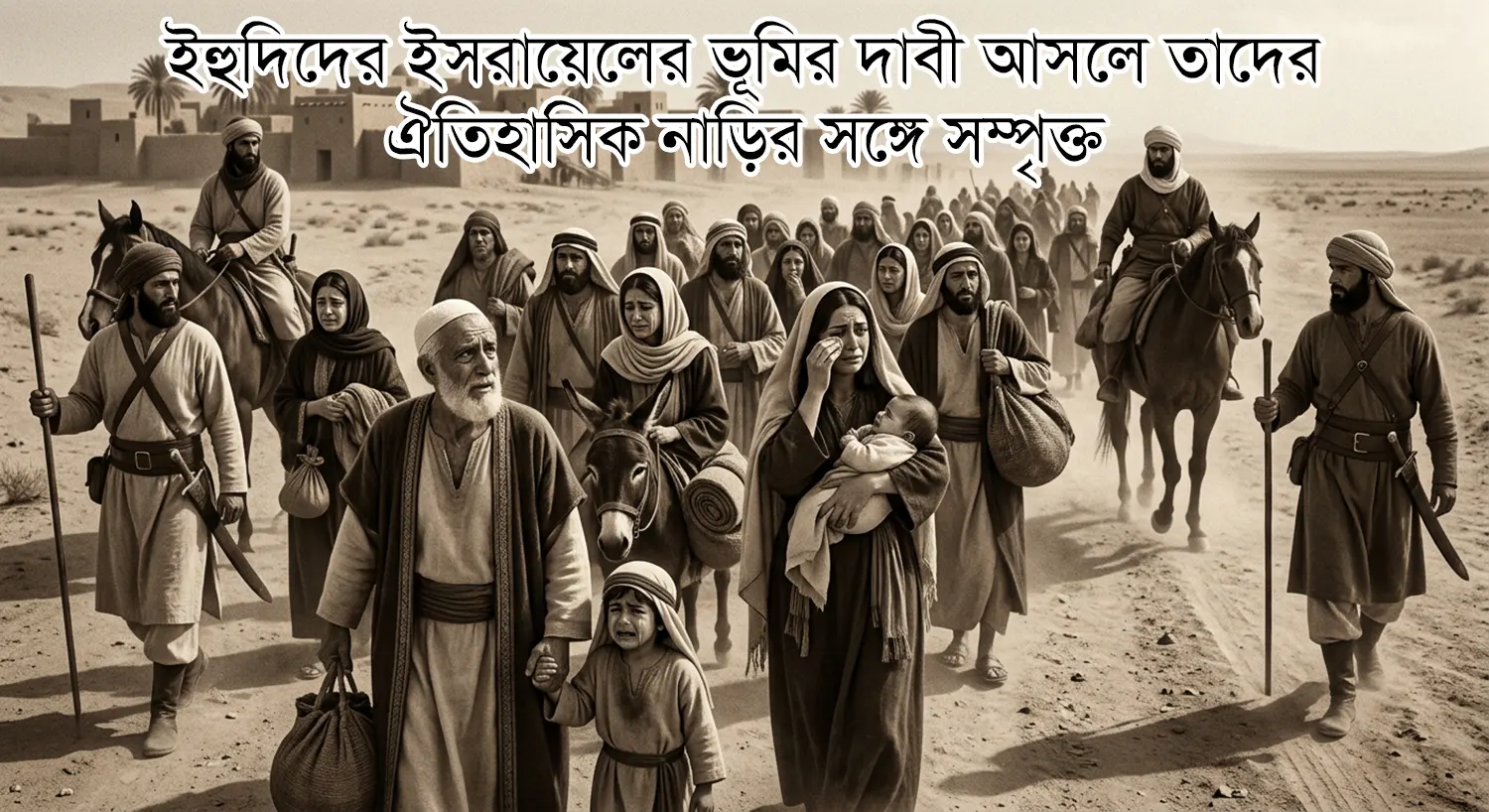
The Jewish claim to the land of Israel is actually connected to their historical roots
Have you heard the popular song from the 1970s ‘By the Rivers of Babylon …’? If you remain a humane person, you will be able to understand at least a little of the pain of an entire ethnic group being expelled for thousands of years simply because of their religious identity. The song was originally recorded in 1970 by the Jamaican reggae band The Melodians. However, in 1978, when the famous Euro-disco group Boney M. released a cover version of the song, it created a huge stir worldwide and gained epic popularity.
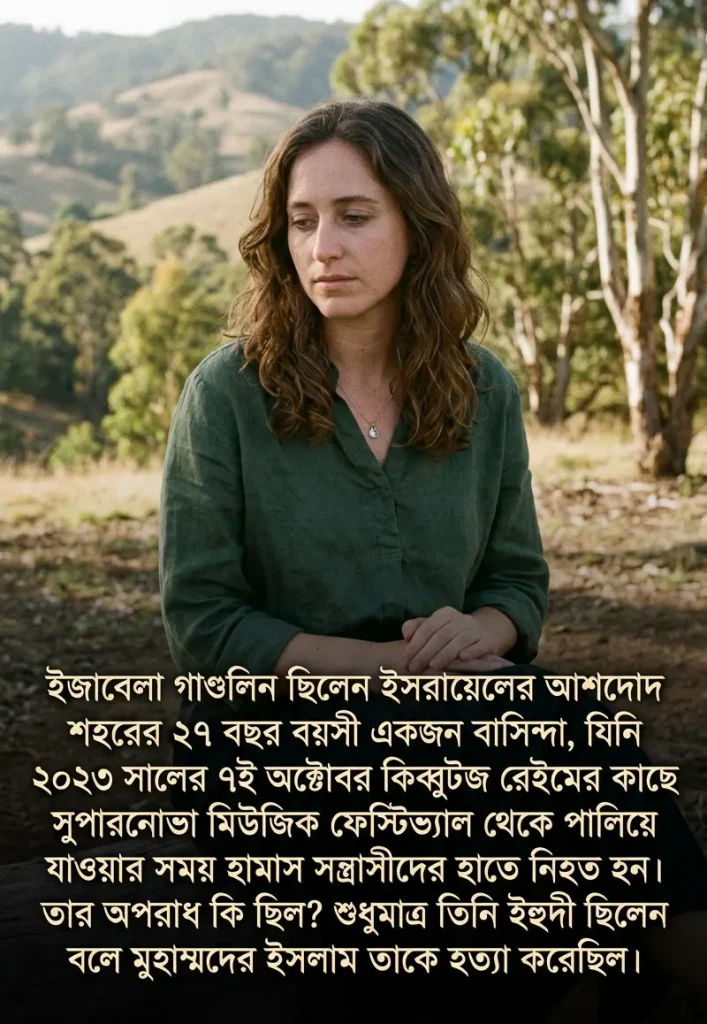
On October 7, 2023, many young men and women were killed while fleeing the Supernova music festival. One of them was Isabella Gandlin, a 27-year-old resident of Ashdod. Her death was a brutal murder, and no explanation can justify it. Hamas’s 1988 charter legitimized war against Jews in religious language. The seventh article of the charter quotes the “Hadith of the trees and stones.” The question of this article is: how deep are the roots of that narrative in Islamic source texts, and how should they be read when considering context and interpretive tradition?
A boundary needs to be drawn at the outset. Hamas’s ideology mixes religion and nationalism. Calling their actions “the actions of all Muslims” is an injustice to hundreds of millions of Muslims, and historically incomplete, yet Hamas’s actions are supported by Islam and the Prophet Muhammad. Therefore, avoiding the harsh parts of Islamic scripture makes the discussion dishonest. Islam contains layers of hostility toward Jews, mentions of their expulsion, and calls for killing.
Qur’anic Commentary
The Qur’an contains extensive discussion of the Children of Israel, with both praise and criticism. On the side of praise are Surah Baqarah 2:47 (granting the Children of Israel superiority over the worlds), 2:62 (promise of reward for Jews, Christians, and Sabians who believe in God and the Last Day and do righteous deeds), 3:113–115 (praise of a devout group among the People of the Book), and 7:159.
On the side of criticism and instructions for harsh treatment:
- 2:61: Humiliation and poverty were imposed upon them, and they incurred God’s wrath.
- 2:65, 5:60, 7:166: Mention of some being transformed into apes and pigs.
- 2:75, 2:79, 4:46: Accusations of altering divine revelation.
- 4:155–161: Accusations of killing prophets, breaking covenants, and usury.
- 5:64: Accusation of saying “God’s hand is tied.”
- 5:78: Curse upon the disbelieving Children of Israel through the tongues of David and Jesus.
- 5:82: Jews and polytheists are the fiercest enemies of the believers.
- 9:30: Statements like “May God destroy them.”
There is no reliable single number for “how many places” Islam incites violence against Jews. The count depends on which words—“Jew,” “Children of Israel,” or “People of the Book”—are included, and which verses are considered condemnatory or descriptive. What is certain is that negative references are numerous.
Muslim exegetes generally say these verses were revealed about specific incidents and groups, not the entire nation. Critics counter that the language of the verses leaves room for universal interpretation, and various Islamist groups have indeed used them that way.
Hadith Commentary
The Hadith of Trees and Stones –
In Sahih Bukhari (2926, 3593) and Sahih Muslim (2922), it is narrated that before the Day of Judgment, Muslims will fight Jews. If a Jew hides behind a rock or tree, it will say, “O Muslim, there is a Jew behind me, kill him.” The only exception is the Gharqad tree. This is a prophecy of the end times, but its use in modern conflict is real. Hamas’s 1988 charter quotes it directly. It is absent from the 2017 policy document, though its use in speeches and propaganda continues. Some interpret it metaphorically, others literally. In conflict, literal readings often dominate.
The Hadith of Rotting Meat –
Bukhari (3330, 3399) and Muslim (1470) state that if the Children of Israel had not existed, food would not rot, and if Eve had not existed, no woman would betray her husband. Commentators like Ibn Hajar connect this to the manna-and-quail incident. The Children of Israel were forbidden from storing daily food; they stored it anyway, and it rotted. In this reading, the hadith highlights two early human mistakes, not a unique Jewish disgrace. Critics argue that the tone still symbolically associates a group with earthly decay.
Instruction to Expel from Arabia –
In Sahih Muslim (1767), Muhammad says he will expel Jews and Christians from the Arabian Peninsula. In Bukhari (3053) and Muslim (1637), a deathbed instruction also mentions expelling polytheists from Arabia. Historically, this instruction was implemented.
The Jewish Tribes of Medina –
The fate of Medina’s three major Jewish tribes is described in Islamic tradition as follows:
- Banu Qaynuqa: Forced to leave Medina after a siege.
- Banu Nadir: Expelled after a siege (Qur’an 59:2–4; Abu Dawud 3001).
- Banu Qurayza: Besieged after the Battle of the Trench. Sa’d ibn Mu’adh ruled that the men be killed and the women and children enslaved (Bukhari 3043, 4121; Muslim 1768). Abu Dawud (2670) and Tirmidhi (1584) describe identifying adult males for execution. Estimates of the number killed range from several hundred to seven hundred or more. Scholars like W. N. Arafat and Walid Ahmad Saleh question the historicity of the accounts, while Meir Kister reaches different conclusions.
“The Earth Belongs to God and His Messenger” –
Abu Hurayra narrates that Muhammad went from the mosque to the Jewish study house (Bayt al-Midras) and said, “Accept Islam and you will be safe; know that the earth belongs to God and His Messenger, and I want to expel you from this land” (Bukhari 3167, 6944; Muslim 1765). There is disagreement about which tribe this refers to. Bukhari places it in the chapter on expulsion, suggesting Banu Nadir. Some commentators link it to Banu Qurayza. Abu Hurayra converted in the seventh year of Hijra, so he may have heard the story from others. Thus, the specific tribe cannot be confirmed.
Muslim historians generally say these actions were responses to political and military treachery, such as violating the Constitution of Medina or colluding with enemies. Critics argue that the events occurred in a context of religious division and were later read as religious ideals, so political explanations alone are insufficient.
History of Jewish Expulsion from Arabia
- Khaybar (628–629 CE): After the conquest, Jews remained in exchange for a share of the crops, though this arrangement depended on Muhammad’s discretion (Bukhari 2331; Muslim 1551).
- Umar’s rule (640s): He expelled Jews and the Christians of Najran from Hijaz, citing the above hadith (Bukhari 2730).
- Later centuries: Jews did not have permanent settlements in Hijaz. But Jewish communities survived for centuries in southern Arabia, including Yemen, under the dhimmi system with various restrictions and jizya.
- Modern era: After 1948, an estimated 800,000–900,000 Jews left or were forced to leave Arab countries including Iraq, Egypt, Yemen, Libya, Morocco, and Algeria. In Operation Magic Carpet (1949–50), nearly the entire Jewish community of Yemen was taken to Israel.
- Saudi Arabia today: Non-Muslims are prohibited from entering Mecca and Medina, and religious practice for non-Muslims is restricted.
Context of “By the Rivers of Babylon”
The lyrics of the song come from Psalm 137. In 586 BCE, Babylonian king Nebuchadnezzar destroyed Jerusalem and the First Temple and exiled the Jews. In the psalm, the exiles sit by the river and weep remembering Zion. The Melodians recorded the song in 1970 (written by Brent Dowe and Trevor McNaughton). In the Rastafari movement, it symbolized African exile and the longing to return home, and in 1978 Boney M. made it globally popular. In the context of this article, the song reminds us how deeply the memory of exile and longing for homeland is embedded in Jewish identity, and how that memory later became a universal cultural language.
The Jewish claim to the land of Israel is connected to their historical roots. They were expelled from their land, and now they seek to reclaim it.
Opposing Perspectives and Limitations
For fairness, the following points must also be mentioned.
- Balanced descriptions: Muhammad stood for the funeral of a Jew (Bukhari 1312). He died with his armor mortgaged to a Jew (Bukhari 2916, 2068). One who kills a contracted non-Muslim will not smell Paradise (Bukhari 3166). In the Constitution of Medina (Ibn Ishaq/Ibn Hisham), Jews are given security as part of the same “ummah” with the believers.
- Status of People of the Book: The Qur’an permits their food and allows marriage with their women (5:5).
- Historical comparison: In the medieval period, Jews were often safer in the Muslim world than in Christian Europe. Mark Cohen’s Under Crescent and Cross discusses this in detail. However, Bernard Lewis and Norman Stillman show that discrimination and violence also occurred.
- Scholarly disagreement: Many scholars oppose applying the Hadith of trees and stones to modern politics. They say hostility is toward the policies of the State of Israel, not the Jewish religion, though in practice this distinction often blurs.
- Sources of modern antisemitism: Much of it is European in origin, such as the spread of “The Protocols of the Elders of Zion.” The worst chapter of antisemitism, the Holocaust, occurred in Europe.
Conclusion
Islamic source texts contain harsh and derogatory statements about Jews; this cannot be denied. The Qur’anic verses of curse, the Hadith of trees and stones, the Hadith of rotting meat, the fate of the Jewish tribes of Medina, and the instruction to expel from Arabia are all legitimate subjects of criticism. These need open discussion under modern human rights standards. But the same scripture also contains some elements of coexistence, and which reading is chosen depends on the reader’s politics and interpretive tradition. Yet the question remains: can a divinely revealed religion and scripture contain such contradictions and inconsistencies? After many harsh and brutal instructions, just a few lines about coexistence—will anyone accept that in this era? The responsibility for the murder of innocent people like Isabella Gandlin lies with the violent organization and ideology that chose the harshest reading of the source texts. In their narrative, God’s law must be implemented on God’s earth, no matter how inhumane, cruel, brutal, or unrealistic it may be.
Related Posts

Why do Islamist clerics consider Bengali cultural festivals their enemy?
This year, unlike many previous years, the major Hindu religious festival Durga Puja in BangladeshRead More
ইসলামিস্ট মোল্লারা কেন বাঙালিদের আনন্দ উৎসবকে তাদের শত্রু মনে করে?
এবার বাংলাদেশে অন্যবারের তুলনায় বেশ শান্তিপূর্ণ, উৎসবমুখর পরিবেশে হিন্দু ধর্মের বড় ধর্মীয় উৎসব দূর্গাপূজা হয়েRead More

Why do Islamist cyber‑jihadis insult, threaten, and file false reports against people with different opinions?
Maulana Azhari once advised Islamists that sharing his Facebook posts is also an Islamic act;Read More
Comments are Closed