
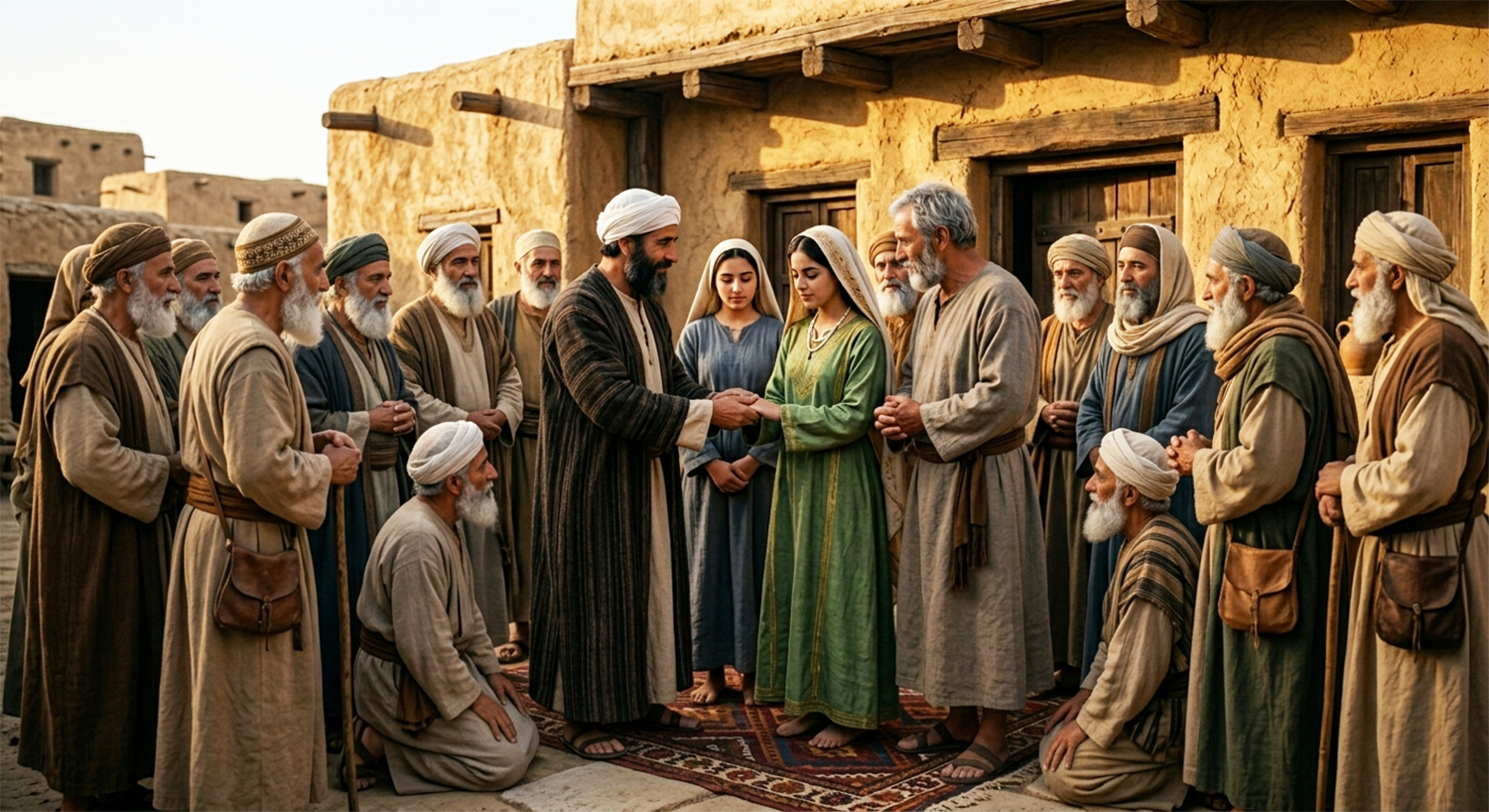
Islamic Morality is Nothing!
The moral claims of Prophet Muhammad and Islam are nothing more than an illusion
Whenever someone writes anything about Islam and Prophet Muhammad, moderate believers come forward claiming that we know nothing about Islam and have never read anything about it. Yet, I have a Bengali translation of the Quran with tafsir on my table. Nowadays, all resources are available online. In this age of AI, one can easily check references if there is even a little goodwill. Since there is no neutral source for the history of Islam, the only reliable sources are what the Muslims themselves have written — such as the Quran, Sahih Hadith, Sirat, translations, and tafsirs. Since you people do not bother to search for references yourselves, I have provided all the links with references at the very bottom. Please take a look. After that, do not come and say that I have written fabricated things.
Islam claims that Prophet Muhammad (570–632 CE) is not just for a specific era, but the ideal for all humanity and for all times. The Quran directly states:
لَّقَدْ كَانَ لَكُمْ فى رَسُولِ اللَّهِ أُسْوَةٌ حَسَنَةٌ
“Indeed, in the Messenger of Allah you have an excellent example.”
— Surah Al-Ahzab, 33:21 | hadithbd.com/quran/tafsir/?sura=33
وَمَا أَرْسَلْنَاكَ إلَّا رَحْمَةً لِّلْعَالَمِينَ
“And We have not sent you but as a mercy to the worlds.”
— Surah Al-Anbiya, 21:107 | hadithbd.com/quran/tafsir/?sura=21
Based on this claim, Islamists say that every action, word, and way of life of the Prophet is worthy of following by all Muslims until the Day of Judgment. But the question is — if there are actions in the Prophet’s life that constitute serious human rights violations according to modern civilized standards, can this claim of being the “ideal for all times” still hold?
In this article, we will critically analyze from the primary Islamic sources — Quran, Sahih Hadith, and Sirah — with direct references and links. This is not about spreading hatred or malice, but about examining an important claim in the light of free thought and reason.
1. Aisha’s Marriage: Child Marriage and the Question of Sexual Consent
1.1 Primary Hadith — Sahih Bukhari
Narrated Aisha: that the Prophet married her when she was six years old and he consummated his marriage when she was nine years old, and she remained with him for nine years (i.e., till his death).
— Sahih Bukhari (Tawhid Publication) | Hadith: 5133 | hadithbd.com/hadith/link/?id=29696
1.2 Sahih Muslim
Narrated Aisha: The Messenger of Allah married me when I was seven years old. I was brought to his house when I was nine years old and I was playing with my dolls. When the Messenger of Allah died, I was eighteen years old.
— Sahih Muslim (Islamic Foundation) | Hadith: 3350 | hadithbd.com/hadith/link/?id=12961
1.3 Sunan Abu Dawood
Narrated Aisha: The Messenger of Allah married me when I was six or seven years old. When we came to Medina, some women came. In Bishr’s narration: My mother Umm Ruman came to me and I was on a swing. She took me and made me ready and adorned me. Then she presented me to the Messenger of Allah. He consummated the marriage with me when I was nine years old. My mother made me stand at the door, and I laughed loudly. Imam Abu Dawood said: meaning my menstruation had started. I was taken into a house where there were some women of the Ansar. They prayed for blessings and good fortune for me.
— Sunan Abu Dawood (Tahqiq) | Hadith: 4933 | hadithbd.com/hadith/link/?id=62301
1.4 Analysis: Islamist Arguments and Their Refutation
According to modern psychology and international law, the age of consent is a fundamental principle. According to the UN Convention on the Rights of the Child (UNCRC, 1989), anyone under 18 is a child and does not have the legal or mental capacity to give consent to sexual relations. Having sexual relations with a 9-year-old is considered child rape under modern law — a criminal offense in 187 countries worldwide.
| Islamist Claim | Counter-argument by Critics |
| It was the custom of that time | But why did the one sent as the “ideal for all times” do something that would become a crime in the future? |
| Aisha had reached puberty | Even if puberty occurs at 9, mental maturity and the capacity for consent do not develop at that age |
| Puberty occurs earlier in Arabia | According to WHO data, this is an unproven myth scientifically |
| Aisha herself was happy | A child who has been abused may consider it normal — this is not proof of consent |
2. War Captive Women and Sexual Slavery: Instructions in the Quran and Hadith
2.1 Quranic Verses — Slave Women are Halal
وَالْمُحْصَنَاتُ مِنَ النِّسَاءِ إِلَّا مَا مَلَكَتْ أَيْمَانُكُمْ
“Also (prohibited are) women already married, except those whom your right hands possess (slave women).”
— Surah An-Nisa, 4:24 | hadithbd.com/quran/tafsir/?sura=4&aya=24
وَالَّذِينَ هُمْ لِفُرُوجِهِمْ حَافِظُونَ إِلَّا عَلَىٰ أَزْوَاجِهِمْ أَوْ مَا مَلَكَتْ أَيْمَانُهُمْ
“And those who guard their private parts except from their wives or those whom their right hands possess.”
— Surah Al-Mu’minun, 23:5-6 | hadithbd.com/quran/tafsir/?sura=23
— Surah Al-Ma’arij, 70:29-30 | hadithbd.com/quran/link/?id=5404
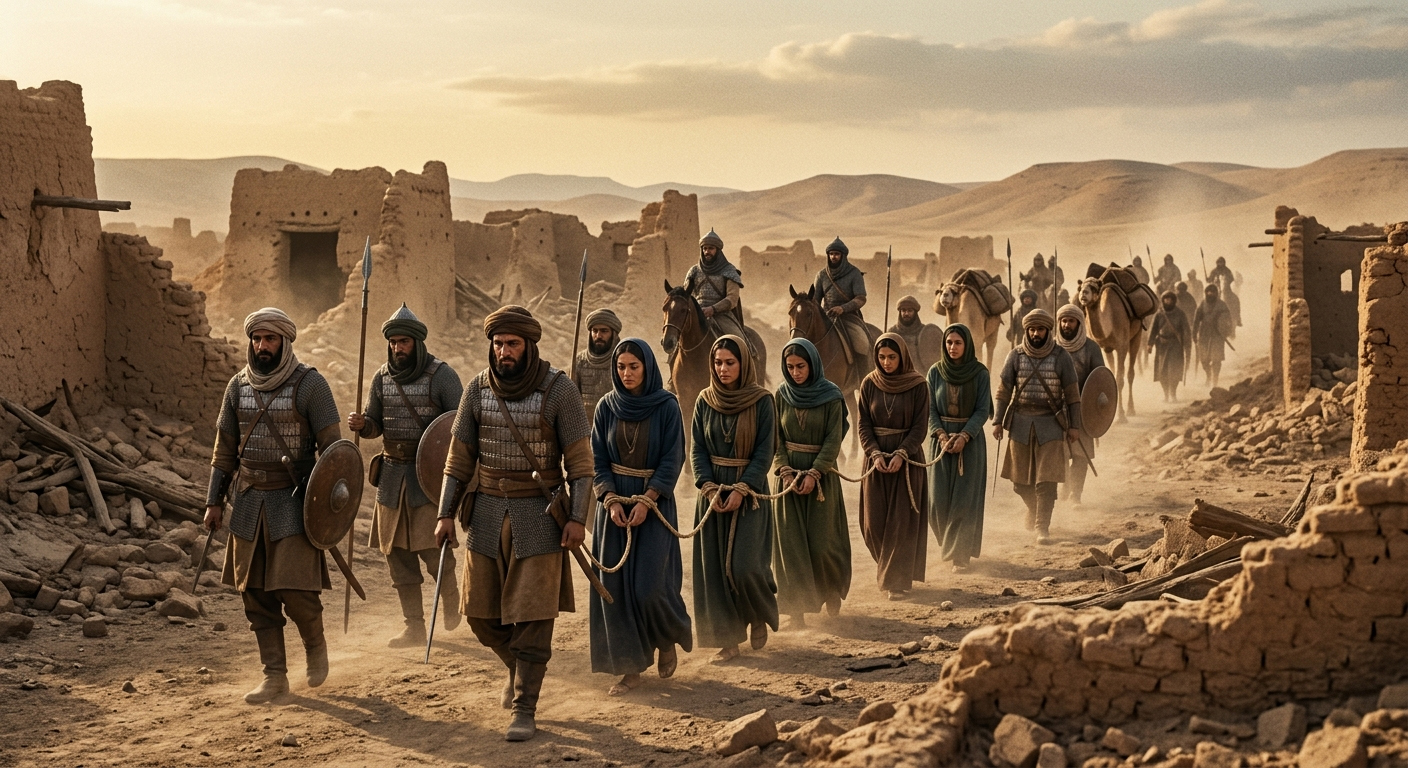
2.2 Hadith on ‘Azl (Coitus Interruptus): Direct Evidence of Sexual Slavery
The following Hadith clearly proves three things:
- Sexual relations were had with war captive women;
- Coitus interruptus (‘azl) was practiced to prevent pregnancy and preserve their market value;
- The Prophet did not prohibit it.
Narrated Abu Sa’id al-Khudri: We went out with Allah’s Messenger on the expedition to Banu Mustaliq. We captured some excellent Arab women. We desired them, for we were suffering from the absence of our wives, but at the same time we also desired ransom for them. So we decided to have sexual intercourse with them but by practicing ‘azl (coitus interruptus). We said: “Shall we do this while the Messenger of Allah is among us without asking him about it?” So we asked him about it, and he said: “There is no harm in it, for that which is predestined for every soul will come to pass.”
— Sahih Muslim (Hadith Academy) | Hadith: 3436 | hadithbd.com/hadith/link/?id=50519
Narrated Jabir: We used to practice ‘azl during the lifetime of the Prophet while the Quran was being revealed.
— Sahih Bukhari (Islamic Foundation) | Hadith: 4833 | hadithbd.com/hadith/link/?id=5135
3. Prophet Muhammad’s Mass Killing and Safiyya bint Huyayy
Who was Safiyya?
Safiyya bint Huyayy was born into a powerful Jewish family in Khaybar. Her father, Huyayy ibn Akhtab, was a famous leader of the Banu Nadir tribe, and her mother was from the Banu Qurayza tribe. As the daughter of such a politically influential and respected family, she grew up with freedom, dignity, and ethnic pride. Her husband, Kinana ibn Rabi, was a Jewish leader and guardian of the treasury in Khaybar. At the time of the Battle of Khaybar, Safiyya was a newlywed young woman — around seventeen years old. On the other hand, Prophet Muhammad was about fifty-seven.
The Banu Qurayza Massacre: Prophet Muhammad Personally Ordering the Beheading of Boys and Taking Sexual Slaves
In the Battle of Banu Qurayza (627 CE) and the subsequent Khaybar campaign (628 CE), the Muslim army defeated the Jewish tribes including Banu Qurayza and Banu Nadir and carried out mass killings. Hundreds of men were lined up and beheaded, and all those who had pubic hair were mercilessly killed. The slaughter continued from morning till night. The total number of men killed in the massacre that day was 700 or 800, and according to some accounts, up to 800 or 900. It is narrated in the Hadith that Prophet Muhammad himself was present and oversaw this massacre. Safiyya’s father, uncle, husband, and most of her relatives were brutally murdered at the hands of Prophet Muhammad and his companions.
Ibn Ishaq, Sirat Rasul Allah (translated by A. Guillaume), P. 464 | archive.org/details/TheLifeOfMohammedGuillaume/page/n255/mode/2up
Narrated Abu Sa’id al-Khudri: Some people (the Jews of Banu Qurayza) surrendered to the judgment of Sa’d ibn Mu’adh. So the Messenger of Allah sent for Sa’d. He came riding a donkey. When he approached the mosque, the Prophet said: “Stand up for your chief (or the best among you).” Then he said: “O Sa’d! These people have surrendered to your judgment.” Sa’d said: “I give the judgment that their warriors should be killed and their children and women taken as captives.” The Prophet said: “You have judged according to the judgment of Allah (or the judgment of the King).”
— Sahih Bukhari (Tawhid Publication) | Hadith: 3804 | hadithbd.com/hadith/link/?id=28244
Narrated Atiyyah al-Qurazi: I was among the captives of Banu Qurayza. They examined us, and those who had begun to grow pubic hair were killed, and those who had not were not killed. I was among those who had not grown pubic hair.
— Sahih Bukhari (Tawhid Publication) | Hadith: 4404 | hadithbd.com/hadith/link/?id=61772
After taking one-fifth of all the property, women, and children of Banu Qurayza for the Prophet Muhammad, the rest was distributed among the Muslim warriors. The Messenger of Allah sent Sa’d bin Zayd al-Ansari to the slave market in Najd along with some captive women from Qurayza to sell them and buy horses and weapons. While the heads of the Qurayza men were being cut off in groups, the women and children were being taken captive and some sent to be sold — in such a situation, no one from Qurayza could be expected to remain mentally stable. On that day, Aisha saw such a Qurayza woman sitting near her. The woman was laughing loudly even as she was being taken away to be killed for insulting Muhammad. Aisha could never forget that scene. It is natural that a truly humane person cannot easily forget such a heartbreaking sight.
Ibn Ishaq, Sirat Rasul Allah (translated by A. Guillaume), P. 466 | archive.org/details/TheLifeOfMohammedGuillaume/page/n257/mode/2up
Narrated Aisha: No woman of Banu Qurayza was killed except one. She was with me, talking and laughing loudly. While the Messenger of Allah was killing their men in the market, a man called her name and said, “Where is so-and-so?” She said, “I am.” I asked, “What is the matter with you?” She said, “I did what I did (she had insulted the Prophet in vulgar language).” Aisha said: She was taken away to be killed. I have not forgotten her behavior even today. I was amazed that she was laughing even though she knew she was going to be killed.
— Sunan Abu Dawood (Tahqiq) | Hadith: 2671 | hadithbd.com/hadith/link/?id=60039
From among the captive women of Banu Qurayza, Prophet Muhammad chose the beautiful 15-year-old girl Rayhana bint Zayd as his share. He proposed marriage to Rayhana, but she refused and preferred to remain his slave. To Rayhana, becoming the slave of Muhammad seemed less humiliating than becoming his wife. Since sexual relations with war captive women are halal in Islam, Muhammad agreed to keep her as a slave without further insistence. The real goal was to enjoy her body, whether marriage rites were performed or not was not important. In the end, the girl named Rayhana became blessed (read: raped) in the company of the greatest man of all time according to Muslims.
Ibn Ishaq, Sirat Rasul Allah (translated by A. Guillaume), P. 466 | archive.org/details/TheLifeOfMohammedGuillaume/page/n257/mode/2up
After the Battle of Khaybar, Prophet Muhammad Chose Safiyya as His Sexual Slave
After the Battle of Khaybar (628 CE), Safiyya and many other women and children were taken as war booty (ghanimah). Bilal brought them past the mutilated bodies of their relatives, causing severe mental trauma. Safiyya’s husband Kinana was severely tortured to reveal the location of the treasure and then brutally killed. According to Islamic law, these captive women were treated as property — like cattle — to be distributed. In Sahih Hadith, Safiyya is described as the Prophet’s share of the “booty.” Companion Dihya al-Kalbi asked for the most beautiful Safiyya as his slave. The Prophet initially agreed, but later, upon hearing of her beauty, took her back and gave Dihya seven other slave girls in exchange.
Ashab-e-Rasul’s Life Stories, Volume 5, Muhammad Abdul Ma’bud, pp. 272-280 | jamaat-e-islami.org/publication/file/154_ashabe_rasuler_jibon_kotha_5.pdf
Narrated Anas bin Malik: The Prophet attacked Khaybar. When Allah granted victory, the captives were gathered. Dihya came and said: “O Messenger of Allah, give me a slave girl from the captives.” He said: “Go and take one.” He took Safiyya bint Huyayy. Then a man came to the Prophet and said: “O Prophet of Allah, you have given Safiyya, daughter of the chief of Banu Qurayza and Banu Nadir, to Dihya? She is only fit for you.” He said: “Call him with Safiyya.”
When the Prophet saw her, he said to Dihya: “Take any other slave girl from the captives except Safiyya.” He then freed her and married her.
— Sahih Muslim (Islamic Foundation) | Hadith: 3366 | hadithbd.com/hadith/link/?id=12977
Narrated Anas: We attacked Khaybar. When the Prophet saw Safiyya’s beauty, he chose her for himself. She was newly married and her husband had been killed in the battle. The Prophet took her and set out. When we reached a place called Sadd-us-Sahba, she became clean from her menses. Then the Prophet had intercourse with her.
— Sunan Abu Dawood (Tahqiq) | Hadith: 2995 | hadithbd.com/hadith/link/?id=60363
Did Prophet Muhammad Actually Marry Safiyya?
On the way back from the battle, the Prophet spent the night with Safiyya (had sexual relations with her) and stayed with her in a tent for three nights with guards posted outside. Having sexual relations with someone without consent or in an environment of fear and coercion is considered rape under modern law. Just hours earlier, Safiyya had been a free Jewish young woman whose entire family — including her newlywed husband, father, and uncles — had been murdered. How realistic is it for any mentally healthy woman to suddenly marry or surrender her body and mind to the killer of her loved ones right after such immense grief? No matter how much the defenders of Islam try to justify it, judge it with your own conscience and logic. The way Islam views women as “property” becomes crystal clear in this incident.
Islamists claim that the Prophet married Safiyya. But even if a marriage took place, was it with genuine consent? Was it even possible under the circumstances? Who performed the marriage? Who were the witnesses? Did the Prophet just declare it and the marriage happen without following any Islamic marriage procedures? This whole marriage story seems nothing more than an attempt to save the image of Islam. See what the Sahih Hadith actually says.
Narrated Anas: The Prophet stayed with Safiyya for three days between Khaybar and Medina. I invited the Muslims to his walima (wedding feast). There was neither meat nor bread in it. He ordered that a leather cloth be spread and people placed dates, cheese, and ghee on it. That was his walima. The Muslims wondered whether she was one of the Mothers of the Believers or just one of his slave women. They said: If he puts a veil on her, she is one of the Mothers of the Believers; if not, she is a slave woman. When it was time to depart, a howdah was prepared for her behind the Prophet’s mount and a curtain was placed between her and the people.
— Sunan an-Nasa’i (Islamic Foundation) | Hadith: 3385 | hadithbd.com/hadith/link/?id=77413
During the caliphate of Umar, the widows of the Prophet were given an allowance of twelve thousand dirhams, but Safiyya was given only six thousand. If the Prophet had truly married her, why was she given only half the amount? Anyway, verify it yourselves, question with your conscience and logic.
Al-Bidayah wa al-Nihayah, Islamic Foundation, Volume 5, p. 485 | archive.org/details/20200721_20200721_1547/page/%E0%A7%AA%E0%A7%AE%E0%A7%AB/mode/2up
4. Maria al-Qibtiyya: The Prophet’s Slave Girl
Maria al-Qibtiyya (Maria the Copt) was an Egyptian Coptic Christian woman sent as a gift to Prophet Muhammad by the Christian ruler of Egypt, al-Muqawqis. She was the mother of the Prophet’s only son, Ibrahim, who died in childhood.
Maria never received the status of an official wife of the Prophet. She remained a concubine/slave, and the mother of his only son. There can be no true consent in the relationship between a slave owner and his slave — because the slave has no real power to say “no.” Modern law considers such physical relations as rape.
The Prophet’s wives did not take kindly to his sexual relations with the slave girl Maria, especially when he would take her to their rooms in their absence. The wives became very angry and protested. To please his wives, the Prophet declared Maria haram for himself. But even then, his heart remained with Maria. Then Allah revealed verses in the Quran to fulfill the Prophet’s desire. After that, there was no longer any obstacle to the Prophet having sexual relations with his slave girl.
Narrated Anas: The Prophet had a slave girl with whom he used to have sexual relations. Aisha and Hafsa kept after him about it until he declared her haram for himself. In response, Allah revealed: “O Prophet! Why do you forbid (for yourself) that which Allah has made lawful to you…” (Surah At-Tahrim: 1).
— Sunan an-Nasa’i (Islamic Foundation) | Hadith: 3961 | hadithbd.com/hadith/link/?id=77992
يَـٰٓأَيُّهَا ٱلنَّبِىُّ لِمَ تُحَرِّمُ مَآ أَحَلَّ ٱللَّهُ لَكَۖ تَبْتَغِى مَرْضَاتَ أَزْوَٲجِكَۚ وَٱللَّهُ غَفُورٌ رَّحِيمٌ
“O Prophet! Why do you forbid (for yourself) that which Allah has made lawful to you, seeking to please your wives? And Allah is Oft-Forgiving, Most Merciful.”
— Surah At-Tahrim, 66:1 | hadithbd.com/quran/link/?id=5230
يَـٰٓأَيُّهَا ٱلنَّبِىُّ إِنَّا أَحْلَلْنَا لَكَ أَزْوَٲجَكَ ٱلَّـٰتِىٓ ءَاتَيْتَ أُجُورَهُنَّ وَمَا مَلَكَتْ يَمِينُكَ مِمَّا أَفَاءَ ٱللَّهُ عَلَيْكَ وَبَنَاتِ عَمِّكَ وَبَنَاتِ عَمَّـٰتِكَ وَبَنَاتِ خَالِكَ وَبَنَاتِ خَـٰلَـٰتِكَ ٱلَّـٰتِى هَاجَرْنَ مَعَكَ وَٱمْرَأَةً مُّؤْمِنَةً إِن وَهَبَتْ نَفْسَهَا لِلنَّبِىِّ إِنْ أَرَادَ ٱلنَّبِىُّ أَن يَسْتَنكِحَهَا خَالِصَةً لَّكَ مِن دُونِ ٱلْمُؤْمِنِينَۗ قَدْ عَلِمْنَا مَا فَرَضْنَا عَلَيْهِمْ فِىٓ أَزْوَٲجِهِمْ وَمَا مَلَكَتْ أَيْمَـٰنُهُمْ لِكَيْلَا يَكُونَ عَلَيْكَ حَرَجٌۗ وَكَانَ ٱللَّهُ غَفُورًا رَّحِيمًا
“O Prophet! Verily, We have made lawful to you your wives to whom you have paid their dowries, and those (captives or slaves) whom your right hand possesses whom Allah has given to you, and the daughters of your paternal uncles and the daughters of your paternal aunts and the daughters of your maternal uncles and the daughters of your maternal aunts who migrated with you, and a believing woman if she offers herself to the Prophet, and the Prophet wishes to marry her — a privilege for you only, not for the believers…”
— Surah Al-Ahzab, 33:50 | hadithbd.com/quran/link/?id=3583
Tafsir Ibn Kathir, Islamic Foundation, Volume 9, p. 131 | drive.google.com/file/d/12s35xbkPEC0cfTwTIdyO4G8CCnhuIn_O/view
5. Slavery: Islam’s Position and the Prophet’s Practice
The main sources of slaves in Islamic history were war captives who were non-Muslims, slaves bought from abroad, and children born into slavery. Slavery was not race-based, but in practice people were enslaved from Africa, Europe, Central Asia — everywhere. This was common in Islamic empires and many other parts of the world at the time. But why did Allah have the Prophet — who is claimed to be the best of all time — practice such a horrific institution?
The biggest source of acquiring slaves was winning wars and enslaving non-Muslims. Non-Muslim men were either killed or, if lucky, enslaved, while women were destined to become sexual slaves. In the Islamic system, buying and selling slaves was allowed. Prophet Muhammad himself participated in this process. Although Islam encouraged freeing slaves, it never abolished the institution of slavery. It did not even discourage sexual relations with slave girls; rather, it said there is reward (sawab) in it.
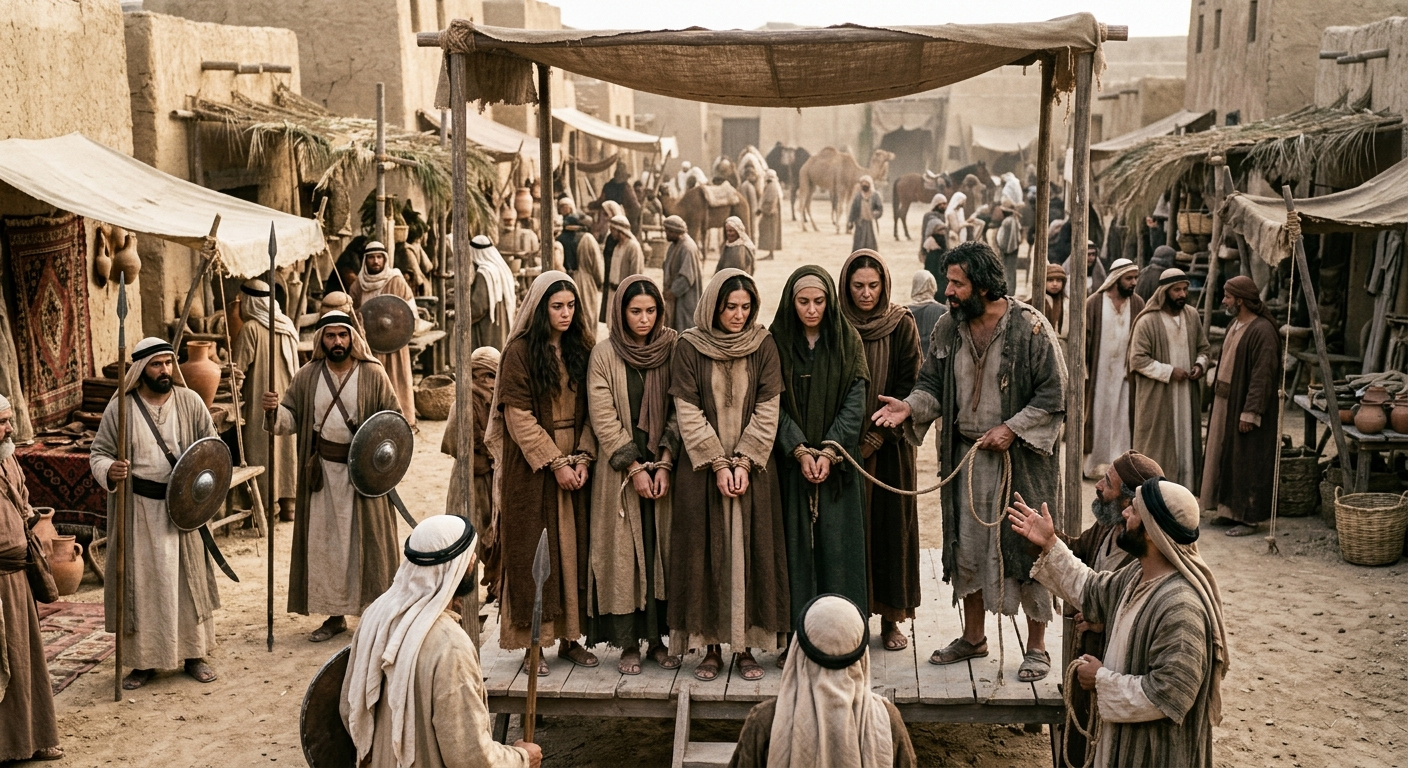
Narrated Abu Dharr: The Messenger of Allah said: “Every tasbih (Subhanallah) is charity, every takbir (Allahu Akbar) is charity, every tahmid (Alhamdulillah) is charity, every tahlil (La ilaha illallah) is charity. Enjoining good and forbidding evil is charity. And having sexual intercourse with one’s wife or slave girl is also charity.” The companions asked: “O Messenger of Allah, if one of us fulfills his desire, does he get reward for it?” He replied: “Tell me, if he had done it in a haram way, would he not have sinned? Similarly, if he does it in a halal way (with wife or slave girl), he gets reward.”
— Mishkat al-Masabih | Hadith: 1898 | hadithbd.com/hadith/error/?id=56458
The Quran did not directly prohibit slavery. Freeing a slave is called a virtuous act, but there is no clear prohibition against buying, selling, or keeping slaves. As mentioned earlier, Prophet Muhammad himself accepted slaves and slave girls, sent them to the market to be sold, and received them as gifts.
فَكُّ رَقَبَةٍ
“It is the freeing of a slave.”
— Surah Al-Balad, 90:13 | hadithbd.com/quran/link/?id=6036
Many of the Prophet’s companions were involved in buying and selling slaves. There are references in Islamic sources where the Prophet himself bought and sold slaves. What does this say about the one who is supposed to be the ideal for all times? If you say it was the custom of the time everywhere in the world, then why is he presented as the ideal for all times and all people, including today and the future? So, will you accept that what Prophet Muhammad did in his time is now considered uncivilized and wrong, and cannot be done today?
Ashraful Hidayah, Islamia Kutubkhana, Volume 9, pp. 618-619 | dn790006.ca.archive.org/0/items/kawmi/MT-Ashraful-hidayah-part-9%5BAlmodina.com%5D.pdf
Narrated Abdul Majid ibn Wahb: Adda ibn Khalid ibn Hawwa said to me: Shall I not read to you the letter which the Messenger of Allah wrote to me? He brought out a document which said: “This is proof that Adda ibn Khalid bought from Muhammad the Messenger of Allah a slave or a slave girl who is free from defects, not stolen, and not unlawfully acquired. This is the transaction between two Muslims.”
— Sunan Ibn Majah | Hadith: 2251 | hadithbd.com/hadith/link/?id=42866
In 1926, the League of Nations internationally banned slavery. The practice that the Rome Statute of the ICC considers a crime against humanity — Islamic law never prohibited it. That means even though modern international law considers slavery a crime against humanity, it is still not a crime in Islam. No matter what argument you give, this Islamic ruling is now obsolete. Simply put, in Islam, keeping, buying, selling, gifting, exchanging slaves and slave girls is completely permissible, and this law has never been repealed. And since keeping slave girls is permissible, sexual relations with them are also lawful in Islam.
A few years ago, international media including the BBC reported that slave girls are still being bought and sold in various forms in the Middle East. There are even online “slave markets” on social media. The terrorist organization ISIS used to sell Yazidi women as war booty (ghanimah). Women from Bangladesh, the Philippines, India, Pakistan, Indonesia, Nepal, etc., who go to work in the Middle East often face rape by their employers. Many return home pregnant. If they protest, the employer says he “bought” her. The chance of getting justice for rape is very limited because in Islam, without four male eyewitnesses, the rape victim herself may face punishment — there are many such examples.
BBC Investigation: Huge online ‘slave market’ for female domestic workers in Kuwait | bbc.com/bengali/news-50273364
Watch: On “Slave Market Day,” ISIS Trades Women for Cash, Weapons | pbs.org/wgbh/frontline/article/watch-on-slave-market-day-isis-trades-women-for-cash-weapons
6. The Futility of the “It Was the Custom of That Time” Argument
- If the Prophet only followed the norms of his time, then he is not the “ideal for all times” — he is just a man of that era.
- If Allah is All-Knowing (Al-Alim), He knew the future — so why did He give laws that would one day go against humanity?
- Rabindranath Tagore married at a young age, but neither he nor anyone else ever claimed he was the “ideal for all times.” Islam makes a different claim, so the standard must also be different. The examples Muslims give are simply foolish.
- Modern Islamic scholars try to revise Aisha’s age — but this goes against Sahih Bukhari, Muslim, Abu Dawood — all major Hadith collections.
7. Islam’s Claim of Women’s Honor vs. Reality
| Issue | Quran/Hadith Ruling | Link (hadithbd.com) |
| Inheritance | Daughter gets half of son’s share | hadithbd.com/quran/tafsir/?sura=4&aya=11 |
| Testimony | Two women equal to one man | hadithbd.com/quran/tafsir/?sura=2&aya=282 |
| Husband’s rights | Permission to beat disobedient wife | hadithbd.com/quran/tafsir/?sura=4&aya=34 |
| Divorce | Man can divorce unilaterally, woman cannot | hadithbd.com/quran/tafsir/?sura=2&aya=229 |
| Status of slave women | Sexual relations with war captive slave women are halal | hadithbd.com/quran/tafsir/?sura=4&aya=24 |
In Islam, women have been described as devils, black dogs, and sources of evil. Women have no personal freedom in Islam. Those who say Islam has given women the highest honor are simply talking nonsense. If I write about this, it will become another full article — I have already written it earlier.
8. Summary of the Central Argument
| Logical Steps | Content |
| First Premise | Islam claims Prophet Muhammad is the best example for all times (Surah 33:21) |
| Second Premise | To be the ideal for all times, his actions must be humane and just in every era |
| Third Premise | Child marriage, sexual exploitation of war captives, and slavery in the Prophet’s life are all serious crimes under modern human rights law |
| Conclusion | Either the Prophet is not the ideal for all times, or these acts are considered ideal — both positions go against humanity |
Final Words
History must be judged fairly by considering context — that is true. But in the case of Islam, this argument does not work, because Islam itself claims that its Prophet is not just for that era — he is the ideal for everyone until the Day of Judgment. If such a claim is made, the standard must also match that claim.
It is proven from the primary Islamic sources themselves that child marriage, the sexual exploitation of war captive women, and slavery existed in the Prophet’s life — actions that are considered serious crimes under modern international human rights law. Islamists cannot provide any satisfactory answer to these questions — either they have to accept the historical context (in which case the claim of being the “ideal for all times” collapses), or they have to claim these acts are still ideal today (in which case they stand against humanity).
Raising these questions is not religious hatred — it is the natural development of human conscience. Every human being has the right to examine every religious claim in the light of reason and humanity.
Related Posts

Operation Entebbe – the story of one night, and the Islamic execution suffered by Nazrul Islam and Sweety Akter
What can a state do to save the lives of its citizens abroad? Are thereRead More
অপারেশান এন্টেবে – এক রাতের গল্প এবং নজরুল ইসলাম ও সুইটি আক্তারের ইসলামি হত্যার শিকার হওয়া!
একটি রাষ্ট্র বিদেশে তার নাগরিকদের জীবন বাঁচাতে কী করতে পারে? এর কোন টেক্সটবুক উদাহরণ আছে?Read More
A random page from Muhammad’s self‑made book Qur’an and its unscientific statements
Sometimes I flip through random pages of Muhammad’s self‑made book Qur’an, and today this pageRead More
Comments are Closed