
Islamic fanaticism and the killing
How Islam’s human‑rights‑violating laws provide justification for killing people
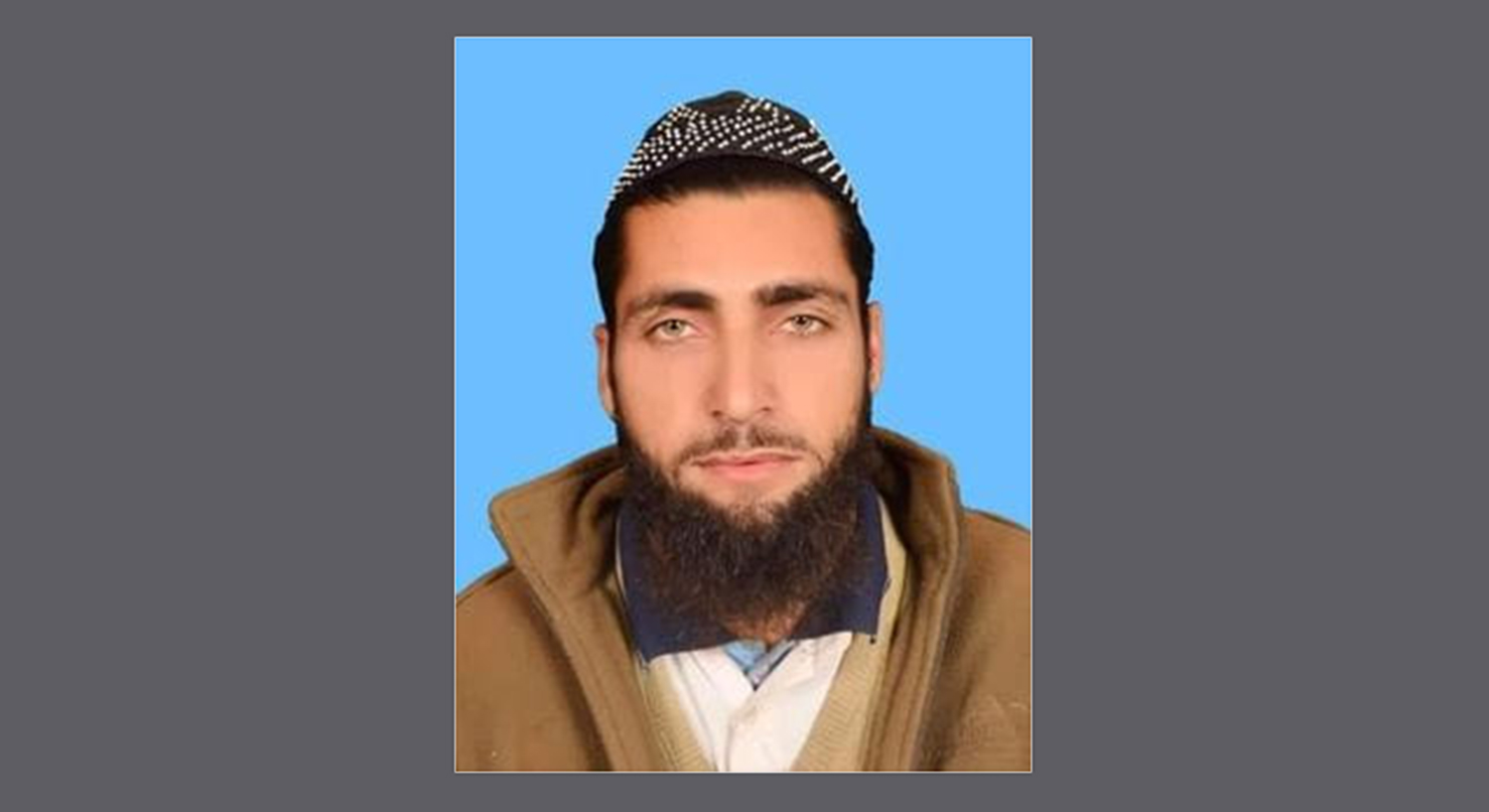
This man in the picture was beaten to death in Pakistan simply because he said he loved Imran Khan as much as the Prophet. This incident once again shows how religious extremism can blind people’s conscience, humanity, and basic sense of justice. An ordinary man was beaten to death just because he said, “He loves Imran Khan the way he loves the Prophet.” This single sentence was enough to “hurt” the religious sentiments of the extremist mob. Within moments, the fanatics surrounded him, beat him, and eventually killed him brutally. As if human life, compassion, or justice had no value to them – only blind obedience and religious emotion mattered.
From 1947 to 2021, at least 89 Pakistanis were extrajudicially killed over blasphemy accusations.
On February 12, 2022, a man named Muhammad Mushtaq was accused of burning pages of the Quran inside a mosque in central Pakistan. A mob armed with sticks, bricks, and axes gathered at the mosque and dragged him outside. Mushtaq was tortured for hours and eventually killed. Later, his body was hung from a tree. Several police officers present at the scene stood by and watched the entire incident.
In April 2017, a brutal incident took place inside Abdul Wali Khan University in Mardan, located in Pakistan’s northwestern Khyber Pakhtunkhwa province – an event that shook not only Pakistan but the conscience of the entire world. The victim was Mashal Khan, a brilliant journalism student who was active on social media advocating for free thought, human rights, and social justice. Suddenly, a rumor spread across the campus that Mashal Khan had committed “blasphemy.” In Pakistan, such an accusation is extremely sensitive and dangerous – because once the allegation is made, the mob takes on the role of judge. Some student groups and extremists began a planned campaign against Mashal. They claimed he had posted anti-Islamic content, although later investigations proved this to be false.
April 13, 2017, afternoon. A frenzied mob of hundreds of students stormed Mashal’s dorm room. They broke down the door and dragged him outside. Video footage shows Mashal being stripped and beaten mercilessly with sticks, iron rods, and bricks. He repeatedly said, “I didn’t do anything,” but no one listened. The mob was so violent that even though police were present, they were too afraid to intervene. Mashal was tortured for hours and was eventually shot dead.
A taxi passenger argued with the driver over the fare. The driver stopped his taxi in a crowded place and shouted that the passenger had committed blasphemy. Immediately, people gathered around, and inevitably the taxi passenger was killed by the mob. Such incidents are countless in Pakistan, many of which never make it into the news. Even foreign nationals have been accused under the country’s harsh blasphemy laws.
On Friday, December 3, in Sialkot, Punjab province, a rumor suddenly spread that Priyantha Diyawadana, a 48-year-old Sri Lankan manager of a sports equipment factory, had torn down a poster bearing the Prophet’s name and thrown it into a dustbin. Within moments, hundreds of people gathered, dragged him into the street, beat him to death, and then burned his body. A few Pakistani coworkers risked their lives trying to save him, but it was in vain.
Even Pakistan’s state courts have sentenced people to death for blasphemy. There are also records of mobs snatching accused individuals from police custody and killing them. The case of Asia Bibi was one such widely discussed incident.
Seeing such incidents, it becomes clear that other South Asian countries are not free from the shadow of this blind extremism. In Bangladesh too, we have repeatedly seen – bloggers being murdered, attacks on Baul artists, musical instruments being smashed, people being forced to fast during Ramadan, attacks on festivals of other religions, destruction of places of worship, burning people alive, beating them to death, and various forms of oppression carried out in the name of religion in both villages and cities. These acts are unimaginable from a human rights and civilizational perspective, yet they are becoming normalized. Personal freedom, culture, art, and freedom of expression are shrinking under the weight of religious extremism.
Because I write about the dark side of Islam, I myself have received death threats many times. In June 2022, I was attacked and narrowly escaped death. The injuries on my body have become permanent, and even now I cannot sleep because of the pain. After receiving threats that hundreds of people from a mosque were coming to abduct and kill me, I fled to India out of fear for my life. Before that, I had received countless threats, and extremists used to follow me. I have lost count of how many days and nights I spent fleeing to save my life. In May 2017, a mob of fundamentalists gathered in front of my house to take me away, and that time I was saved only because the landlord, a police officer, begged them for mercy. In 2012, my home was set on fire and I was threatened with death. Hundreds of people have fled Bangladesh because of repeated killings and threats from these fundamentalists.
In Islam, there is a group of people we know as “moderate Muslims” – those who have not read or understood the Quran, Hadith, translations, tafsir, or sirah, and who identify as Muslim mainly for the sake of identity. They form their religious beliefs through social media, religious speakers, and sermons. Their presence is everywhere on Facebook. After every incident of extremism, they address the extremists with the same line – “These are not real Muslims, they don’t know anything about Islam.” But the reality is that most of these moderates themselves have never seriously read the Quran, Hadith, sirah, or tafsir. They do not know what their scriptures actually say, where certain doctrines originated, why they emerged, how these ideas shape society, or whether the extremists are actually the ones following Islam more literally.
This makes the question even clearer – if someone truly follows the religious texts literally, is it possible for them not to become extreme? Many doctrines, rulings, and historical narratives are presented in ways that reinforce blind obedience, intolerance, and suppression of dissent. That is why those who study the scriptures deeply often conclude that extremism is not a deviation – rather, in many cases, it aligns with mainstream interpretations of Islam.
One of the most significant and controversial parts of Islamic Sharia is Shatim-e-Rasul – the accusation of insulting or criticizing the Prophet Muhammad. According to traditional Islamic jurisprudence, the punishment for insulting the Prophet is death, and there is no opportunity for pardon. Even if the accused repents, apologizes, or seeks forgiveness – most major Islamic jurists say they cannot be forgiven. Their reasoning is that the Prophet’s status is so elevated that even the slightest disrespect is intolerable. One cannot question or doubt any of his words, actions, or decisions. One cannot love oneself or one’s parents, children, or spouse more than the Prophet, nor consider anyone equal to him. A Muslim must love Muhammad more than their own life and be ready to sacrifice their life for him.
On the other hand, if someone criticizes Allah or holds incorrect beliefs about Him, there is room for forgiveness through repentance. But this opportunity does not exist in the case of the Prophet Muhammad. Meaning, while forgiveness is possible for criticizing Allah, even minor criticism of the Prophet, comparing him to someone else, or loving someone more than him – all fall under Shatim-e-Rasul. Even if someone compares another person to the Prophet and considers them equal or superior, they are deemed guilty and become a Shatim-e-Rasul.
Based on this doctrine, it is said that killing a Shatim-e-Rasul is obligatory upon Muslims — a religious duty that must be carried out and supported if one remains a Muslim. Various Islamic traditions cite the actions of the Prophet Muhammad and his companions as examples of this ruling. As a result, on this issue, the different Islamic schools of jurisprudence — Hanafi, Maliki, Shafi’i, Hanbali — and most Islamic scholars show little disagreement; rather, they agree that the punishment for insulting the Prophet is death and that repentance is not acceptable.
In Islam, the punishment for apostasy is also death. In authentic Hadith it is stated: “Whoever leaves his religion, kill him.” Meaning, if someone born into a Muslim family later leaves the religion, criticizes Allah or the Prophet, or refuses to follow Islamic rulings, Islam prescribes death for them. If someone leaves Islam and adopts another religion, they are considered an apostate. There is a way to enter Islam, but no way to leave it.
In May 2014, a Sudanese court sentenced a Christian woman named Meriam Ibrahim to death on charges of “apostasy” and “violating religious law.” She was accused of leaving Islam and adopting her husband’s Christian faith – which is considered a serious crime under Sudan’s strict Sharia-based laws. The woman clearly stated in court that she was born Christian and had never accepted Islam. But the court rejected her statement. Because she was pregnant, the court postponed the execution until after she gave birth.
In this context, it becomes clear that before criticizing Islamic fanatics, it is necessary to critically examine the religious sources – the Prophet and the religious laws such as the Quran and Hadith. The harshness, intolerance, and violence practiced by fanatics are rooted in these scriptures and historical precedents. Therefore, questioning the root causes, exposing their contradictions and inhumane aspects – this is the rational and humanistic approach.
On the other hand, those of us who identify as humanists believe that human life is the highest value in this world. To protect human existence, freedom of thought, freedom of expression, and fundamental human rights, it is necessary to demand accountability against any inhumane act or injustice – whether committed by a prophet, a religious leader, or someone considered divine. Protecting human dignity is the central principle here.
If religion truly remained confined to personal belief, there would be no problem. What a person believes or what rituals they follow in their private life is their own matter. But the problem begins when religious doctrines or religious authority attempt to control other people’s personal lives, freedoms, choices, or behavior. When personal belief becomes a tool of social control, conflict, discrimination, and oppression inevitably arise.
This is why it is essential to critique religious doctrines. Their inconsistencies, contradictions, inhumane aspects, and irrational claims must be repeatedly brought to light. Because through criticism, people move toward free thought, break the chains of blind faith, and establish humanistic values.
Related Posts
Palestine and Gaza merging with Israel, and all of Kashmir merging with India, would lead to greater humanitarian benefit
In modern politics, independence is often considered an almost inviolable value, where leaders aim toRead More
ফিলিস্তিন ও গাজা ইসরায়েলের সঙ্গে, পুরো কাশ্মীর ভারতের সঙ্গে মিশে গেলেই মানবতার বৃহত্তর কল্যান হবে
আধুনিক রাজনীতিতে স্বাধীনতাকে প্রায় অলঙ্ঘ্য মূল্য ধরা হয়, সেখানে নেতাদের লক্ষ থাকে দেশের নেতৃত্ব বাRead More
The Jewish claim to the land of Israel is actually connected to their historical roots
Have you heard the popular song from the 1970s ‘By the Rivers of Babylon …’?Read More
Comments are Closed