
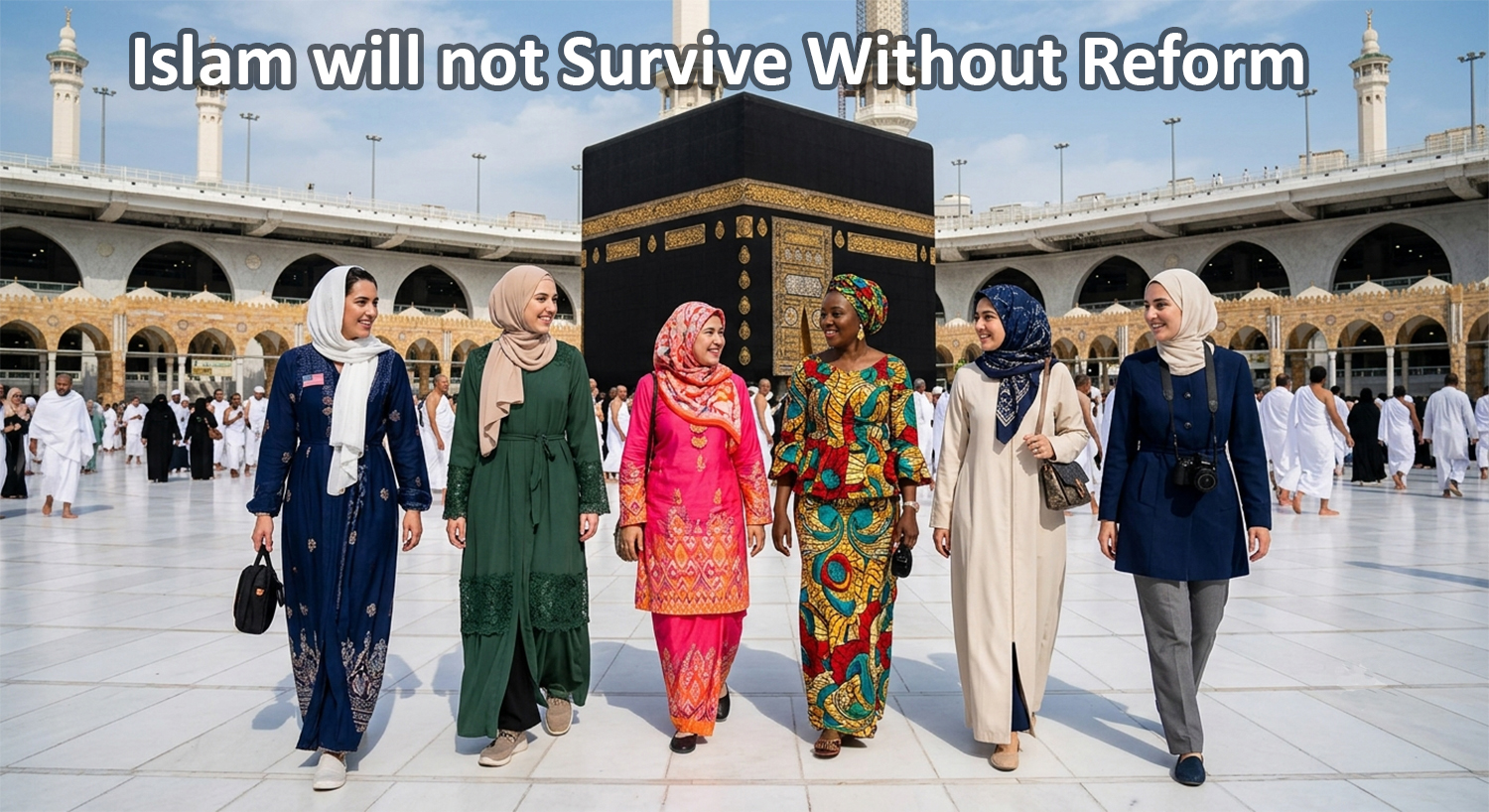
Islam Needs a Massive Reform
Islam and the Qur’an must go through reform, otherwise Islam will be pushed aside
Historically, Islamic jurisprudence or classical fiqh developed within a specific social and political context, which stands in sharp conflict with the pluralistic and democratic values of the modern era. Many courageous Muslim intellectuals of the twentieth and twenty‑first centuries have tried to understand the Qur’an’s message through its historical and linguistic context. For example, Egypt’s renowned intellectual Nasr Hamid Abu Zayd argued that the Qur’an was revealed within a particular historical and linguistic setting, and therefore its legal rulings require modern reinterpretation. As a consequence, he was declared a “murtad” (apostate), and the court forcibly annulled his marriage to his wife, forcing him to leave the country.
Similarly, Sudan’s revolutionary thinker Mahmoud Muhammad Taha proposed a bold theory distinguishing between the eternal humanistic and spiritual messages of the Meccan surahs and the temporary legal rulings of the Medinan surahs. As the price for this, in 1985 Sudan’s then‑extremist regime sentenced him to death on charges of treason and blasphemy. This brutal history demonstrates how dangerous the pursuit of free thought and institutional reform is in the Islamic world.
The foundation of the current global order is the 1948 United Nations Universal Declaration of Human Rights (UDHR), which guarantees equal rights to every human being regardless of gender, religion, or race. In contrast, classical fiqh or traditional Islamic law does not grant non‑Muslims (dhimmis) and women equal status to men; rather, it contains provisions such as rules for war captives, slavery, corporal punishment, and strict blasphemy laws — all of which are unacceptable to the conscience of modern, civilized, and peace‑loving people. To bridge the vast gap between this medieval legal framework and modern human rights, a profound religious reform is necessary — yet no strong leadership or institutional structure capable of undertaking such reform exists today in the Muslim world. The constant fear of being killed by extremist groups or conservative social forces has blocked the path to reform. Courageous and modern‑minded leadership like Turkey’s Mustafa Kemal Atatürk, who used state power to suppress extremism, is almost entirely absent in the contemporary Muslim world.
Believing the Qur’an’s spiritual teachings to be eternal truth and simultaneously treating the legal rulings created for a society a thousand years ago as rigid and unchangeable in the modern era — these two things can never be the same. Unfortunately, authoritarian political interests in Muslim countries, the clergy’s desire to preserve their religious monopoly, and the emotional conservatism of the general population have all been exploited to maintain this stagnation. Ruling elites grant concessions to extremists to legitimize their own power, while the clergy incite the masses by portraying any progressive idea as an “attack on religion.” As a result, the path to legal, social, and psychological reform in the Islamic world has become not only dangerous but nearly impossible under current circumstances. Due to this institutional bankruptcy and intellectual stagnation, ordinary Muslim societies are being pushed out of the mainstream of modern global knowledge, science, and thought.
The impact of this internal crisis within Islam is not confined to the borders of the Muslim world; it is contributing to global geopolitical instability, migration crises, threats to everyday human security, and increasing social polarization. For the sake of building a peaceful, progressive, and safe world, Islam must undergo a deep and fundamental reformation that teaches its followers tolerance and pluralism. But if religious extremism, rigid inflexibility, and violence against dissent continue, it will become increasingly difficult for the civilized world to coexist peacefully with this radical form of Islam. Ultimately, in the greater interest of world peace and humanity, Islam must reform itself to suit the needs of the era; otherwise, the modern free world and progressive human society, for the sake of their own survival, will be compelled to maintain an inevitable separation or strict distance from the extremist currents within Islam.
Related Posts

Actresses Shabana, Moushumi, Popy – Religious Sentiment and the Politics of the Public Sphere
In the history of Bangladeshi cinema, names like Shabana, Moushumi and Popy mark important chapters.Read More
নায়িকা শাবানা, মৌসুমী, পপি – ধর্মানুভূতি এবং জনপরিসরের রাজনীতি
বাংলাদেশের চলচ্চিত্র ইতিহাসে শাবানা, মৌসুমী কিংবা পপির মতো নাম গুরুত্বপূর্ণ অধ্যায়। তারা আশি, নব্বই ওRead More
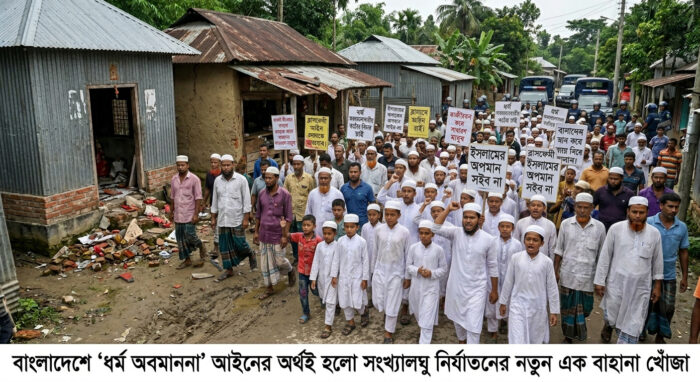
In Bangladesh, the very meaning of the “blasphemy” law is to find a new pretext for persecuting minorities
The attack on the house, shop, and temple of Deepto Roy in Tahirpur, Sunamganj isRead More
Comments are Closed