
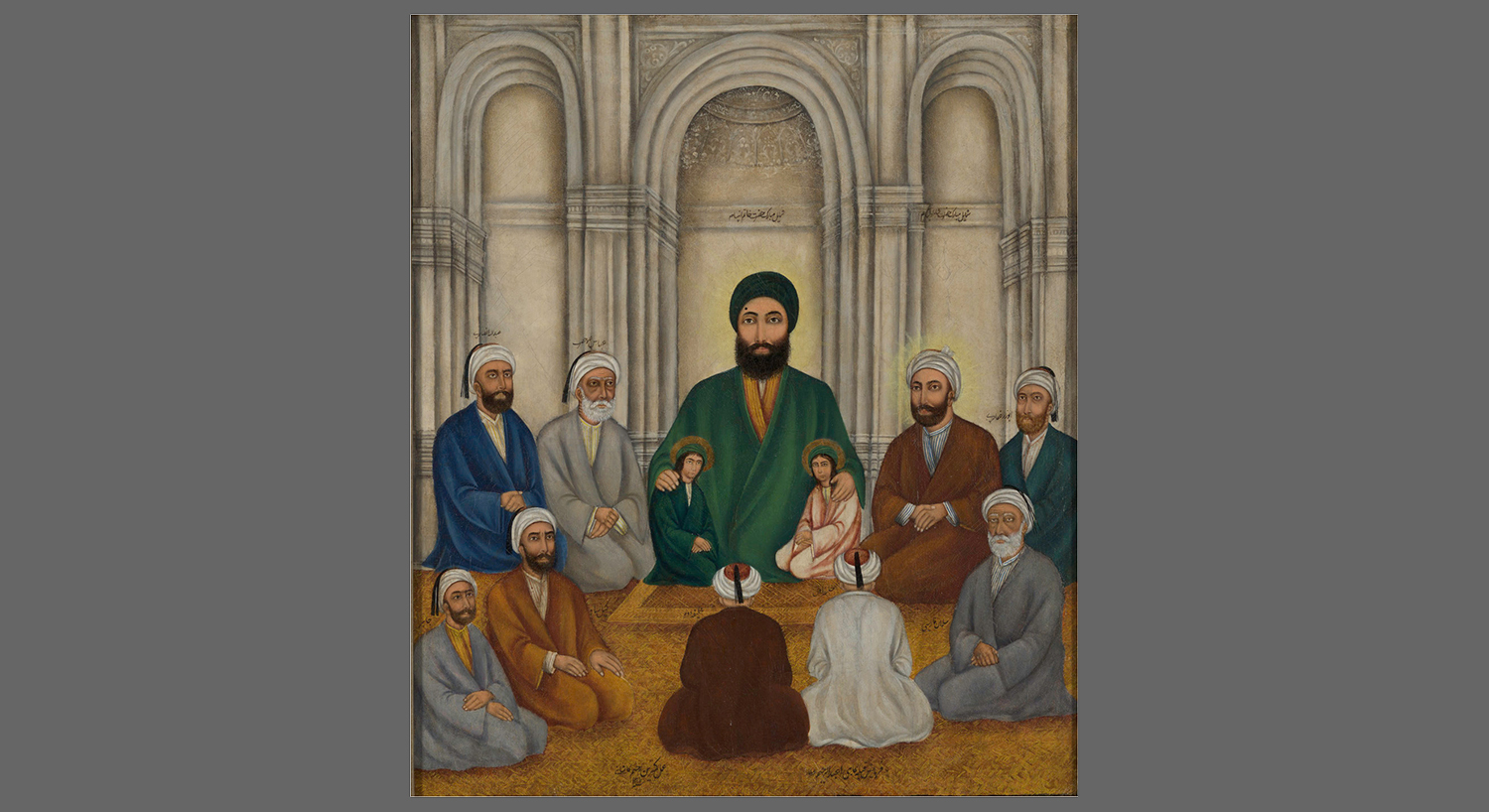
A False Claim!
Is Prophet Muhammad the greatest human of all time?
Some devout individuals claim that renowned non-Muslim scholars have written in their books that Muhammad was the greatest and most truthful man of all time. If such claims are true, then please specify the exact book title and the name of the author. Also mention the page number and the context in which this statement was made. Only then can a rational discussion take place. Blindly believing whatever is said in religious sermons without verification is not reasonable. Whether it’s Ahmadullah, Abbasi, Azhari, or Zakir Naik on television – whoever makes a claim must provide evidence. No assertion is acceptable without logic and factual support.
In Islamic history, it is seen that when Prophet Muhammad was politically and socially weak, he tolerated opposition and criticism, and at one point was compelled to leave his birthplace Mecca and migrate to Medina. However, later when he gained political and military power, he returned to Mecca as a victor and took a strict stance against his opponents. Many historical sources indicate that during that time, criticism or mockery against him was met with severe punishment. In this context, certain Islamic traditions and jurisprudence discuss “Shatime Rasul” – the punishment for insulting the Prophet – where death penalty is prescribed for criticism. The name of poet Imrul Kayes comes up in this discussion, who, according to some Islamic sources, was sentenced to death for criticizing Prophet Muhammad. Here, a significant distinction can be observed: according to Islamic belief, if someone criticizes Allah and then repents, they may be forgiven. But in the case of criticizing Muhammad, there is no forgiveness – Islam commands that such a person be killed. This ruling has been used by some extremist groups even today to justify their actions. Many thinkers and researchers have raised questions about this double standard, and it demands reconsideration in light of religious freedom, freedom of expression, and ethical principles.
Analyzing the biography of Prophet Muhammad reveals many behaviors and decisions that are questionable from the perspective of human values. In fact, an ordinary morally upright person today may be considered more humane and just than him in many respects. Various aspects of his life – such as vindictiveness, contradictory decisions, use of revelations for personal benefit, polygamy, child marriage, sexual relations with minors, and unscientific statements – are all found in readings of the Qur’an, Hadith, Sirah, and Tafsir. Notably, a comment by Ayesha is found in Hadith, where she mocks the Prophet’s method of selecting revelations – saying that whatever was needed at the time, that’s the revelation that came. This suggests that revelations were often aligned with personal needs.
There is no neutral or external historical documentation about Muhammad’s life. Surrounding royal courts, and even the advanced Greek philosophers of that era, left no significant records about him. Yet within Muslim society, he is portrayed as the greatest and most exemplary man of all time. In this context, our only source of knowledge about Muhammad’s life is his own narrative – preserved in the Qur’an, Hadith, Sirah, and Tafsir. And from these sources emerge many aspects that are worthy of criticism and demand reevaluation in light of human values.
Michael H. Hart, in his famous book The 100: A Ranking of the Most Influential Persons in History, compiled a list of the 100 most influential people in history, placing Muhammad at the top. This is a list of “influential” figures – not of the “greatest” or “morally superior” individuals. However, in the Bengali translation, the book’s title was changed to The 100 Greatest Thinkers of the World, which contradicts the original intent and is misleading. Based on this mistranslated title, many devout individuals cite the book as if it ranks Muhammad as the greatest moral figure. But “influential” simply means someone who had a major impact on history – whether that impact was positive or negative. For example, if someone says Sheikh Hasina is a highly influential figure in Bangladesh, does that automatically mean she is the greatest moral and ideal person? This confusion must be addressed. Being influential does not equate to being morally superior. History is full of individuals who had immense influence, yet whose morality and humanity are questionable. Therefore, using Michael Hart’s list as proof of Muhammad’s moral greatness is a flawed argument
Let’s briefly examine what qualities were present in Muhammad, whom believers call the greatest, that would place him below a very ordinary good person. All of these can be proven from the Quran, Hadith, Tarzma, and Sirat. They are available at the link below.
You claim that the Prophet of Islam, Muhammad, is “the greatest man of all time” – but by what standard? Humanity, morality, rationality, or historical evidence? To answer this question, one must go beyond the words of preachers in public gatherings, or the promotional content on TV, Facebook, YouTube, TikTok, Twitter, and websites. Instead, you must read the original religious texts yourself. Not secondary commentaries or others’ interpretations – read the Qur’an, Hadith, Sirah, Tafsir, and translations directly. Examine what is said, what happened, and what decisions were made. If you are a person of conscience, you will find yourself pausing repeatedly – your own moral compass will raise questions, create doubt, and perhaps compel you to rethink. Claims of greatness cannot rest solely on emotion; they must be grounded in evidence, logic, and ethical analysis. So read first, understand, and then decide – does your conscience truly affirm that greatness?
I am leaving a link to an article for you. The article provides references directly from the Quran, Hadith, and Sirat. I hope you will read it and then point out any mistakes line by line, please, without making sweeping statements.
Related Posts
Is Bangladesh, with 90% Muslims, better than the so‑called free‑sex countries?
Bangu male believers think — and even some women — that the Western world meansRead More
তথাকথিত ফ্রি সেক্সের দেশের চেয়ে ৯০% মুসলমানের বাংলাদেশ কি ভাল?
বাঙ্গু পুরুষ মুমিনদের ধারনা, এমনকি কিছু নারীরও যে – পশ্চিমা দুনিয়া মানে ফ্রি সেক্স, সেখানেRead More
People’s Arabic names are not the property of Allah or Muhammad. Stop demanding that others change their names
One fine morning you log into Facebook and see that everyone—from Mokhles, the tea sellerRead More
Comments are Closed