
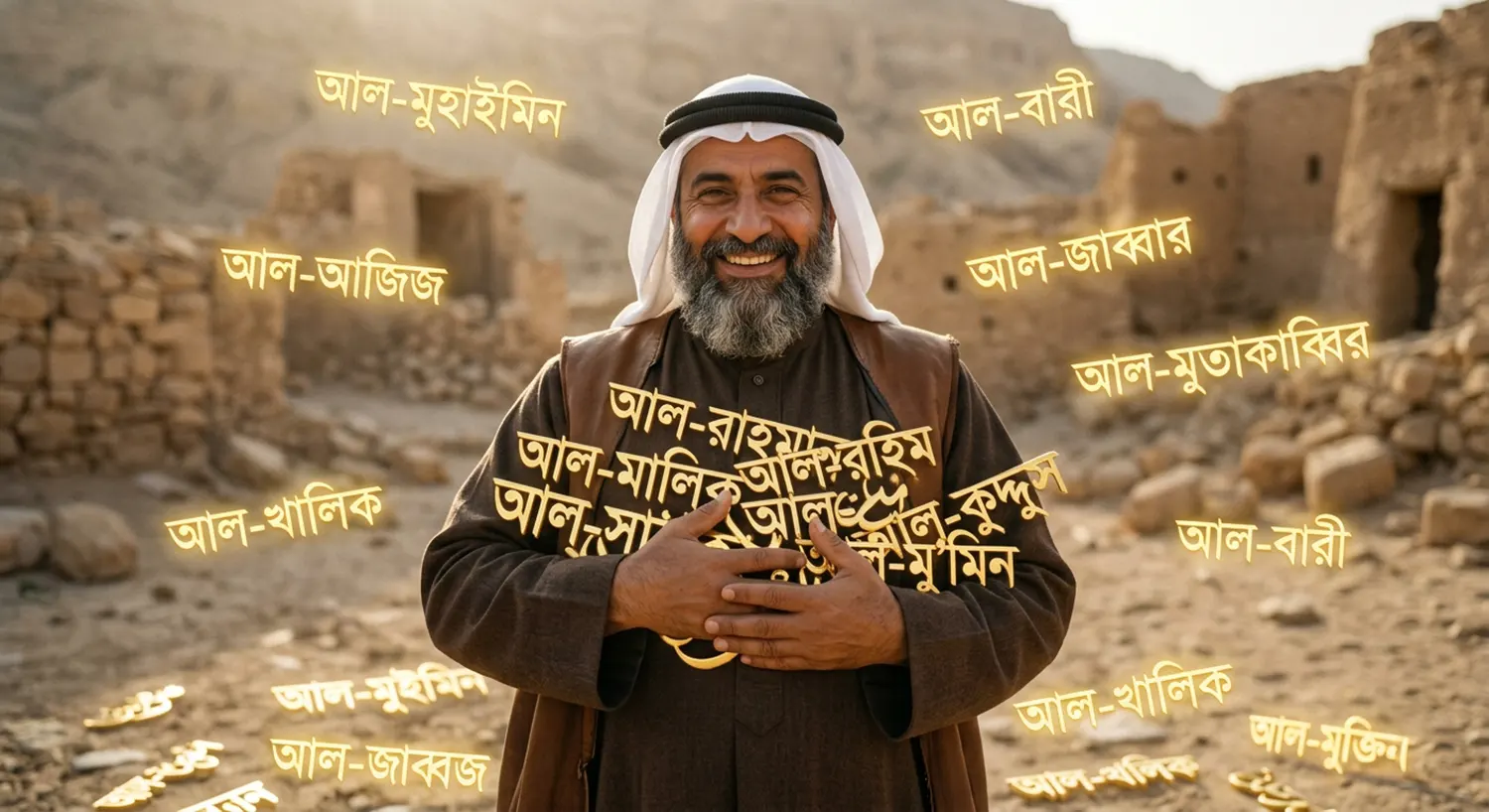
Is Arabic the Property of Islam?
People’s Arabic names are not the property of Allah or Muhammad. Stop demanding that others change their names
One fine morning you log into Facebook and see that everyone—from Mokhles, the tea seller of Bhurungamari, to the top BUET engineer with a degree—are addressing you with rude familiarity, hurling obscene insults at your parents and ordering you to change the name your parents gave you. Your parents, devoted to Islam, followed tradition and gave you a name using an Arabic word. Apparently that name can no longer be kept. Since you have criticized Islam, you are supposedly a Hindu now, so why should you have a “Muslim” name? Scratching your head, you wonder to yourself—someone doesn’t become a Hindu just by criticizing Islam; if they lack even this basic sense, is there any point arguing with them? Then you do a bit more research and find that fourteen hundred years ago, a man born among famine-stricken, obscure, harsh Arab Bedouins—a child-loving desert bandit leader named Muhammad—claimed that all the praiseworthy Arabic names that had been in use for thousands of years belonged to him and his assistant, Allah.
I have written about this many times over the past 15 years. A person’s name is not the property of any religion. There is no such thing as a separate category of “Islamic names”; at best, one can call them Arabic names. The Arabic language was born long before the arrival of Islam. The beautiful, praiseworthy names that were in use at that time were adopted by Islam and claimed as Allah’s names. Yet originally, these were names of various pagan gods and goddesses of that region. Muhammad’s own name was given by his parents and grandfather, and all of them were pagans. Muhammad himself declared that his parents would go to hell because they were pagans. So all the names of Muhammad’s parents, grandfather, and forefathers were names from the pagan era. Umar, Abu Bakr, Uthman, Ali—none of them changed the names they had from their pagan days.
Then why do ignorant believing brothers tell us to change our names? Did we choose our own names? If we had, surely we wouldn’t have picked a name already seized as someone else’s property. People of different religions in the Arab region also have similar names. Iraq’s former foreign minister under President Saddam Hussein, Tariq Aziz, was a Christian. There are countless names like Rebecca, Yusuf, Zulekha that are found among Muslims, Christians, and Jews alike. If Islam claims this heritage of Semitic languages, does that automatically make it Muhammad’s property? Did Muhammad’s father or Allah create the Semitic or Arabic language?
A brief history of the Arabic language
Arabic is a Semitic language whose roots lie in the same language family as Hebrew, Aramaic, Akkadian, and Phoenician. Evidence from ancient North Arabian scripts and inscriptions shows that Arabic and its precursor forms were in use many centuries, even millennia, before the advent of Islam. In the pre-Islamic era (known as the Jahiliyyah period), the Arabian Peninsula was home to many tribes, faiths, and cultures—pagan Arabs, Jewish tribes (such as Banu Qaynuqa, Banu Nadir, Banu Qurayza in Medina), Christian Arabs (people of Najran, the Ghassanid and Lakhmid kingdoms), and Zoroastrians. All these communities spoke Arabic or closely related Semitic languages, composed poetry, and named their children using words from those languages. In other words, Arabic is not the creation of any single religion—it is a regional and historical language that, long before Islam, served as a common medium of communication for people of many faiths.
Shared names among people of different religions
In Arab and Middle Eastern regions, many names are used by Muslims, Christians, Jews, Baháʼís, and Yazidis alike, because these names are not inherently religious but part of linguistic and cultural tradition. Some examples:
- Arabic names common to both Muslims and Christians: Yusuf/Yousuf (Joseph), Ibrahim, Yunus, Dawud, Sulayman, Maryam/Mariam, Ilyas, Idris—these are originally Biblical/Torah names that Arabic-speaking Jewish and Christian communities used long before Muslims. Arab Christians still call George “Jirjis”, Michael “Mikhail”, and Peter “Butrus”.
- Arab Jewish names: Yusuf, Dawud, Sarah, Rachel, Ishaq—these exist in almost identical forms in both Hebrew and Arabic.
- Baháʼí names: Names like Baha’u’llah, ‘Abdu’l-Baha, Shoghi are also derived mainly from Arabic-Persian praiseworthy words, just as similar words appear in Muslim names (Abdul-, Nur, Rahman, etc.).
- Yazidi names: Although Yazidis are part of Kurdish-Iranian culture, many of their names come from Arabic or Semitic roots, while others derive from local Kurdish tradition.
- Neutral praiseworthy names: Rashid, Amin, Karim, Salih, Nadia, Layla—these are literally praiseworthy Arabic words (meaning honest, trustworthy, generous, etc.) that were used in the pre-Islamic era and are still used in a non-religious way today.
In short
A name is not the owned property of any single religion—it is an inheritance of language and culture. Arabic is an ancient Semitic language that people of various faiths used long before Islam, and even today Muslims, Christians, Jews, Baháʼís, and Yazidis all share many identical or similar names. Claiming that any particular name “belongs only to Muslims” is baseless from both linguistic and historical perspectives.
Is becoming a believer synonymous with choosing to remain ignorant and stubborn?
Related Posts
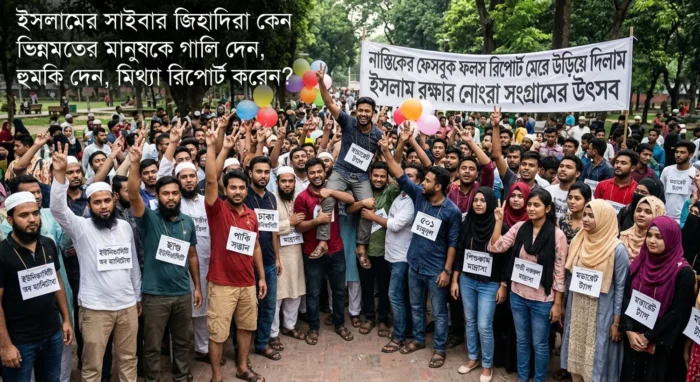
Why do Islamist cyber‑jihadis insult, threaten, and file false reports against people with different opinions?
Maulana Azhari once advised Islamists that sharing his Facebook posts is also an Islamic act;Read More
ইসলামের সাইবার জিহাদিরা কেন ভিন্নমতের মানুষকে গালি দেন, হুমকি দেন, মিথ্যা রিপোর্ট করেন?
মাওলানা আজহারি একবার ইসলামিস্টদের উপদেশ দিয়ে বলেছিলেন – তার ফেসবুক পোস্ট শেয়ার করাও ইসলামের কাজ;Read More
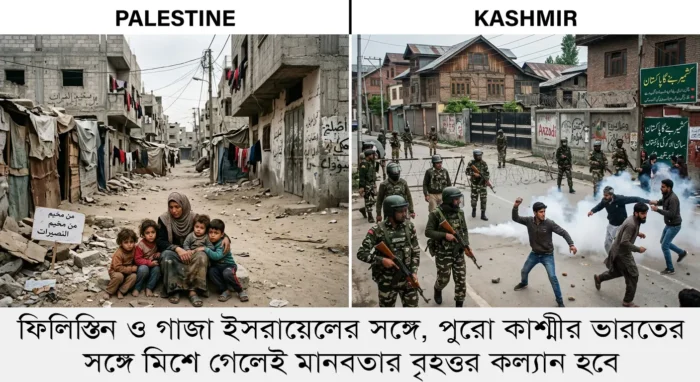
Palestine and Gaza merging with Israel, and all of Kashmir merging with India, would lead to greater humanitarian benefit
In modern politics, independence is often considered an almost inviolable value, where leaders aim toRead More
Comments are Closed