
Insults in Islam
Why Is the Word “Bastard” So Popular Among Islamists?
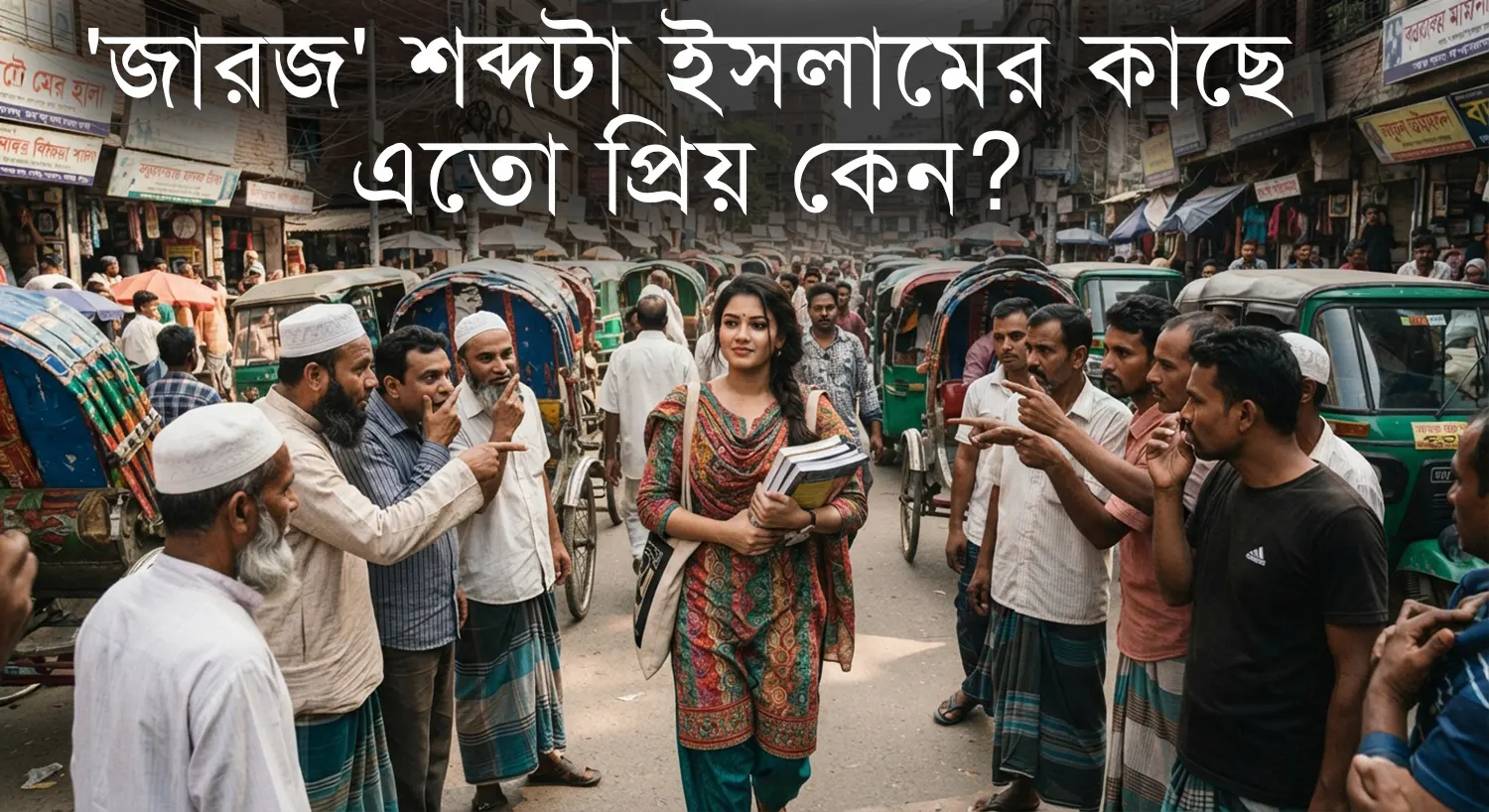
You criticize Islam, expose the misdeeds attributed to the Prophet Muhammad, unveil what you see as the inhumane nature of Allah, and yet have never heard the word “bastard” used against you by Islamists? That would be surprising. Even if your parents were legally married, many Islamists will still hurl this insult at you. It is not only ordinary Islamists; many religious speakers also use it frequently. They call you and me by this word as an insult. We may choose to ignore it, because the circumstances of a child’s birth cannot reasonably be an insult. But the sad part is what this reveals about their worldview: they demean and despise a human child.
A person’s birth circumstances have no connection to their talent, morality, or contribution to humanity. The short list below illustrates that point. The purpose is simply to make the issue clear. Human dignity does not depend on achievement. People who never became famous, who lived ordinary lives, but whose parents were not married are equally deserving of full respect.
- Leonardo da Vinci (artist and scientist): The son of a notary and a peasant woman who were not married.
- Alexander Hamilton (one of the Founding Fathers of the United States and its first Secretary of the Treasury): Born to unmarried parents in the Caribbean.
- Steve Jobs (founder of Apple): The child of two unmarried students who later gave him up for adoption.
- Larry Ellison (founder of Oracle): Born to an unmarried mother and also adopted.
- William the Conqueror (the Norman ruler who conquered England): The illegitimate son of the Duke of Normandy, who later became King of England. He was also known in history as “William the Bastard.”
- Erasmus (renowned Renaissance humanist thinker): The illegitimate son of a priest.
- Eric Clapton (legendary guitarist): The child of an unmarried teenage mother.
- Sarah Bernhardt (world-famous French actress): Born to an unmarried mother.
- Eva Perón (popular Argentine leader): Born outside of marriage.
- Jean le Rond d’Alembert (French mathematician and philosopher): Born to unmarried parents and abandoned shortly after birth.
Do not be surprised if you find many Islamists studying in Europe on Erasmus scholarships among those who use such insults. At that point, you may feel that Islam made them Islamists, but failed to make them humane.
No person chooses the family or relationship into which they are born. At birth, a child is incapable of doing either good or evil. The child simply enters the world, with an entire life ahead of them. Yet this basic truth is forgotten when the word “bastard” becomes one of the worst insults in society, especially among Islamists. Even more telling is that the insult is most often directed at critics of Islam. This can be observed not only in Bangladesh but also among some Islamists in many other parts of the world. Unable to respond to disagreement with reasoned arguments, they attack a person’s parents and their relationship, regardless of whether the accusation has any basis in reality.
The logic behind this insult is self-defeating. Those who believe Allah is the creator and controller of everything also believe that every life comes into existence according to His will and that destiny is preordained. If so, how can the marital status of a child’s parents make that child less legitimate or less worthy of respect? That child, too, is a creation of the same God. To demean that child is, in a sense, to demean His creation. A more fundamental question is this: what kind of justice places responsibility for the actions of parents upon their child? No religion or moral philosophy teaches that one person should be punished for the deeds of another. Yet that is exactly what this insult does. In attempting to hurt a critic, it insults millions of innocent people around the world, especially children and adults born outside marriage. Many who use the insult likely never think about this. In a moment of anger, they use language whose real victims are not their opponents in an argument, but countless innocent human beings.
One measure of civilization’s progress is how little value people place on inherited identities when judging another person’s worth. Every human child, regardless of the circumstances of birth, is legitimate and welcome. Modern human rights principles affirm precisely this idea. The United Nations Convention on the Rights of the Child makes clear that no child should face discrimination because of the circumstances of their birth. Anyone who attacks another person because of their birth identity stands outside those values of civilization.
Now we come to the central debate: criticism of religion and freedom of expression. Modern democratic societies are founded on the understanding that ideas and beliefs can be questioned, and that respecting people does not require placing their beliefs beyond criticism. Human beings possess dignity; ideologies do not possess rights to dignity. Questioning a religion, religious text, prophet, or god through reason, criticizing them sharply, or even mocking them are all part of freedom of expression. The First Amendment of the United States Constitution protects even speech that is offensive in religious matters. The United Nations Human Rights Committee has likewise stated that punishing mere displays of disrespect toward religion is incompatible with international human rights law. A criticism may contain errors. Its language may be harsh. The appropriate response is counterargument, evidence, or simply ignoring it. It is not imprisonment or execution, and mob violence and murder are certainly signs of an uncivilized society. A greater danger than erroneous speech is the existence of a power that decides what can and cannot be said.
Real-world experience shows that blasphemy laws often become tools for exercising precisely such power. Roughly one-quarter of the world’s countries have some form of blasphemy legislation. According to research by Pew, 79 countries have such laws, and seven prescribe the death penalty for blasphemy. Pakistan is among the most frequently cited examples. Although the state has not carried out executions under these laws despite issuing death sentences, accusations alone have repeatedly led to mob violence, extrajudicial killings, and lengthy pretrial detention. Bangladesh too has witnessed numerous cases of lynching, death by burning, and machete attacks linked to such accusations. Government officials themselves have acknowledged that many of these incidents or cases were fabricated. The victims are often members of minority communities or targets of personal grudges. Citing U.S. State Department human rights reports, one source notes that although most prisoners under such laws are Muslims, religious minorities suffer disproportionately. In practice, these laws frequently become tools for seizing power, land, business advantages, or settling personal scores under the banner of defending faith. Once the cry of “blasphemy” is raised, an enraged crowd rarely waits for courts, evidence, or due process. People in Bangladesh have witnessed such events repeatedly.
It is here that a deeper connection becomes visible between birth-based insults and killings carried out in the name of blasphemy. Both emerge from the same mindset, one that regards dissenters as undeserving of respect or even of life itself. The person who calls a critic a “bastard” attempts to push them outside the boundaries of human dignity through language. The person who kills them carries the same exclusion to its ultimate conclusion. The first ends with an insult; the second ends in bloodshed.
Islam contains rulings prescribing death for apostates and for those who insult the Prophet. It is true that many classical schools of Islamic jurisprudence endorsed such positions. The question, however, is whether those views can withstand the universal human rights standards of the twenty-first century. The historical or religious origin of a punishment does not automatically make it just. Slavery, too, once enjoyed both religious and legal sanction. Civilization advanced precisely when people declared that practices accepted in the past could still be wrong. Freedom of belief includes the freedom to abandon a belief, to question it, and even to reject it entirely. A religion that can retain its followers only through fear may appear to suffer from a lack of confidence in its own truth.
Ultimately, the claim is simple. Every human being, regardless of how they were born, deserves respect. Every person has the right to question, doubt, and criticize. And no one should be killed or threatened with death because of their views or beliefs in a civilized society. To those who cannot accept this principle, our appeal is straightforward: respond with arguments, not insults. Because if a belief can withstand scrutiny, reason will prevail. And if it cannot, neither insults nor swords can save it.
Related Posts
ইসলামের কাছে ‘জারজ’ শব্দটি এতো প্রিয় কেন?
আপনি ইসলামের সমালোচনা করেন, নবী মুহাম্মদের অপকর্মের ফিরিস্তি দেখান, আল্লাহর অমানবিক রুপ উন্মোচন করেন আরRead More

Actresses Shabana, Moushumi, Popy – Religious Sentiment and the Politics of the Public Sphere
In the history of Bangladeshi cinema, names like Shabana, Moushumi and Popy mark important chapters.Read More
নায়িকা শাবানা, মৌসুমী, পপি – ধর্মানুভূতি এবং জনপরিসরের রাজনীতি
বাংলাদেশের চলচ্চিত্র ইতিহাসে শাবানা, মৌসুমী কিংবা পপির মতো নাম গুরুত্বপূর্ণ অধ্যায়। তারা আশি, নব্বই ওRead More
Comments are Closed