
Hajj Business of Islam
The profitable Hajj business of Saudi Arabia in the name of Islam!
This Arab prince is not scattering pieces of paper over this singer’s head—those are money. You know how much one unit of their currency equals in ours. Just look where that money is being thrown and stuffed. You may not realize—your money is in there too.
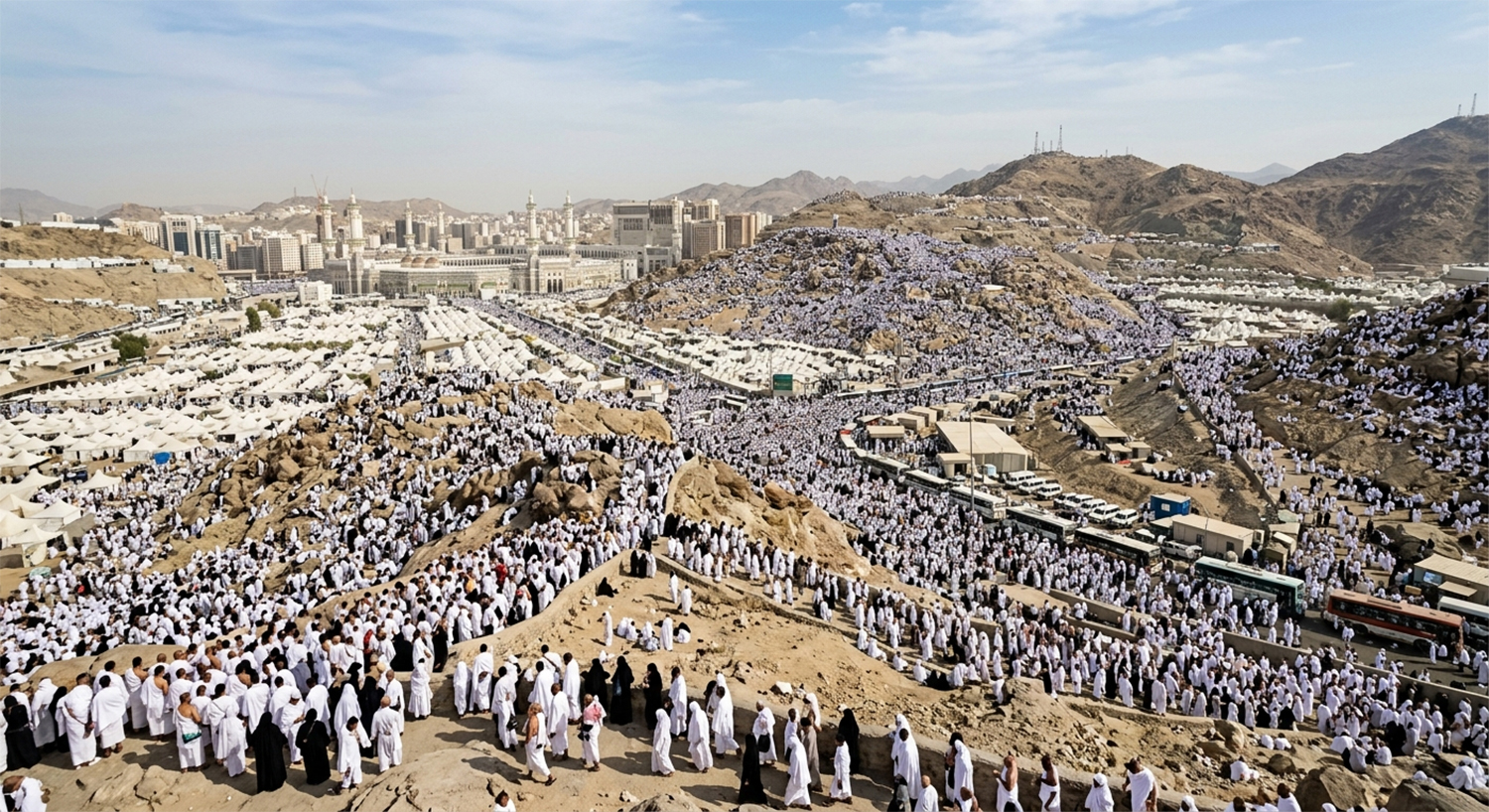
Right now, the millions of people circling Mecca in the intense heat, throwing stones at a long pillar to symbolically strike the devil, kissing a stone believed to have fallen from a meteorite, running frantically from one end of barren rocky hills to the other, raising their hands to the sky and crying out in prayer—your money is also there. Those who save their entire lives, deprive themselves and their children of many necessities, and then spend it all traveling to Saudi Arabia in the name of Hajj and Umrah—this is their money too.
Before the discovery of النفط (oil), their primary source of income was this Hajj business. In Saudi Arabia’s economy, Hajj and Umrah (religious tourism) play an extremely important role. After النفط, it is the country’s second-largest source of income. Every year, Saudi Arabia earns on average between 12 to 20 billion US dollars in revenue from Hajj and Umrah. According to Vision 2030 goals, there are plans to increase the annual number of Umrah pilgrims to 30 million and boost revenue to 150 billion dollars. Around 25% to 30% of business and private-sector employment in the Mecca and Medina regions depends entirely on the Hajj and Umrah seasons.
According to Islamic claims, Adam, Abraham, Moses, and Jesus (Isa) were all Muslims and their religion was Islam—yet their religions did not include Hajj, they did not even know Mecca, and nothing about their practices centered around Mecca, a city of ancient Bedouin nomads. If Abraham had built the Kaaba, then it would have been a Jewish pilgrimage site. They too would perform Hajj. Yet from thousands of years of Semitic religious sources, there is no mention of the Kaaba or Hajj.
Mecca and Hajj were merely strategies to achieve economic prosperity in a harsh, famine-stricken desert—and that strategy continues today. It was also a way to establish a power center for Prophet Muhammad and define loyalty to him. Saudi Arabia earns billions of dollars in foreign currency every year from Hajj. Millions of people there make their livelihood from this Hajj business. Workers from countries like Bangladesh endure hardship abroad and bring foreign currency home, yet a large portion of that money is again spent on Hajj by elderly people nearing the end of their lives. Due to the social prestige of adding “Haji” before one’s name, significant economic loss occurs for the country.
Any part of religion that requires money is essentially a business. Religion itself is a patriarchal product, and its capitalist dimension is this monetized practice. This has been carefully established over a long time. The Prophet of Islam destroyed the idols preserved in Mecca and abandoned his ancestral religion, but he did not abandon the practice of Hajj. Because this Hajj had long been tied to commerce. Even today, Saudi Arabia does not share the management of Hajj with other Muslim countries because it generates revenue—despite Hajj being a matter for all Muslims worldwide. This is also one of the reasons for conflict with Iran, which, as a powerful stakeholder in Islam, seeks a share in managing Hajj.
A famous American reality TV personality, Kim Kardashian, was paid 1 million dollars by a Saudi prince just to appear briefly at a birthday party in the evening—that’s 12 crore taka. Saudi Arabia has donated slightly more than that for Rohingya refugees from Bangladesh—about one and a half times as much, roughly 1.5 million dollars or 18 crore taka. Instead of checking whether people in your own country or neighbors are suffering financially, continue enabling Saudi Arabia to expand its Hajj business further! Go again next year, or send more people! It is needed so that figures like Kim Kardashian can attend the parties of Saudi princes.
Related Posts

Actresses Shabana, Moushumi, Popy – Religious Sentiment and the Politics of the Public Sphere
In the history of Bangladeshi cinema, names like Shabana, Moushumi and Popy mark important chapters.Read More
নায়িকা শাবানা, মৌসুমী, পপি – ধর্মানুভূতি এবং জনপরিসরের রাজনীতি
বাংলাদেশের চলচ্চিত্র ইতিহাসে শাবানা, মৌসুমী কিংবা পপির মতো নাম গুরুত্বপূর্ণ অধ্যায়। তারা আশি, নব্বই ওRead More
In Bangladesh, the very meaning of the “blasphemy” law is to find a new pretext for persecuting minorities
The attack on the house, shop, and temple of Deepto Roy in Tahirpur, Sunamganj isRead More
Comments are Closed