
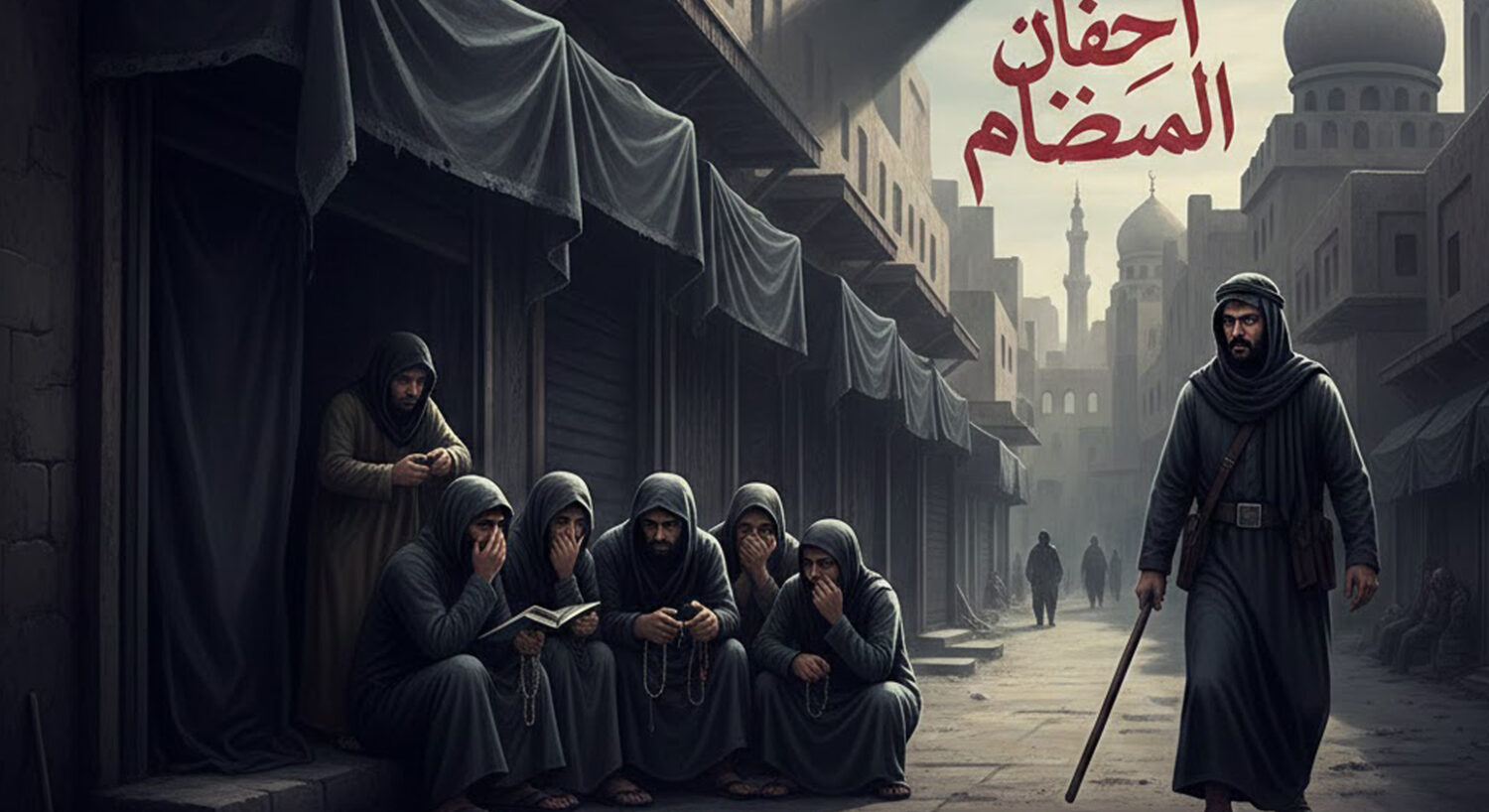
Coexistence with Islamic Ideology!
Is peaceful coexistence with Islamic ideology possible in a safe world?
Until Allah’s rule is established in every household on earth (until the Day of Judgment), fighting (kill) must continue—this is the teaching and command of Islam.
In this time of 2026, when science, human rights, reason, and individual freedom have become the core pillars of human civilization, serious questions arise about coexistence with an ancient ideology. Some fundamental teachings of Islam—especially jihad, qitāl, jizya, and the institution of slavery—direct struggle against non-Muslims with the goal of establishing Islamic rule in every household on earth. This is not an extremist interpretation, but a direct reference from the Qur’an, Hadith, and classical tafsir. Those who criticize this ideology are thinking about preserving a safe, secular, and humane society for future generations. Not all Muslims are personally bad people, but as an ideology, Islam’s universal claim is in conflict with modern humanity.
In Qur’an Surah Al-Anfal, verse 39, it is said: “Fight them until there is no more fitna and the religion is entirely for Allah.” In Tafsir Ibn Kathir and other classical works, ‘fitna’ here is interpreted as shirk or non-Muslim rule. That is, warfare will continue until Islamic rule is established on earth. Surah At-Tawbah, verse 29 is even clearer: “Fight those who do not believe in Allah or the Last Day… from among the People of the Book, until they pay the jizya with their own hands and are humbled (صاغرون).” The word ‘صاغرون’ indicates humiliating subjugation. Classical scholars such as Ibn Kathir say that jizya is a symbol of the humiliation and inferior status of the unbelievers. It is not just a regular tax, but an acknowledgment of Islamic dominance.
The Hadith literature also makes this instruction explicit. In Sahih Bukhari and Tirmidhi it is narrated that the Prophet said: “I have been commanded to fight the people until they say ‘La ilaha illallah.’” Another hadith describes Paradise as being placed “under the shade of swords.” These rulings are valid until the Day of Judgment—as mentioned in many fiqh books (such as Al-Hidaya and Fatawa Alamgiri). Offensive jihad is the responsibility of the Islamic state once it gains sufficient power. At present, in many Muslim countries or communities this is suspended due to lack of power. But with population growth, migration, and increasing political influence, many scholars and preachers admit that the likelihood of this ideology being revived is significant.
High birth rates are part of this strategy. Population projections in Europe, America, India, and Australia show that due to high fertility rates (around 2.6) and immigration, the proportion of Muslims in France, the UK, and Germany will increase significantly by 2050. Some Islamic preachers openly say that France or the UK will come under the shade of Sharia. In Bangladesh and Pakistan, Sharia-oriented public sentiment is already strong. This is a strategy of establishing dominance “gradually” through democratic means. But when a majority is achieved, what will be the condition of non-Muslim minorities? History (Pakistan, Bangladesh, the decline of Christian and Hindu populations in the Middle East) provides the answer.
Islam did not abolish slavery; rather, it permitted sexual relations with war captives described as “those whom your right hands possess” (ma malakat aymanukum) (Surah An-Nisa 24, 23:6). Hadiths (Muslim, Tirmidhi) mention that after the Battle of Awtas, verses were revealed permitting relations with captive women. Classical scholars (Shafi‘i and Hanafi schools) state that women captured in jihad are part of the spoils of war, over whom the owner has sexual rights—some interpret that consent is not required. Many modern scholars also admit that in a future “legitimate jihad,” this could again become applicable. This is a direct violation of human rights—reducing women to sexual objects.
Is coexistence possible in modern civilized society? On a personal level, many Muslims are peace-loving, practice their faith, and live modern lives. But as an ideology, Islam’s universalism and the demand of Sharia (which makes non-Muslims second-class citizens) conflict with secular democracy, equal rights, and freedom of speech. The verse “There is no compulsion in religion” (2:256) is considered abrogated (mansukh) by later verses (such as Tawbah 5, 29) by many tafsir scholars. In an Islamic state, the religious freedom of non-Muslims is limited, and criticism is punishable (blasphemy laws).
Those who say “criticizing Islam is Islamophobia” should think: if no one speaks up, in what environment will future generations grow up? In Europe, no-go zones, Sharia patrols, honor killings, opposition to LGBT people, and incidents of terrorism are increasing. In India, love jihad; in Bangladesh, persecution of minorities—these are not isolated incidents, but outcomes of an ideology. When Muslims are a minority, they demand rights; when they become a majority, they impose Sharia. This is seen as taqiyya or a gradual strategy of dominance.
Why is Islam an enemy of humanity? Because its core philosophy is the universality of Allah’s rule, where non-Muslims must either convert, or pay jizya in humiliation, or face war. Slavery, the subordinate status of women (in inheritance, testimony, polygamy), punishment for apostasy—these were common in 7th-century Arabia, but are unacceptable in the modern age. For rational, humanistic people, blind coexistence with such an ideology is impossible, because it denies reason, criticism, and individual freedom.
To build a beautiful, safe, and knowledge-driven society for future generations, criticism of Islamic ideology is essential. This is not hatred, but a search for truth. If reform-minded Muslims confine these parts of the Qur’an and Hadith to their historical context and accept secular democracy, only then is coexistence possible. But as long as Islam claims to be a “complete way of life” and retains jihadist ideology, there will be no complete safety anywhere.
Criticism is the foundation of free thought. If Islam is true, then it has nothing to fear from criticism. And if it is not, then for the welfare of humanity, its dark sides need to be exposed. We want to leave behind a world for our children where, regardless of religion, people can live freely—without fear of jizya, Sharia, or jihad. That is why speaking out against Islamic ideology is necessary. Standing for truth is not a crime, but a responsibility.
If you want to know the Islamic source references on this topic, you can read the article at this link — https://tinyurl.com/y5y84x9s
Related Posts
Why do Islamist clerics consider Bengali cultural festivals their enemy?
This year, unlike many previous years, the major Hindu religious festival Durga Puja in BangladeshRead More
ইসলামিস্ট মোল্লারা কেন বাঙালিদের আনন্দ উৎসবকে তাদের শত্রু মনে করে?
এবার বাংলাদেশে অন্যবারের তুলনায় বেশ শান্তিপূর্ণ, উৎসবমুখর পরিবেশে হিন্দু ধর্মের বড় ধর্মীয় উৎসব দূর্গাপূজা হয়েRead More
Why do Islamist cyber‑jihadis insult, threaten, and file false reports against people with different opinions?
Maulana Azhari once advised Islamists that sharing his Facebook posts is also an Islamic act;Read More
Comments are Closed