

Bengali Cinema and Olivia
The Evolution of Cinema, the History of Color Motion Pictures, and a Bright Star of Dhallywood: Olivia Gomez
Among the few actresses in Dhallywood who are addressed with deep respect and admiration as “Madam,” one of the most prominent is Olivia Gomez. Olivia is considered one of the most glamorous, fashion-conscious, and powerful actresses of the golden age of Bangladeshi cinema. She is regarded with immense respect and honor in the country’s film industry. From directors and co-stars to ordinary people, everyone addressed her as “Madam,” which was a unique recognition of her elegance and personality.
Olivia Gomez was born on February 16, 1953, in Karachi, Pakistan (her family later moved to Bangladesh). From childhood, she was known for her beauty and stylish appearance. Although she began her career as a model, she entered the film industry in 1972 through the movie ‘Chhondo Hariye Gelo’, directed by S. M. Shafi. Right from the beginning, she won audiences over with her natural acting skills and captivating presence.
The biggest milestone of Olivia’s career was the film ‘The Rain’, directed by S. M. Shafi and released in 1976. The movie became tremendously popular not only in Bangladesh but also internationally. The Olivia-Wasim pairing created a sensation at the box office. The songs of ‘The Rain’ remain memorable even today. In particular, the song “Eka Eka Keno Bhalo Lage Na”, sung by Runa Laila and composed by Anwar Parvez, became an obsession among the youth of that era. Olivia’s effortless expressions, Western fashion sense, and glamour in the song established her as one of the leading actresses of Dhallywood. The songs of the film became so popular that they were dubbed into Urdu and French.
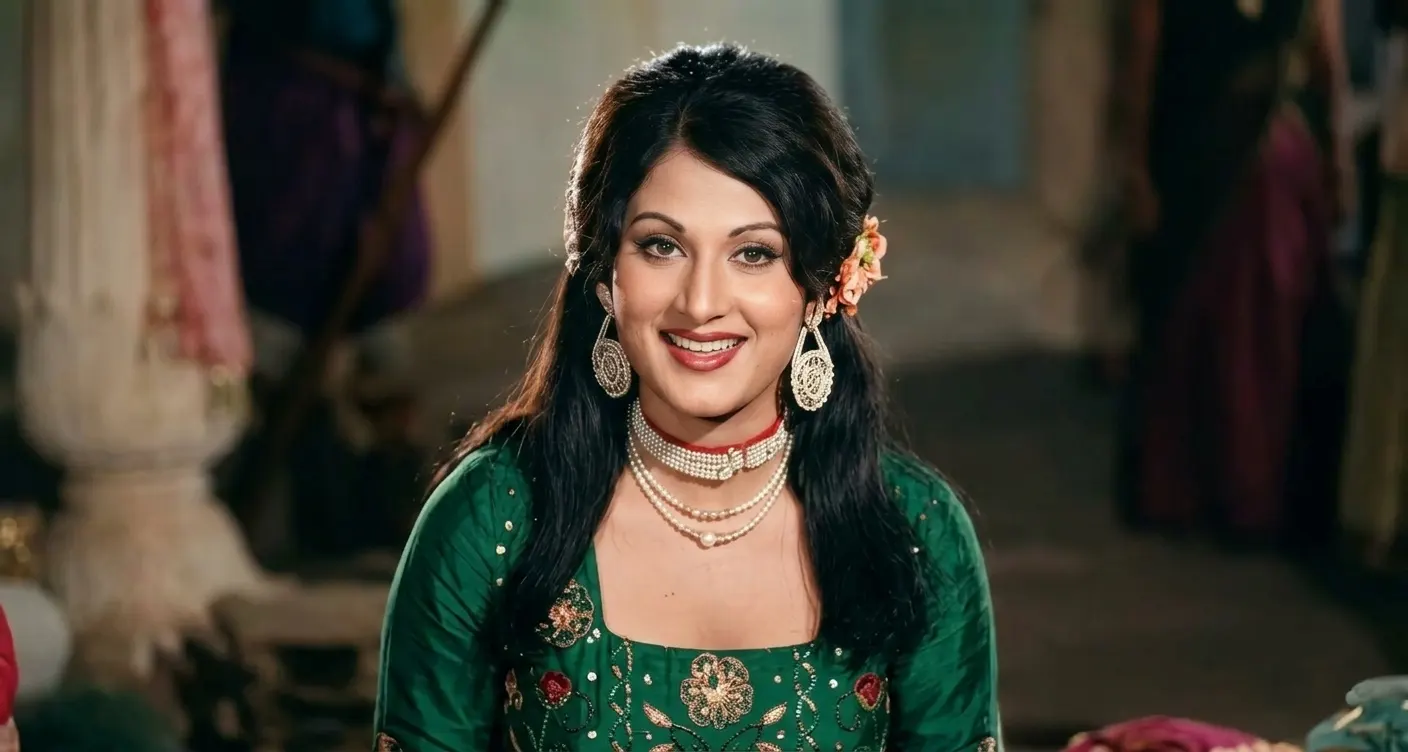
Olivia was not confined only to glamorous roles. She demonstrated equal skill in rural, social, and action-oriented characters. Some of her notable films include:
- ‘Dost Dushman’ (a remake of the famous Hindi film ‘Sholay,’ in which she portrayed Hema Malini’s character)
- ‘Jadur Banshi’
- ‘Bahadur’
- ‘Shrimati 420’
During that era, she introduced a new trend in fashion within Dhallywood. Her hairstyles, choice of clothing, and makeup greatly influenced women of the time. She was truly one of the first genuine fashion icons of Bangladeshi cinema.
Olivia was known for being highly disciplined and professional in the film industry. She was never associated with unnecessary gossip or controversies. For this reason, everyone in the industry addressed her as “Madam.” After the death of her husband, S. M. Shafi, in 1995, she gradually withdrew from the film world. Today, she remains completely out of the public spotlight, living a quiet, spiritual, and peaceful life. However, despite staying away from the screen, her name will forever be written in golden letters in the history of Bangladeshi cinema.
The History of Cinema Technology: The Magical Beginning of Light and Shadow
The history of cinema technology is essentially a remarkable fusion of science and art. This magical journey began in the late nineteenth century.
- Early Era: In the 1890s, Thomas Alva Edison and his assistant William Kennedy Dickson invented a device called the Kinetoscope, through which a person could watch moving images through a small viewing window. However, the true birth of cinema occurred in 1895 when the French Lumière brothers (Auguste and Louis Lumière) invented the Cinematograph. This device functioned simultaneously as a camera, projector, and printer. They organized the first public screening of moving pictures in a café in Paris.
- Silent Era to Sound Era: Early films were silent. Moving images were shown on screen while live piano music provided the atmosphere in theaters. In 1927, the release of The Jazz Singer marked the beginning of the sound era in cinema. This technological breakthrough elevated cinema to an entirely new dimension.
- Evolution of Cameras and Film Reels: Initially, celluloid film (35mm) was used, which was highly flammable. Later, safety film became the standard. From analog cameras, the industry has now evolved into the digital age. Modern digital cameras such as RED and ARRI can capture films at exceptionally high resolutions.
- VFX and CGI: One of the greatest wonders of modern cinema technology is Visual Effects (VFX) and Computer-Generated Imagery (CGI). Films such as Jurassic Park and Avatar have demonstrated how technology can bring any imagined world to life on screen.
The History of Color Cinema: From Black and White to a World of Color
When cinema was first invented, it existed only in black and white. However, because people are naturally accustomed to seeing a colorful world, filmmakers continuously sought ways to introduce color into motion pictures.
- Hand-tinting: In the early twentieth century, filmmakers such as Georges Méliès manually colored film frames one by one. This was an extremely time-consuming and expensive process.
- Kinemacolor: In 1906, George Albert Smith developed Kinemacolor, the first successful two-color (red and green) motion picture process.
- Technicolor: The greatest revolution in the history of color cinema came through Technicolor. Although the company was founded in 1915, its Three-strip process, introduced in 1932, created a worldwide sensation. This technology used separate film strips for red, green, and blue to produce full-color images. Films such as The Wizard of Oz and Gone with the Wind, both released in 1939, remain legendary examples of Technicolor’s brilliance.
- Eastmancolor and the Digital Era: With the introduction of Eastmancolor in the 1950s, producing color films became easier and more affordable. Today, digital color grading enables filmmakers to create any desired color palette, contrast, and mood in every frame.
The History of Cinema in Bangladesh: From Its Roots to the Golden Era
The technological and artistic evolution of world cinema also influenced this delta region. The history of Bangladeshi cinema is a unique record of struggle, heritage, and success.
- The Beginning: The first film screening in this region took place in 1898 at Crown Theatre in Dhaka. However, the credit for being the first Bengali filmmaker goes to Hiralal Sen.
- First Full-Length Feature Film: The first full-length Bengali talkie produced in East Pakistan (present-day Bangladesh) was ‘Mukh O Mukhosh’. Directed by Abdul Jabbar Khan, it was released on August 3, 1956. The film was produced under extremely challenging conditions without a proper studio or advanced technology, laying the foundation of the nation’s film industry.
- Establishment of FDC: In 1957, under the initiative of Bangabandhu Sheikh Mujibur Rahman (then Minister of Industries), the East Pakistan Film Development Corporation (now BFDC) was established. It became the most important institution in the development of the country’s film industry.
- Golden Era: The 1960s, 1970s, and 1980s are considered the golden age of Bangladeshi cinema. Legendary directors such as Zahir Raihan, Alamgir Kabir, Amjad Hossain, and Subhash Dutta created one timeless masterpiece after another. Films like Jibon Theke Neya, Golapi Ekhon Trene, and Titas Ekti Nadir Naam earned international acclaim. It was also during this period that stars such as Razzak, Kabori, Shabana, Bobita, Farooque, and Olivia rose to prominence.
Conclusion
From the Lumière brothers’ black-and-white silent moving pictures to today’s colorful digital world powered by advanced technology, the long journey of cinema stands as a remarkable testament to human creativity. As technology evolved, so did the language and form of cinema. Along this path, Bangladeshi cinema has also built its own rich and distinguished history. Beginning with the struggle of Mukh O Mukhosh, the industry eventually delivered internationally admired blockbusters such as The Rain.
Behind these achievements were legendary artists like Olivia Gomez. She distinguished herself not only through her glamour and acting talent but also through her personality, refined taste, and professionalism. Technology may continue to take cinema to even greater heights in the future, bringing new colors and brilliance to the screen. Yet the contributions of artists like Olivia Gomez and the timeless films in which they starred will forever remain alive in the hearts of Bengali audiences with the same enduring appeal.
Related Posts

Islam’s Circular‑Logic Fallacy
Place: Cabin of a Dhaka–Sylhet-bound trainCharacters: Maulana Abdur Rahman (a responsible member of Tabligh Jamaat)Read More
ইসলামের সার্কুলার লজিক ফ্যালাসি
স্থান: ঢাকা থেকে সিলেটগামী ট্রেনের কেবিনচরিত্র: মাওলানা আব্দুর রহমান (তাবলিগ জামাতের একজন দায়িত্বশীল) ও অধ্যাপকRead More

Comments are Closed