
Bangladesh - Palestine
Why do people in Bangladesh feel so much emotional sympathy for Palestine – how do Palestinians view Bangladeshis?
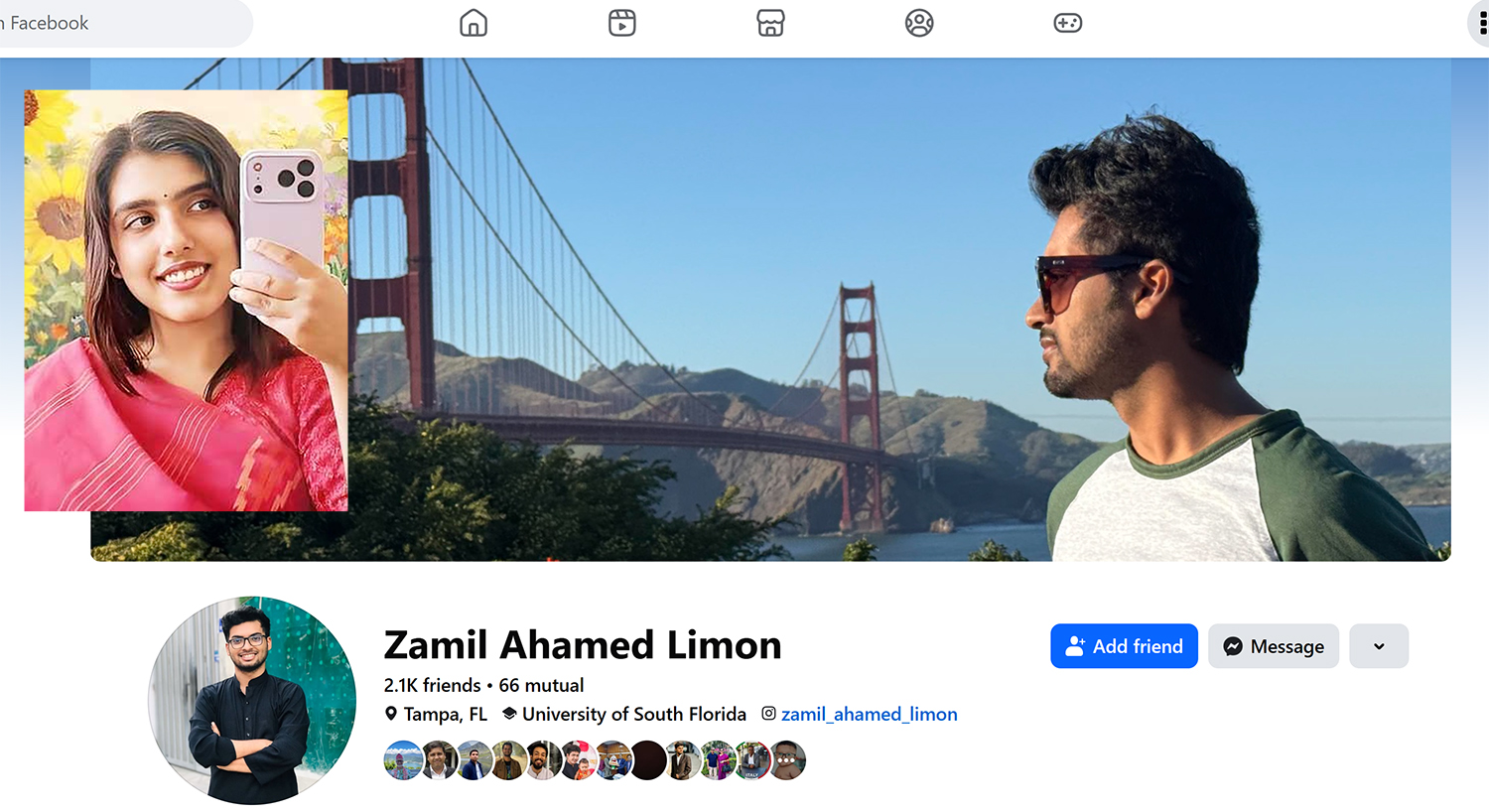
You all know about the recent brutal murder in Florida, USA, of two Bangladeshi PhD research students — Jamil Ahmed Limon (27) and Nahida Sultana Brishti (27). I will not go into details; you are already aware. The killer was so enraged and deranged that he dismembered their bodies into pieces. Bangladeshi devout Muslims have not been very vocal about this horrific crime. The reason is that the accused killer is a Palestinian, named Hisham Saleh Abu Ghraybeh (26). Before the Palestinian “brother nation” (devout Muslims consider all Muslims as one nation—what anthropology says, who cares!) gets defamed, many are busy suppressing the issue. They have even produced various conspiracy theories shifting much of the blame onto the murdered female student. For devout Muslims, it seems inevitable to believe that women are behind all crises in the world! Prophet Muhammad himself said that nothing is more harmful to men than women, that women come disguised as the devil to harm men. Anyway, in Islam, women are viewed as objects.
Limon was my direct junior at my university; we had the same degree and discipline. In that sense, his brutal murder feels like losing a younger brother to me. Brishti was not directly related to me, but she was still a human being, a researcher, like a younger sister. Had they lived, they surely would have contributed new knowledge to the world. Their deaths deprived humanity. The Palestinian youth responsible for their murder was already delinquent and violent. He had nothing to offer the world—he was a cancer to it. Yet, our devout Muslim brothers are highly emotional about Palestine, and in the spirit of religious solidarity, hiding his sins brings them spiritual reward according to their belief.
Although I haven’t been religious since seventh or eighth grade, I attend festivals. There are very few occasions of celebration in life. So I try to attend different cultural events to observe how people behave. In Dhaka, I used to visit Kalabagan field during Durga Puja and attended iftar parties when possible. While living in America, I occasionally attended iftar at a large mosque. It was a chance to taste diverse cuisines and observe different cultures. On days when Bangladeshis organized events, there was a lively atmosphere — chatter, fun, storytelling — typical Bengali traits.
One time Palestinians organized the event; the mosque was in a Palestinian area. That day’s experience was quite strange. They prioritized only their own group and other Middle Eastern people. Where was the Muslim brotherhood? Where was the affection for Bangladeshi Muslim brothers? They took pizzas early and piled them on their tables, grabbing multiple ice creams and cakes while elderly men ate in front of children from other cultures. Bangladeshi children wandered around with no attention. The attitude felt like — you people are not “real” Muslims, you are poor outsiders; why should you eat these things? From that day, I understood they considered themselves elite Muslims and viewed darker-skinned South Asians as inferior. Many of them seemed uninterested in prayers and focused mainly on food. There was no discipline in lines; they would bypass others and push ahead. Even in a country like America, they lacked basic courtesy like queuing. Many of them appeared arrogant, not like people from an oppressed group. I later confirmed with other Bangladeshis that my perception was accurate.
These Bangladeshi devout Muslims cry so much for Palestine, yet in 1971, when Pakistan’s military and local collaborators carried out genocide against Bangladeshis, killing and raping women, Palestine showed no sympathy. They supported Pakistan. How should one assess a group that claims to be oppressed yet does not stand for others facing genocide? After independence, Bangladesh had to prove itself as part of the Muslim world before Palestine accepted it. During the 1973 Arab-Israeli War, Bangladesh supported Palestinians and sent medical teams, after which Arab nations gradually recognized Bangladesh. In 1974, at the OIC summit in Lahore, formal relations were established following a meeting between Sheikh Mujibur Rahman and Yasser Arafat.
On the other hand, during the 1971 war, Israel offered to recognize Bangladesh and provide military assistance. Bangladesh rejected this in solidarity with Palestine. Many Jews supported Bangladesh’s liberation, raised funds, helped in refugee camps, and even fought. One of them was William A. S. Ouderland, Bangladesh’s only foreign Bir Protik. General Jacob, who made significant contributions, was also Jewish. Israel recognized Bangladesh again in February 1972, but Bangladesh ignored it and even stated in its passport that it was not valid for Israel—something not even mentioned in Palestinian passports.
When ISIS beheaded Coptic Christians in Egypt, when they carried out genocide against over 5,000 Yazidis in Iraq, burying elderly women and children alive, enslaving women, and forcing children into war — did Palestinian groups protest? When Boko Haram kidnapped Christian children in Nigeria, did they protest? Even Bangladeshi devout Muslims largely remained silent. Their protests are highly selective — their sympathy is only for Muslims, not for humanity.
I don’t know whether Limon and Brishti chose Hisham as a roommate out of religious brotherhood. Even if they did, in his eyes, they were inferior Muslims — neighbors of Hindu India — just as Pakistan viewed Bangladeshis in 1971. Similarly, Bangladeshi devout Muslims are often not recognized as “true” Muslims by many in the Middle East and are treated as inferior, with female domestic workers often viewed as sexual objects.
The current Israel–Palestine conflict was initiated by Hamas. On October 7, 2023, Hamas launched a sudden attack by land, sea, and air (using paragliders and thousands of rockets) inside Israel. In that attack, 1,195 Israeli and foreign civilians were killed, and 251 were taken hostage — the largest attack in Israel’s history. Would a powerful state like Israel accept this? It was inevitable they would respond to prevent future attacks.
During the 1982 Lebanon war, around 1,000 to 8,000 Bangladeshi youths fought for the PLO against Israeli forces, many dying. Even then, Bangladeshi Muslims did not gain Palestinian acceptance. It is often reported that Bangladeshi laborers in the Middle East face hostility from Palestinians. Personally, I have rarely seen Palestinians sympathetic to Bangladesh.
Globally, many people — including non-Muslims — have protested in support of Palestine. Students in American universities faced jail and punishment. In Europe, many peace activists and LGBTQ groups have protested as well. Even Mia Khalifa, an adult film actress of Christian origin, has supported protests.
If these Jews, Christians, atheists, humanists, Western women, adult film actors, and LGBTQ activists visit a future Palestine, will they be welcomed as friends? Hamas follows strict Islamic law, which prescribes death for homosexuality. Will they accept such people? When European LGBTQ groups were asked whether they know homosexuality is punishable in Islam and Palestine, they replied in surprise — how could a people oppressed for so long punish others for being gay? You can find the answer yourselves. When the answer comes from the Quran and Hadith — will they recognize who their friends truly were? Do Bangladeshi devout Muslims recognize those who helped them in 1971? If they meet them, they would attack them. Showing ingratitude in the interest of Islam is considered obligatory.
Related Posts

The 72 full‑breasted, personality‑less houris of Paradise vs. the personality‑rich cherished women of the world! What do you want?
It is said that in Paradise a believing servant will receive 72 exquisitely beautiful houris;Read More
জান্নাতের ৭২ উন্নতবক্ষা ব্যক্তিত্বহীন হুর বনাম দুনিয়ার ব্যক্তিত্ববান শখের নারী! কী চান?
বলা হয় জান্নাতে মুমিন বান্দা ৭২ জন অপূর্ব সুন্দরী হুর পাবেন, তারা হবে চিরযৌবনা, চিরকুমারী।Read More
Islamic deception – the believer disguised as a close friend may actually be on a mission to kill you!
For the sake of Islam and establishing its supremacy, yesterday morning could have become aRead More
Comments are Closed