
A Story of Saving a Life
Seven billion people of this world are indebted to those twenty‑two orphaned children
The year was 1798, and King Charles IV was ruling Spain. At that time, Princess Maria Luisa became infected with smallpox. The disease was then known as the “Red Death.” News of the princess contracting the illness brought panic throughout the royal palace. It was a highly contagious disease – spreading quickly and almost always ending in death. The king himself became terrified, knowing the disease could now spread inside the palace.
Smallpox, or variola, was considered one of the most terrifying epidemics of that era. There was good reason for this. Every ten or twenty years, when the disease appeared, entire villages would be wiped out. There were often no people left to even bury the dead. The disease was caused by a virus called variola.
Those few who survived each outbreak no longer feared it, because their bodies had developed immunity. But for people after the epidemic, the problem remained. Even if the disease did not always cause certain death, permanent physical damage was inevitable. Symptoms included high fever, nausea, body aches, and red, itchy lesions. Survivors were left with permanent scars, and some became blind.
Princess Maria Luisa survived that outbreak. King Charles IV also managed to protect the rest of his family from the disease. The method he used to save his family later became accepted throughout the world.
The Cow’s Disease:
In 1796, an English physician, Dr. Edward Jenner, demonstrated that anyone who contracted cowpox became fully protected from smallpox.
Cowpox is a type of disease found in cows, but humans can also contract it. The viruses that cause cowpox and smallpox are closely related. The lesions or sores that appear in both diseases look almost the same. But the key difference is that cowpox does not kill humans. After a few days of illness, they recover.
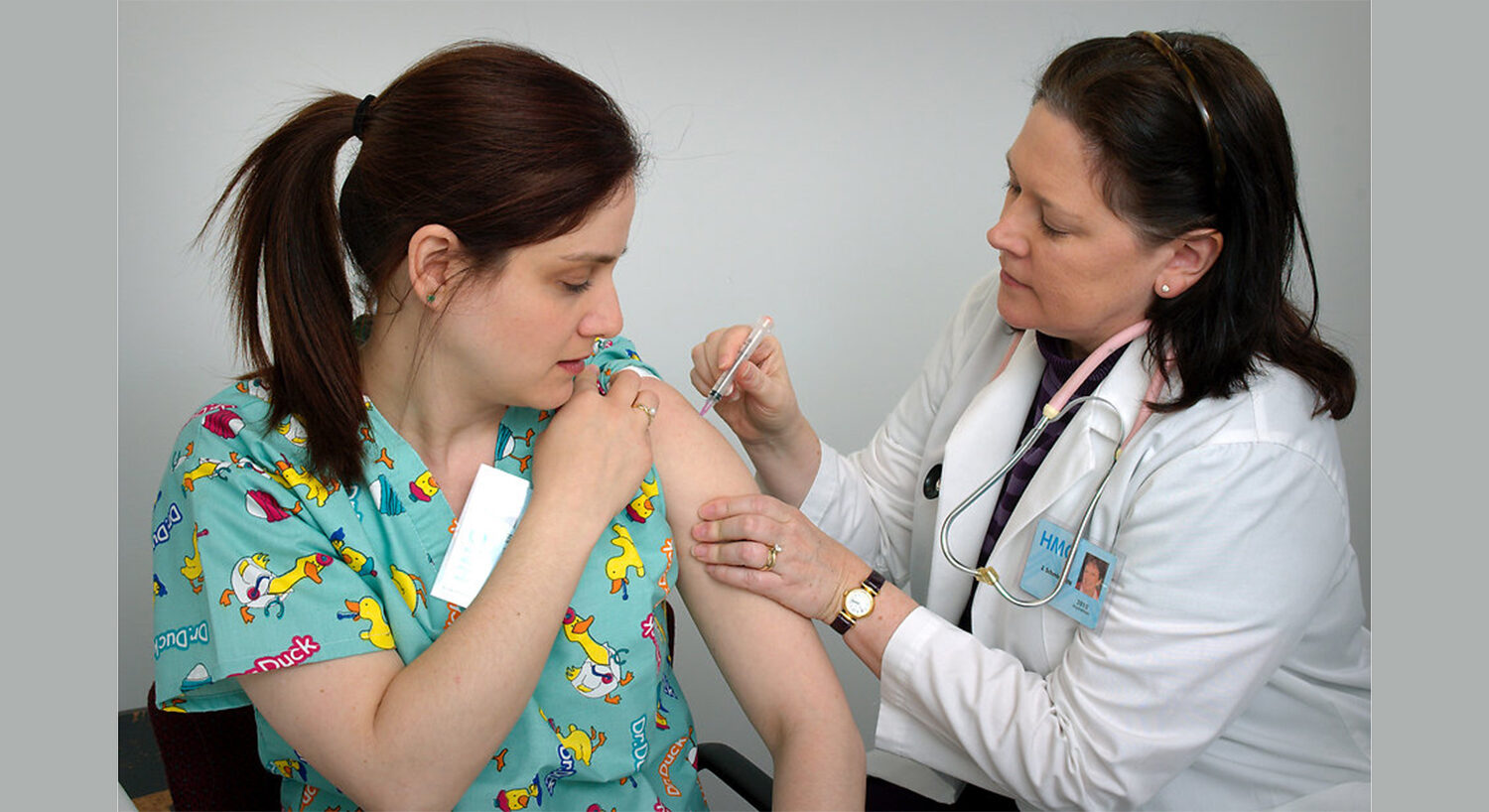
To deliberately infect healthy people with cowpox, Dr. Jenner used a new method, which he called the “arm-to-arm transfer.” He would take fluid from the sores of a cow or a person infected with cowpox, create a small wound on a healthy person’s skin, and insert the fluid there. This allowed the cowpox virus to enter the healthy person’s body. The person would develop cowpox and recover within a few weeks. This process built immunity against both cowpox and smallpox.
Dr. Jenner named the entire process “vaccination.” The word comes from the Latin term “vaccinus,” meaning “related to cows.” Jenner’s discovery became the first known preventive measure in human civilization against an infectious disease.
Vaccination Across the Atlantic:
King Charles IV did not stop after vaccinating his own family. Using royal funds, he launched a vaccination campaign across the entire Spanish Empire. He ordered royal physician Francisco Javier Balmis to deliver Jenner’s vaccine to every Spanish territory. At that time, Spain’s empire stretched from northern to southern America. (Later, after Spain conquered the Philippines, that too became part of the empire.)
To carry out the king’s orders, Dr. Balmis had to transport the cowpox virus across the ocean from city to city. Keeping the virus alive during such a long journey required a rather unusual method.
Dr. Balmis tried two methods. First, he attempted to seal fluid from cowpox sores in glass jars. It didn’t work – the virus died in most cases. So he turned to a second method.
The Human Chain:
Dr. Balmis’s second method involved using people. The problem was that anyone infected with cowpox recovered within two or three weeks. So during the long journey, Balmis used what became known as a “human chain.”
He selected individuals who had never had cowpox or smallpox. Most adults had already contracted one of the two diseases. But there were still some who had never had either.
Eventually, the government arranged a group of twenty-two orphaned children, all between the ages of three and nine. They became the core members of the human chain. During the sea voyage, Balmis infected one child after another in sequence through arm-to-arm transfer, keeping the virus alive until it reached the Spanish colonies.
Between 1803 and 1807, Dr. Balmis vaccinated nearly one hundred thousand people. This became the first large-scale vaccination campaign in history.
After the mission, the king arranged for the orphans’ care and education. They later grew up in Mexico. Because of those children, millions of people were saved from the deadly smallpox epidemic.
In 1967, a group of physicians declared a global war against the disease. Governments around the world began vaccination programs. Smallpox was completely eradicated from the planet. Since 1979, no human has been reported to have contracted the disease.
We all owe gratitude to those twenty-two orphaned children.
Related Posts

Spiritual powers, occult rituals, black magic, Satan worship, jinn‑ghosts, ruqyah – Islam’s box of superstitions
At that time I was in class seven, the school was closed for a fewRead More
আধ্যাত্মিক শক্তি, তন্ত্র-মন্ত্র, কালো জাদু, শয়তানের পুজা, জিন-ভূত, রুকাইয়া – ইসলামের কুসংস্কারের ডিব্বা
তখন আমি ক্লাস সেভেনে পড়ি, গ্রীষ্মের ছুটিতে কিছুদিন স্কুল বন্ধ ছিল। জয়পুরহাটের কালাইয়ের এক প্রত্যন্তRead More

Zamzam water can be contaminated just like ordinary water. It is purified using technologies developed by non-Muslims before being distributed
Zamzam well water is regarded as highly sacred and religiously significant in the Muslim world.Read More
Comments are Closed