
The Power of Fundamentalists in Bangladesh
Bangladesh will continue to suffer – and suffer greatly – from the consequences of nurturing these extremist fundamentalist groups
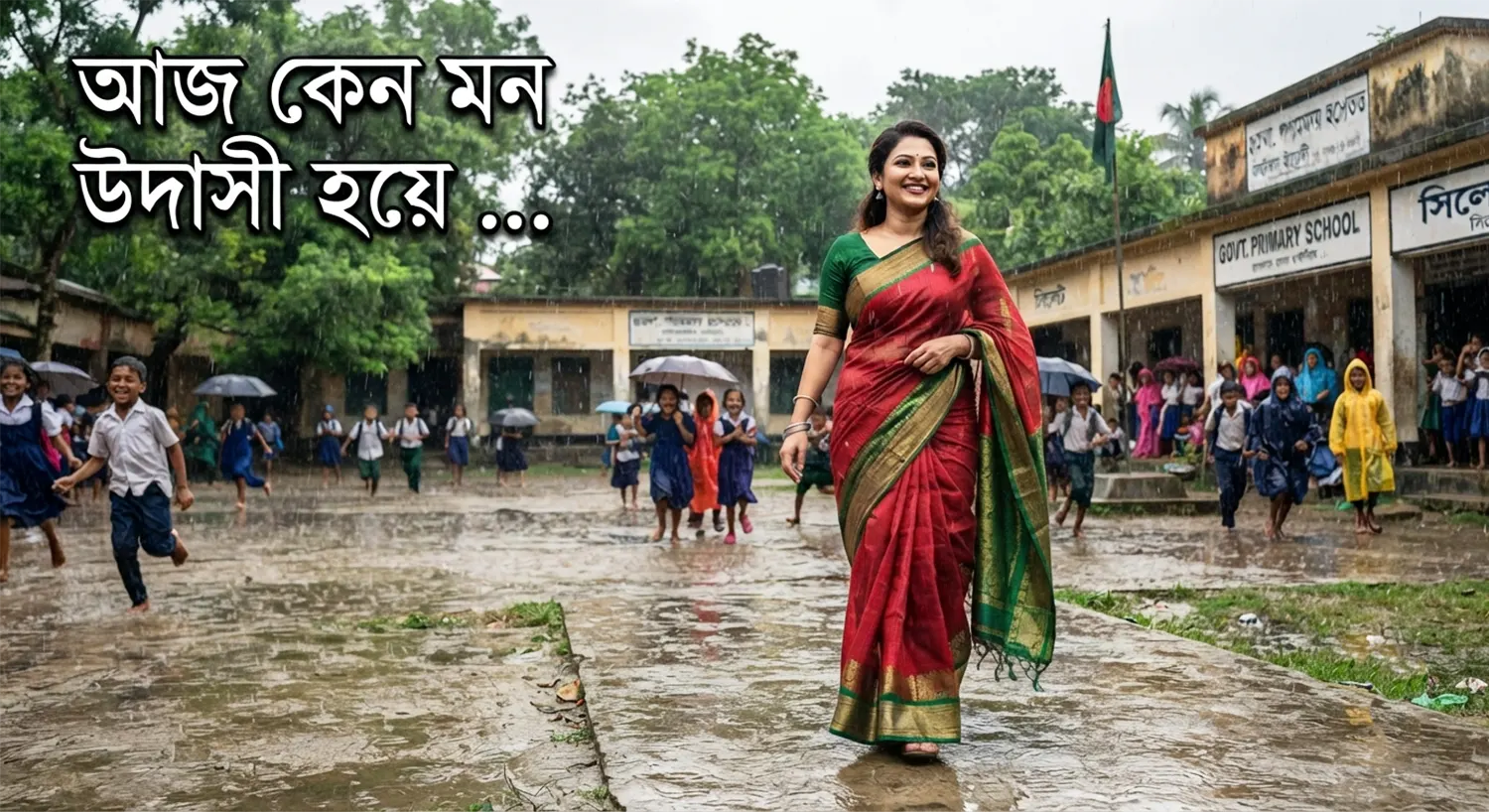
In Bangladesh, there has always been an extremist, religiously fanatical group that fears music, dance, and cultural practice, and considers them their adversary. To be specific, this is a Muslim fundamentalist group. Within it there are people who have no institutional education at all, as well as people who have received the highest university education, including many doctors and engineers with pure science backgrounds. There is no scope to separate them as merely madrasa-educated. They believe that if people engage in creative practice and advance in knowledge and science, their religious business, their religious tricks and fabrications will be exposed. Then they start attacking education, culture, and science in various ways and under different pretexts. The latest example of this is Beauty Pal, selected as the best teacher at the district level in Sylhet, and the organized cyber bullying carried out against her.
You already know, because she posted on social media a video of herself in elegant, neat attire doing a catwalk to the song “Aaj keno mon udashi hoye …”, that very dark group is bullying her in cyberspace in various ways, and people from different professions are involved in it. Their attitude is as if by making this video with that song she is dragging the country into ruin! There are two issues here. First: as a head teacher she is stepping outside conventional norms and, through creative means, engaging with students and making learning enjoyable – they cannot accept that. And second: she is by birth a Sanatani (Hindu), a Sanatani and also a woman, a head teacher of a school, the best in the district – this too is a cause of burning resentment for the fundamentalist, patriarchal, religion-dependent majority. Had she been Beauty Khatun instead of Beauty Pal, this scenario would not have occurred; this is the termite-eaten reality of an Islam-governed society like Bangladesh, whether you accept it or not. In a pluralistic society controlled by Islam like Bangladesh, when a woman from a minority community gains public recognition and praise, there is always the risk that religious and gender-based prejudices will become active around that achievement. As a result, it is hard to deny that the hostility operating behind the façade of criticism is very real. And in Islam, all music, cultural practice, sports, literature, and creative pursuits are considered haram; Islam does not want children to learn from an early age to seek the meaning of life in these things.
Watch these two videos of her with the students in class, how wonderful they are! I rather feel regret that we did not have such a teacher in our time.
https://facebook.com/reel/1700894607796022
https://facebook.com/reel/1579115583927650
If we review the social history of Bangladesh, we see that in every generation this particular fundamentalist group has looked at creativity, artistic practice, and cultural expression with suspicion and has created resistance and obstacles against them. Music, dance, literature, or sports – they do not consider these merely as entertainment or creative practice, but rather as a kind of threat to their established ideology. Because when people engage in creativity, learn to ask questions, and learn to think of new things, then many forms of established authority or narratives face the risk of being questioned. From this fear arises the tendency to raise various accusations against creative, joyful education and culture.
The incident involving Sylhet’s best teacher, Beauty Pal, is merely a recent example of this broader trend. When a teacher tries to engage with students creatively by stepping outside conventional structures, instead of receiving this positively, that reactionary dark segment of society tries to label it as “immorality” or “a degradation of the dignity of teaching.” Yet this effort to make learning enjoyable is a recognized aspect of modern educational science worldwide. The fact that someone in Bangladesh has started practicing it is rather a matter of good fortune.
For a long time in Bangladesh, the way religiously based extremist ideologies have been encouraged at the political and administrative levels has further strengthened this trend. In the politics of votes, the calculation of religious sentiments, and the pursuit of short-term political gains, various governments and parties have repeatedly compromised with these groups. As a result, what was once at the margins has gradually secured a place in the social sphere and today has acquired the power to influence mainstream discourse. For many years in Bangladesh, different governments and political parties have given patronage to these religiously fanatical fundamentalist groups. By giving unrestricted opportunities to their waz-mahfils, religious gatherings, and hate speeches, they have opened the way for poison to spread in society. The free environment created for spreading hostility against women, people of other religions, and free thought has continuously polluted society. Just as a snake reared in one’s lap eventually bites, similarly these groups are now striking at every level of society – in fields, in public squares, in homes, in vehicles, openly and secretly. These are the inevitable consequences of spreading hatred in the name of waz and religious practice.
Every impartial person of sound judgment will agree that the way, for a long time, open opportunities have been created in waz-mahfils and religious gatherings to deliver hate-filled speeches against women, non-Muslims, and cultural practice, their social impact cannot be ignored. When these mediums of spreading hatred continue without control, then organized bullying against a teacher on social media is not an isolated incident – rather, it is an expression of a long-term ideological practice.
In this context, the question arises: how will the state and society confront this trend? Merely reactive measures – such as issuing condemnations after specific incidents – are not enough. Instead, it is necessary to provide institutional protection for the practice of creativity, pluralism, and religious-cultural tolerance within the education system, so that teachers like Beauty Pal can safely continue their work and future generations of students can grow up in a fear-free environment.
In conclusion, it can be said that the cyber bullying incident surrounding Beauty Pal is not just an injustice against an individual – it is a reflection of a continuous trend against education, culture, and pluralistic consciousness in Bangladesh. As long as the state and society do not limit the opportunities for spreading hatred and hostility, and do not prioritize the expansion of creativity and education, such incidents will continue to occur again and again. Teachers like Beauty Pal will become discouraged, lose their enthusiasm and creativity, and perhaps one day be forced to leave the country.
Related Posts
People’s Arabic names are not the property of Allah or Muhammad. Stop demanding that others change their names
One fine morning you log into Facebook and see that everyone—from Mokhles, the tea sellerRead More
মানুষের আরবি নাম আল্লাহ বা মুহাম্মদের সম্পত্তি না, নাম পাল্টে রাখার আবদার বাদ দিন
ওয়ান ফাইন মর্নিং ফেসবুকে ঢুকে দেখলেন, ভুরুঙ্গামারির চায়ের দোকানদার মোখলেস থেকে শুরু করে বুয়েটের ডিগ্রিRead More
Chinmoy Krishna Prabhu or Enayetullah Abbasi?
From Bonn in Germany, I reached a local station to catch the last train toRead More
Comments are Closed