
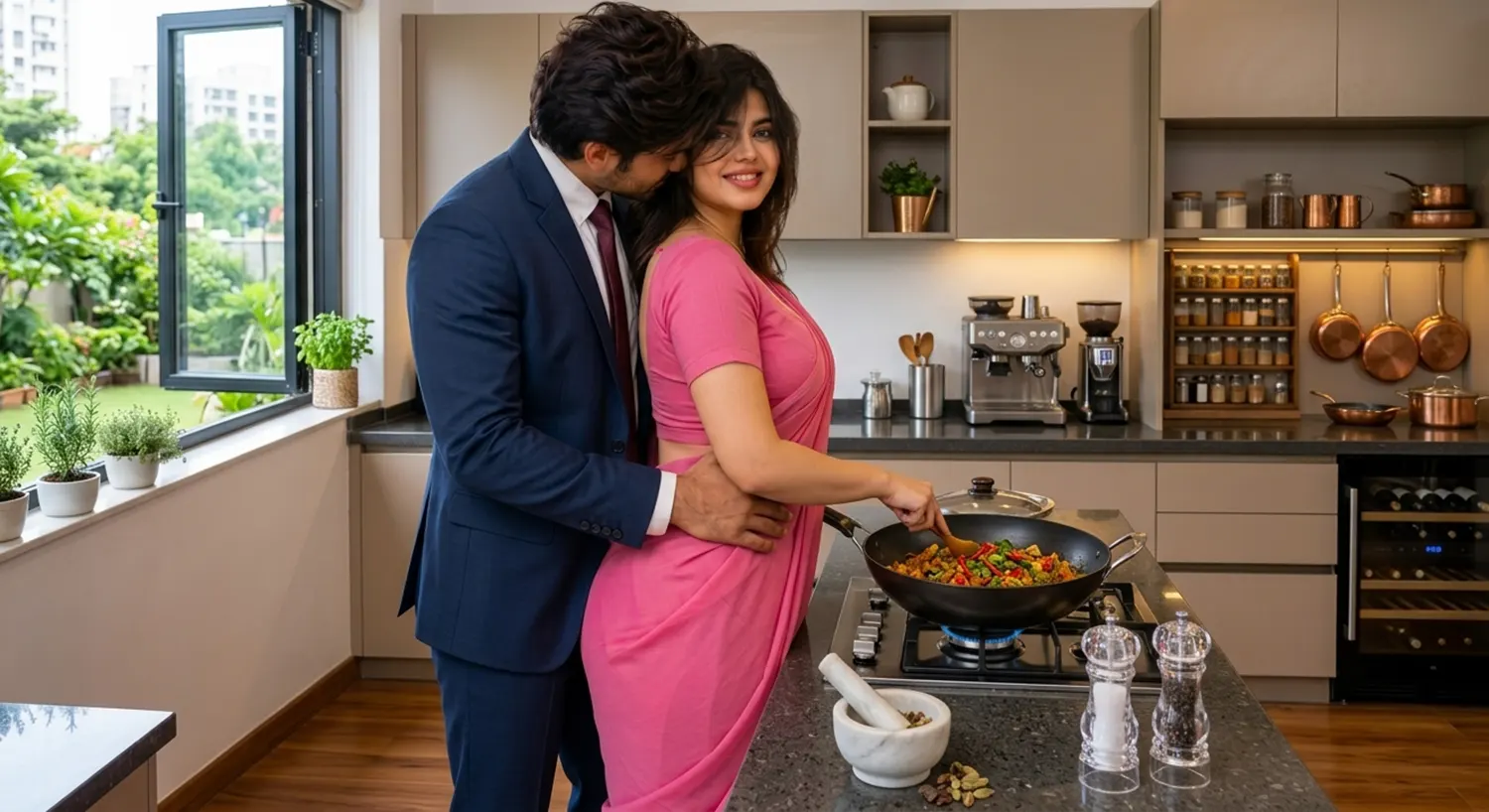
Women's' breasts and buttocks
Why does Allah show such preference for women with large breasts and large buttocks? Do men feel the same way? Does this give women any advantage?
If you leave Prophet Muhammad in Pattaya’s Walking Street and Beach Road after evening, in the half-light, he will, upon hearing the boom-boom sounds, surely prefer the ladyboys over the ladies. Because their breasts are larger, hair is beautiful, build is attractive, skin is smooth, like the heavenly houris—only in the final round he might need some advice from madrasa-trained Koros. We see that to Allah and thus to Prophet Muhammad, women with large breasts are more beloved. The Prophet encouraged men to marry virgins and very young girls. He spoke of marrying girls who are beautiful, of noble lineage, wealthy, and religious—who will obey their husbands word for word. His idea is that very young virgin girls are sweet-faced, possess pure wombs, are easily satisfied, and their vaginal canal is warmer. These are words from hadith. In paradise he promised 72 houri women with large breasts, large eyes, and mines of beauty. Do men feel attraction toward women’s large breasts and large buttocks? If so, why?
Scientists, philosophers, artists, and religious leaders have thought for many centuries about certain features of the human body. A woman’s breasts and buttocks are among them. The questions are roughly these: if these are large, do they seem more attractive to men? Do they have any reproductive advantage? Why does size vary? Why do some women resort to surgery, pads, or special clothing? Are there evolutionary reasons behind people’s ideas about these things? And do religious descriptions, especially of the houris in paradise, grant extra status to a particular kind of body?
There is almost no simple answer to this topic. In many areas science is still in the realm of conjecture and debate, and taste changes with culture and time. So in this essay I will separate what is established, what is hypothesis-based, and what is disputed.
Why does size vary: what does biology say?
Breasts: Inside a woman’s breasts are milk-producing glandular tissue, connective tissue, and fat. Several factors play a role in determining size:
- Genes: A large part of family and ethnic variation is hereditary.
- Hormones: During puberty, under the influence of estrogen and progesterone, the breasts develop. Size changes during the menstrual cycle, pregnancy, and breastfeeding.
- Total body fat: When weight increases or decreases, breast size usually changes as well, because a large portion of the breast is fat.
- Age and menopause: When estrogen decreases, glandular tissue declines and the elasticity of the skin also decreases, causing changes in size and shape.
An important piece of information is that breast size is not a reliable indicator of milk-producing capacity. Small breasts can contain sufficient glandular tissue, while a large portion of big breasts may be just fat.
Buttocks: The size of the buttocks depends on two things: the structure of the pelvic bones and the amount of gluteal muscle and the fat over it. During puberty, estrogen creates a pattern of fat deposition in the female body on the hips and thighs, called gynoid or gluteofemoral fat distribution. In the male body, due to the same hormonal reasons, fat accumulates more around the abdomen. In addition, genes, diet, exercise, pregnancy, and age also have an effect here. z and
Are these attractive in men’s eyes?
In short: to some extent yes, but not universally, and “the bigger the better” is not true either.
Buttocks and waist-to-hip ratio (WHR): In the 1990s, psychologist Devendra Singh showed that many men find women with a waist-to-hip ratio of about 0.7 (waist narrower relative to hips) more attractive. Later research has found variation. In some societies, especially in environments with food scarcity or among hunter-gatherer groups, bodies with relatively higher weight or different ratios have been preferred. That is, a specific number is not a universal “formula of beauty.”
Breasts: In this case research results are even more mixed. Some studies in Western countries have found medium size to be most preferred. In some cultures a tendency toward larger size has been observed, while elsewhere small and firm shapes have been considered ideal. There is huge variation in individual preference, and under the influence of media, pornography, social media, and advertising, the idea of what is “ideal” changes from decade to decade.
Another point is that attraction is not just a matter of body measurements. People choose partners based on a combination of face, gait, voice, personality, intelligence, sense of humor, and socio-economic status.
Evolutionary explanations: what is said, how reliable
Evolutionary psychologists have proposed several hypotheses. None of these is definitively proven.
a) Sexual selection and “signal” theory: Humans are the only primates whose breasts remain permanently swollen even outside pregnancy. A Darwinian explanation is that this has become a signal of youth and health to men.
b) Fat-storage theory: Another explanation says that the fat in breasts and buttocks is primarily energy storage. Pregnancy and breastfeeding are extremely energy-intensive, so women whose bodies had sufficient stored energy had a higher chance of their children surviving. It is argued that men learned to read this signal.
c) Gluteofemoral fat and children’s brains: According to researchers Lassek and Gaulin, the fat in the hips and thighs contains higher levels of DHA-type long-chain omega-3 fatty acids, which are important for fetal and infant brain development. In some of their studies, children of mothers with such fat distribution performed comparatively better on cognitive tests. However, there is disagreement among scientists about this theory, and the results may be influenced by other factors (such as the family’s socio-economic status).
d) Hormonal signals: In a Polish study (Jasienska and colleagues, 2004), it was found that women with lower waist-to-hip ratios and relatively larger breasts had higher levels of estradiol (a form of estrogen) in the mid-cycle, which is related to the probability of conception. But the effect size is small, and this does not prove that these traits brought major advantages in evolution.
Criticism: Critics say that many of these explanations are “storytelling,” that is, fitting a cause after knowing the result. Just because a particular body shape is preferred in a certain society or era does not mean it is an evolutionary adaptation. The vast variation across cultures suggests that learning and social influence also play a huge role.
Is there really any reproductive advantage?
What can be said:
- No direct relationship between breast size and the ability to conceive or produce milk has been proven. Women with small breasts can fully breastfeed their children.
- Very low body fat (as in the case of athletes or women suffering from malnutrition) can disrupt the menstrual cycle and reduce fertility. That is, sufficient energy reserves in the body are a prerequisite for reproduction. But from this we cannot conclude that the larger the breasts or buttocks, the greater the fertility.
- Wide pelvic bones are often cited as an argument for “ease of childbirth,” but modern research has shown that complications in childbirth arise for many other reasons. The size of the fat and muscle over the hips does not directly determine the ease of delivery.
Therefore, at the individual level, no “reproductive advantage” can be claimed with certainty. At most, it can be said that in some historical environments these traits may have had an indirect effect as signals of health and nutrition.
Why surgery, pads, and special clothing?
There are multiple layers behind this behavior:
a) Social expectations and pressure of the ideal body: Advertising, films, Instagram, and TikTok repeatedly present certain shapes as “normal and desirable.” Filters and editing create ideals that most women’s bodies do not have in reality.
b) Self-confidence and self-identity: Many women choose surgery or shapewear for themselves. For them, removing discomfort about a part of their body is a matter of mental relief. It would be wrong to see this only as an attempt to please men.
c) Competition in the sexual marketplace: From an evolutionary perspective, some say that the tendency to exaggerate signals is old. History is full of examples, such as European corsets, the 19th-century bustle (a structure to make the buttocks look larger), and modern push-up bras and shapewear. This is called “supernormal stimulus,” meaning exaggerating a natural signal.
d) Risks: In the case of implants, there can be capsular contracture, rupture, infection, and the need for reoperation. Brazilian butt lift (BBL) is known as one of the cosmetic surgeries with comparatively higher risk of death, mainly due to the danger of fat embolism. Safety procedures have improved later, but the risk is not zero. So before making a decision, open discussion with a qualified, trained surgeon is essential.
Does this affect the sexual life of women and men?
Women’s side: Research has repeatedly shown that negative perceptions about one’s own body can reduce sexual interest, arousal, and satisfaction. Many women remain self-conscious and worried about their bodies even during intercourse (in psychology this is called “spectatoring”). Some studies have found short-term improvement in self-esteem and sexual confidence after breast augmentation surgery, but long-term results are mixed and not the same in all cases.
Men’s side: For men too, the exaggerated images in pornography and media can create unrealistic expectations about the bodies of real partners. This can lead to dissatisfaction with the partner, comparisons, and tension in the relationship.
The main point: Sexual satisfaction depends primarily on mutual trust, communication, emotional intimacy, physical and mental well-being, and understanding each other’s needs. Body measurements are not the main determinant here.
And religion and the houris of paradise
The description of houris given by Allah and thus by Prophet Muhammad grants a kind of bodily status to some women and belittles others. This issue needs to be viewed in light of the text, its interpretation, and the overall moral framework.
What is in the text: In the Qur’an, in the description of the companions of paradise, there are words like “hur ‘in” (with large and beautiful eyes), “qasiratut-tarf” (of modest gaze), “atrab” (of the same age), etc. In verse 33 of Surah Naba, the word “kawa’ib” appears. Many classical exegetes such as Ibn Kathir and Tabari have interpreted this as women with round and swollen breasts, and most preachers in Bangladesh also describe this in juicy language.
The justification of criticism: Many feminist and modernist scholars believe that these descriptions reflect the male-centered perspective of seventh-century Arab society and create a risk of presenting women as objects of consumption. This criticism cannot be dismissed outright; rather, from a moral standpoint it is demeaning to women. In this way, directly declaring bodily status divisions among the women of the world from the text of a religious scripture itself calls into question the acceptability of that religion.
Conclusion
Women’s breasts and buttocks are biologically the result of hormones, genes, and fat distribution. Their size may play some role in men’s attraction, but preferences vary widely by culture, time, and individual. Evolutionary explanations are interesting but hypothesis-based, and “reproductive advantage” cannot be proven at the individual level. The use of surgery, pads, and shapewear is simultaneously the result of social pressure, self-confidence, and a historical tendency to “enhance signals.” Sexual satisfaction depends mainly on the quality of the relationship, comfort with one’s body, and mutual understanding. And in the matter of religious descriptions, debate over the text and its interpretation continues, but the most reasonable principle is that human moral worth is not determined by the measurements of their bodies.
Related Posts
নারীর বড় বক্ষ ও নিতম্বের প্রতি আল্লাহর এতো পক্ষপাত কেন? পুরুষেরও কি তাই? এটা কি নারীকে সুবিধা দেয়?
আপনারা যদি পাতায়ার ওয়াকিং স্ট্রীটে ও বীচ রোডে সন্ধ্যার পর আলো আঁধারিতে নবী মুহাম্মদকে ছেড়েRead More
Do women like the color pink? What is the psychology behind it?
Last winter my friend Lamia went to buy a birthday present for her niece. TheRead More
নারী কি গোলাপী বা পিংক রঙ পছন্দ করে? এর পিছনে মনস্তত্ত্ব কী?
গত শীতে আমার বন্ধু লামিয়া ভাগ্নির জন্মদিনের উপহার কিনতে গিয়েছিল। দোকানি জামাগুলো সামনে ছড়িয়ে দিয়েRead More
Comments are Closed