
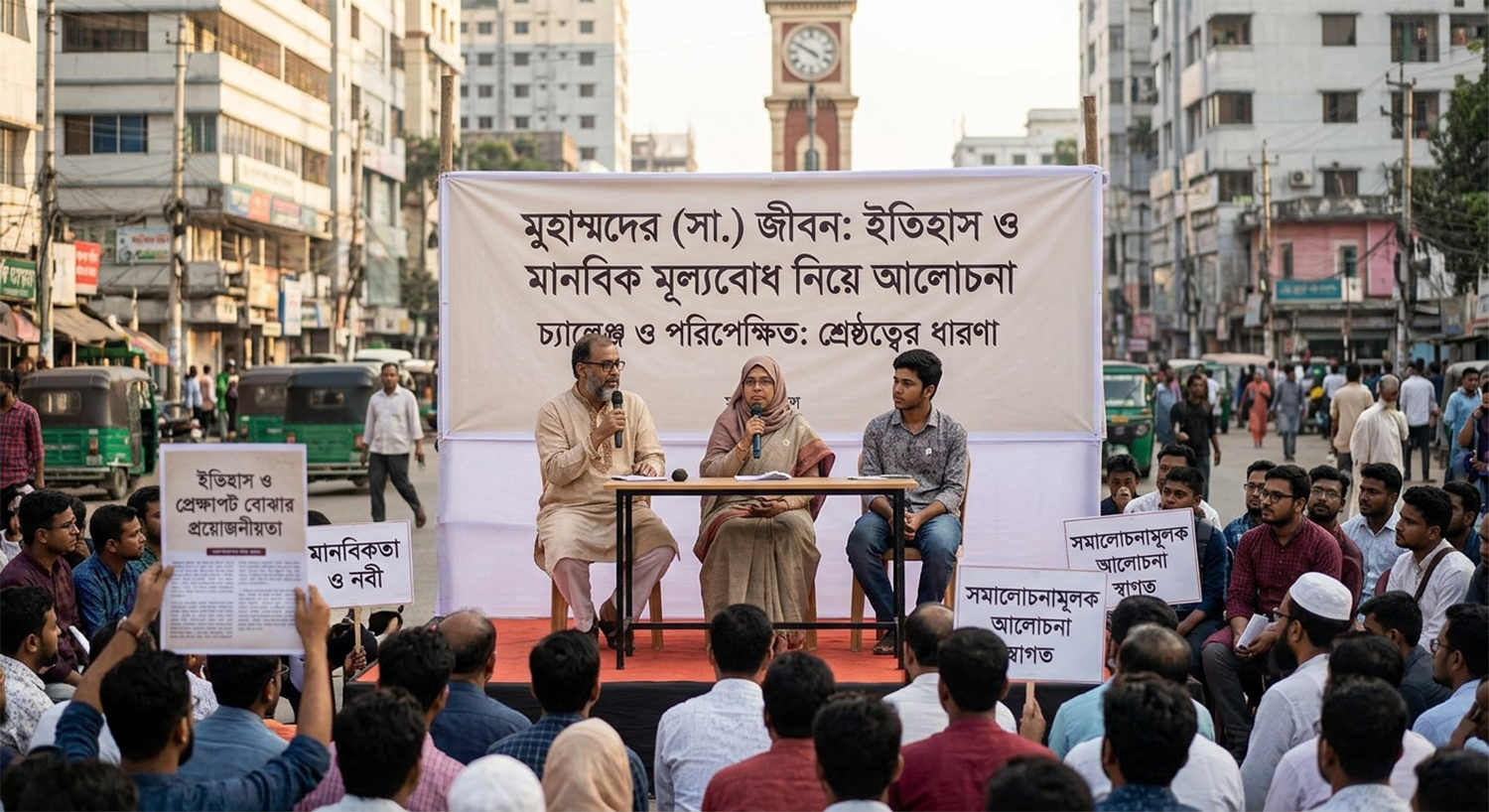
Was Muhammad a Great Man?
Some inhumane chapters from the life of Islam’s Prophet Muhammad – was he truly a great man?
Authentic hadith literature contains narrations stating that the Prophet Muhammad would, in a single night, move from house to house among his wives and female slaves, engaging in intercourse sequentially, and would perform only one ritual bath at the end. These narrations describe his sexual potency as being “equal to that of thirty men.” In Islamic tradition, such descriptions are often presented as a “miracle” or a divinely granted special ability of the Prophet, although presenting sexual potency as a miracle itself raises cultural questions. These narratives portray the Prophet’s sexual life as superhuman, extraordinary, and far more powerful than that of ordinary people. As a result, when criticism or questions arise regarding his private sexual conduct, Muslim scholars often respond by saying, “This was a power granted by Allah, so it should not be questioned.” However, from a historical-analytical perspective, such descriptions transform the Prophet’s character from a human figure into a mythic one, making it difficult to critically evaluate his real behavior.
Sexual Failure and Reactions of Anger
During the Hajj journey, when the Prophet approached Aisha with the intention of intimacy, he discovered that she was menstruating. He then went to Safiyyah and found the same situation there as well. Various sīrah (biographical) books mention that in this situation the Prophet became irritated and used insulting words toward Safiyyah, such as calling her “barren” or “shaven-headed.” An analysis of these narrations suggests that his reaction was the result of personal frustration and the failure to satisfy sexual desire. Despite having multiple wives, encountering the same obstacle consecutively with two of them appears to have angered him. This raises an essential question: can a moral exemplar, a spiritual leader, a person described as possessing “the best character,” use insulting and demeaning language toward his wife in such circumstances? This question lies at the core of the criticism.
The Daughter of a Political Enemy and Jewish Accusations
Safiyyah was the daughter of the Jewish leader Huyayy ibn Akhtab, who was a severe critic of the Prophet. Jews used to comment on the Prophet’s multiple marriages by saying that he “knew nothing except women” and that “if he were truly a prophet, he would not be so attracted to women.” Huyayy ibn Akhtab was at the forefront of these accusations. Notably, Safiyyah was the daughter of the very person who had raised the most persistent sexual-misconduct allegations against the Prophet. After the conquest of Khaybar, the Prophet chose precisely that man’s daughter for himself. This can be interpreted as a mixture of political revenge, a display of power, and sexual entitlement.
The Conquest of Khaybar — Distribution of Captive Women and Safiyyah’s Fate
After the conquest of Khaybar, Muslim forces captured women and children as war booty. The captive women were gathered together so that fighters could choose women according to their preference. When Dihyah al-Kalbi chose Safiyyah for himself, the Prophet later summoned him, took Safiyyah for himself, and in exchange gave Dihyah seven slave women.
Two points are clear here:
1) Safiyyah was the most beautiful captive woman—this is explicitly mentioned in the narrations.
2) The Prophet kept her for himself because of her beauty.
Narrations in Sahih Muslim state that the Prophet consummated his relationship with Safiyyah on the return journey. This raises an important question: a woman who had just lost her family—whose family members had been killed by the Prophet and his army, who was a captive, handed over as war booty to the victor—could she truly have consented “voluntarily” to intimacy with the victor that very same day? This claim contradicts realistic human psychology.
Safiyyah’s Psychological State — Loss of Family, Captivity, and Trauma
Safiyyah’s father, husband, uncle, and most male relatives were killed in the battle of Khaybar. Various sīrah books mention that Bilal brought her as a captive past the bodies of her dead relatives. For a woman, this would have been a devastating psychological blow. From a psychological perspective, the claim that a woman in such a condition could willingly engage in intimacy with the victor is entirely unreasonable. This can be explained only as “Stockholm syndrome” or a “survival strategy,” not as “voluntary love.” Islamic narratives often ignore this reality and present the incident in a romanticized manner.
Relations with Slave Women — Surah At-Tahrim (66:1) and Aisha’s Comment
Hadith literature records that when the Prophet’s wives visited their parental homes, he would engage in intimacy with his slave women. On one occasion, when his wives caught him in the act, he attempted to appease them by declaring that he had made that slave woman forbidden for himself. However, Qur’an 66:1 shows that Allah exempted him from that decision. Aisha commented on this incident by saying: “I see that your Lord hastens to fulfill whatever you desire.” This remark is highly significant because it portrays the relationship between the Prophet and Allah as one in which Allah appears constantly ready to fulfill the Prophet’s personal wishes. This raises an uncomfortable theological question for Islamic doctrine: did the Prophet’s personal desires influence divine revelation?
Psychological Analysis
Analyzing these historically narrated events through the lens of psychology highlights several important factors—especially power relations, trauma, sexual behavior, and the mental state of captive women.
Power Asymmetry
In the case of Khaybar, Safiyyah was a war captive, while the Prophet was the victorious commander. In psychology, this is referred to as an “extreme power imbalance.” In such situations:
- The captive cannot express free will
- True consent becomes practically impossible
- The captive may show forced obedience to the victor as a survival mechanism
This is known as “survival-driven compliance.” In other words, the behavior is not voluntary but a strategy to survive.
Trauma & Grief Response
Safiyyah’s father, husband, and uncle were killed in battle. Being taken past their bodies by Bilal constitutes “acute traumatic exposure.”
In psychology, common responses to such trauma include:
- Shock
- Dissociation (detachment from reality)
- Emotional numbness
- Intense survival instinct
In such a state, it is psychologically implausible that a woman would willingly seek intimacy.
Potential for Stockholm Syndrome
War captives or abducted individuals may sometimes develop positive feelings toward their captors. This happens when:
- The captor has total control
- The captive depends on the captor for survival
- Fear, uncertainty, and helplessness persist
In Safiyyah’s case—loss of family, captivity, and total dependence—such a response is possible. However, it cannot be described as “voluntary love.”
Source List
Hadith
- Sahih Bukhari — Hadith 268 (Tawhid Publication)
- Sahih Muslim — Hadith 3366 (Islamic Foundation)
- Sahih Bukhari — Hadith 5113
- Sahih Muslim — Hadith 1464
Sirah & History
- Al-Bidaya wa’n-Nihaya — Ibn Kathir, p. 40
- Accounts of the Companions — Reports on Safiyyah being brought by Bilal
- Various Sirah works — Conquest of Khaybar and distribution of captives
Qur’an
- Surah At-Tahrim — Verse 66:1
Related Posts
Operation Entebbe – the story of one night, and the Islamic execution suffered by Nazrul Islam and Sweety Akter
What can a state do to save the lives of its citizens abroad? Are thereRead More
অপারেশান এন্টেবে – এক রাতের গল্প এবং নজরুল ইসলাম ও সুইটি আক্তারের ইসলামি হত্যার শিকার হওয়া!
একটি রাষ্ট্র বিদেশে তার নাগরিকদের জীবন বাঁচাতে কী করতে পারে? এর কোন টেক্সটবুক উদাহরণ আছে?Read More
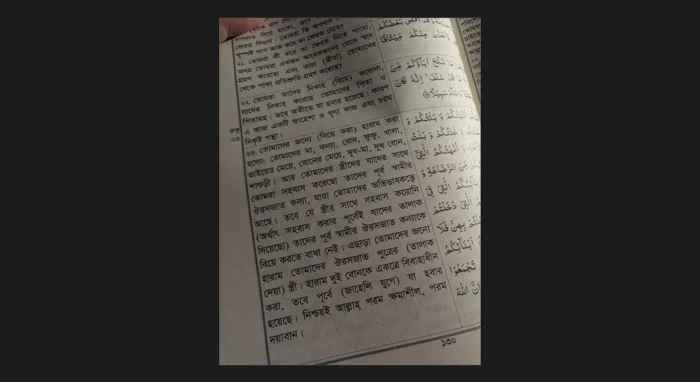
A random page from Muhammad’s self‑made book Qur’an and its unscientific statements
Sometimes I flip through random pages of Muhammad’s self‑made book Qur’an, and today this pageRead More
Comments are Closed