
Islamic Religious Frenzy in Bangladesh
This Religious Frenzy Must End Now – Walk the Path of Civilization
Bangladesh’s society has changed a lot over the past 20/30 years. Sadly, the most heinous catalyst of this change was Sekachina and her party Amlik. Now this Gen Z generation we talk about—their growing up, the way for injecting the poison of fundamentalism into the heads of many of them, the development of their good or bad thoughts—all of this happened during Sekachina’s era. With the power, mandate, popularity, and time she had in office—it was only possible for her to eradicate fundamentalism from Bangladesh. But what happened instead? The misguided Gen Z and ordinary citizens, at the cost of thousands of lives, at the price of various permanent and temporary injuries to more than twenty thousand people, have practically swept away the previous government. Yet the torture that the countless mad, fascist, fanatical religious people, whom Sekachina nurtured and raised by patronizing them, will inflict on the nation will have to be endured for a long time. In the villages, in the countryside, and online, the extent to which Sekachina created the opportunity for the spread of radical Islam—the level of that horror can be understood from this video as one example. During her time, Sekachina gave many secular bloggers, free thinkers, anti-tradition writers, and cartoonists the opportunity to be killed in order to make her power popular among fundamentalists. But if she had wanted, she could have made the country free of corruption, and advanced in education, knowledge, science, democracy, civilization, and progress. Then all this radical thinking and ideology would gradually have been removed from the country. She herself would not have had to flee the country, and the hundreds of thousands of leaders and activists of her party would not have had to hide helplessly. They did not understand that fundamentalist militants would never support Amlik, even if it built model mosques in every village across the country. Amlik’s greatest strength was the non-communal, progressive people; they lost them by nurturing and raising these militants and fundamentalists.
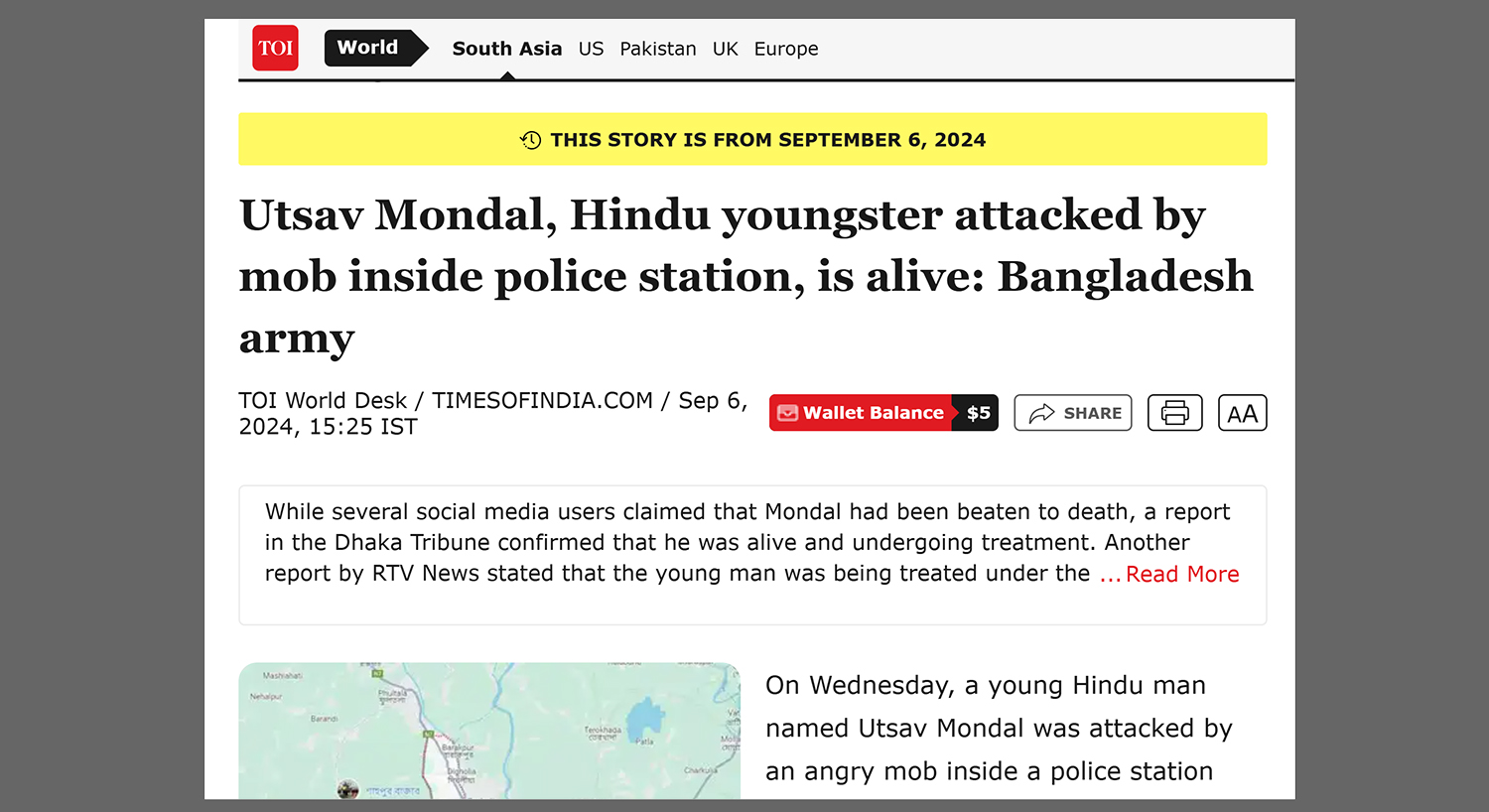
A helpless boy, in front of him the police assigned to provide him security, and on the other side thousands of students and people ready to tear him apart and devour him. The police are indifferent, the crowd is frenzied. Does this boy have any crime? In their words, he has insulted the Prophet of Islam, Muhammad. The problem with fanatics, especially Muslim fanatics, is that they see even rational criticism of their Prophet as insult and abuse against the Prophet. Whatever the Prophet did, whatever he said—which is again recorded in their own Quran, Hadith, Sirat, translations, and tafsir—if you present those, they still feel it is insult. They used to consider Hasina as a Prophet too, and if anyone said anything against her, Hasina’s lance-spencers would pounce together, abduct, kill, or lock them up in the mirror room. Compared to Sekachina, Prophet Muhammad was an even bigger fascist, killer, and tyrant. Since there is no opportunity to know anything about the time of Prophet Muhammad through any neutral history or archaeological evidence, the books of Islam are the only resource. And with those alone it can be proven that Prophet Muhammad was an inhuman fascist, tyrant, killer, and perpetrator of genocide. At the same time he was racist and anti-knowledge and anti-science. If he lived in today’s time, he would have been tried in the International Court for crimes against humanity and genocide. Those who consider Prophet Muhammad pure, holy, and sinless have actually never read Islam’s own books with an open mind.
Now if someone says these things, is that any kind of wrongdoing? I do not know what this boy wrote or said. But Sekachina and Prophet Muhammad are both public figures. Every single person in the world has the right to criticize them. Even false criticism or abuse in their name also falls under the level of people’s fundamental freedom of speech and human rights. Criticizing an imaginary God is also a human right. The problem is that Prophet Muhammad said that if someone criticizes Allah and then repents and asks for forgiveness, he will be forgiven, but if someone even slightly criticizes him, then that person becomes a “shatime rasul” (insulter of the Prophet), and the punishment for “shatime rasul” in Islam is the death penalty.
Were there so many radical people all around before? Now we see people breaking shrines, laying hands on folk singers. A retired teacher used to tutor my sister, he was from a Hindu family. The gentleman was science-minded, an atheist. He used to openly criticize religion and the creator. I have never seen anyone disrespect him. Rather, everyone used to seek his advice and wisdom. In folk songs, “jari” and “sari” songs, there used to be many lines that challenged conventional religious beliefs and the concept of God.
The Renaissance that took place in Europe was to free the state and society from the influence of the Christian Church. Through this they removed religious control from the state. Religion became a personal matter for individuals. Only after that did Europe become prosperous, and now it is the model of the humane world. Therefore, if you cannot remove religion from the state system, if you do not accept people’s freedom of speech, then how will you build a new Bangladesh? However, I am still hopeful that there will be a positive change in the country. And I am hopeful precisely because of this Gen Z generation. In front of them, in fact, there was almost no dissemination or spread of ideas outside religion. From birth they have seen sermons and religious admonitions everywhere. They did not get the opportunity for free thought. But I have not found the main leaders among them to be people with fundamentalist thinking. Some say many of them are from madrasa backgrounds. This can even be a plus point for them. Having a madrasa background and later getting the opportunity to study at university, they can easily distinguish between the two worlds of thought. Take Mahfuz Alam, for example, who is being called the mastermind of the Gen Z revolution—listen to his two recent speeches. I did not feel that he or they are people with fundamentalist thinking. Notice one thing about them: they do not bring religious rituals much into their words or behavior. No one starts speaking with “salam”, I have not seen them say “bismillah”, “mashallah”, “inshallah”. If you pay attention to Mahfuz Alam’s speeches or his timeline, you will not find these.
The degradation of this country did not happen in a single day. Therefore, the journey of this country on the path of progress will not happen in a single day either. We have to be a little patient, we have to wait. The injustices that are happening now are not things that never happened before. These are, in a sense, our national characteristics. Therefore, we must change the mindset of the nation through the spread of proper, knowledge-based education. Not much, if you can ensure people’s basic human rights and freedom of speech, the country will naturally start walking on the path of development. Please resist and oppose radical fanatical lunatics. Just as someone has the right to practice religion without obstruction, another person also has the right not to practice religion, and to criticize religious great men or God. If you do not understand this simple standard of civilization, then you yourselves are the greatest enemies of the country, the lance-spencers of fascism.
Related Posts

Actresses Shabana, Moushumi, Popy – Religious Sentiment and the Politics of the Public Sphere
In the history of Bangladeshi cinema, names like Shabana, Moushumi and Popy mark important chapters.Read More
নায়িকা শাবানা, মৌসুমী, পপি – ধর্মানুভূতি এবং জনপরিসরের রাজনীতি
বাংলাদেশের চলচ্চিত্র ইতিহাসে শাবানা, মৌসুমী কিংবা পপির মতো নাম গুরুত্বপূর্ণ অধ্যায়। তারা আশি, নব্বই ওRead More
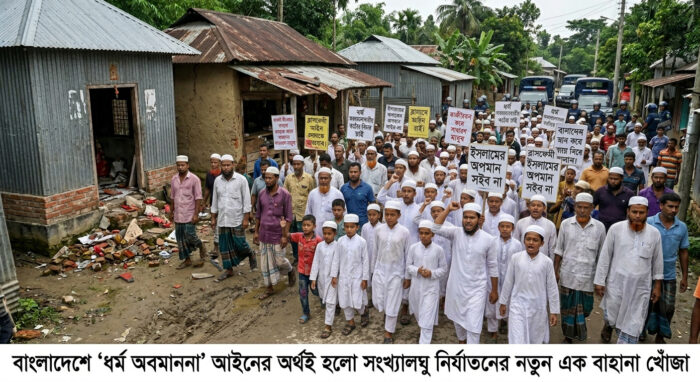
In Bangladesh, the very meaning of the “blasphemy” law is to find a new pretext for persecuting minorities
The attack on the house, shop, and temple of Deepto Roy in Tahirpur, Sunamganj isRead More
Comments are Closed