
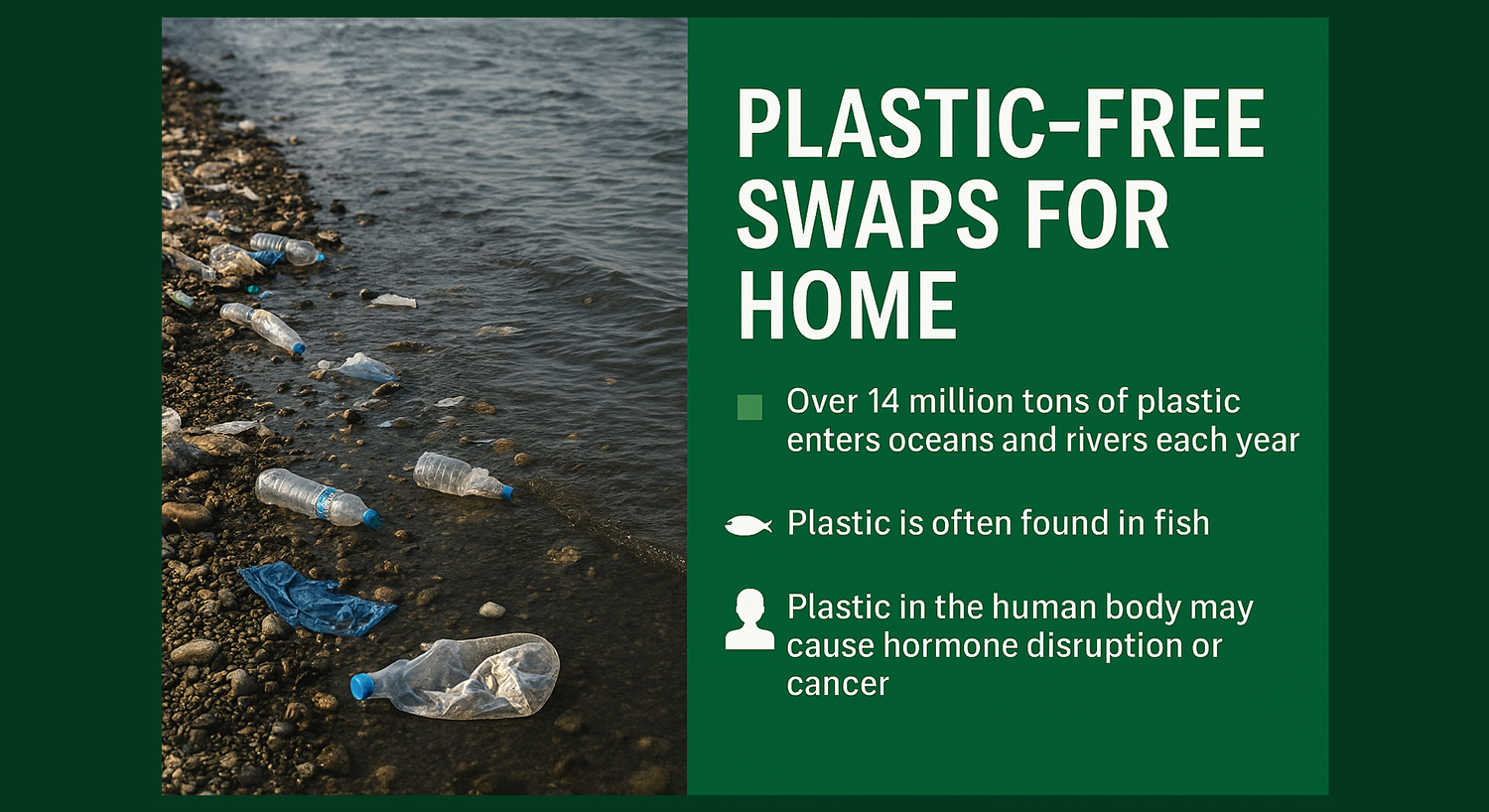
No Plastics at Home
Plastic-Free Home: A Complete Guide to Sustainable and Eco-Friendly Alternatives for Everyday Living
🌿 Plastic‑Free Home
Plastic pollution is now a global crisis. Most plastic waste piles up from our everyday household use – shopping bags, bottles, packaging, kitchen items, bathroom products – altogether our home becomes a major source of plastic waste. The good news is, by using some very simple plastic‑free swaps or plastic‑free alternatives, we can make our home healthier, more eco‑friendly, and sustainable.
🏡 Plastic‑Free Home: Why is it important?
- Plastic takes 400–1000 years to break down
- Microplastics are spreading into food, water, and air – everywhere
- Burning or breaking down plastic creates toxic chemicals
- Risky for the health of children, pets, and the whole family
- Extremely harmful for the environment, rivers, oceans, and wildlife
🍃 1. Plastic‑free alternatives in the kitchen
- Beeswax wrap: For wrapping food, covering bowls, reusable
- Glass/steel containers: Keeps food safe, doesn’t retain odor
- Glass/steel bottles with filter: BPA‑free, healthier
- Coconut fiber scrubber: 100% biodegradable
🛁 2. Plastic‑free alternatives in the bathroom
- Bamboo toothbrush: Biodegradable, soft bristles
- Soap bar: Reduces plastic bottles, lasts longer
- Shampoo bar: Travel‑friendly, fewer chemicals
🧺 3. Plastic‑free alternatives for laundry and cleaning
- Detergent sheets/powder: No plastic bottles, dissolves easily
- Wooden brush: Durable, effective for cleaning
🛒 4. Plastic‑free alternatives for shopping and storage
- Cotton/jute bags: Reusable, washable
- Bulk shopping: Rice, lentils, spices – less plastic, lower cost
🌿 5. Plastic‑free alternatives for home decor and daily use
- Clay/wooden decor: Aesthetic and eco‑friendly
- Soy wax candles: Toxin‑free, long‑lasting fragrance
🐾 6. Plastic‑free alternatives for children and pets
- Wooden toys: Safe and educational
- Steel/ceramic bowls: Hygienic and easy to clean
📌 Easy tips to start a plastic‑free lifestyle
- You don’t need to change everything at once – start with one swap at a time
- Prioritize reusable items
- Buy in bulk from local markets
- Start composting at home
- Support plastic‑free brands
🌊 Plastic Pollution in Seas and Rivers: Real Facts & International Reports
🌍 How Much Plastic Enters the Ocean Every Year
- According to UNEP, about 11–14 million tons of plastic enter the seas and rivers every year
- This amount may become three times higher by 2040
- Currently, the total amount of plastic waste in the ocean is more than 200 million tons
🏞️ Real Examples of River Plastic Pollution
- Ganga River: Carries about 115,000 tons of plastic every year
- Yangtze River: Carries more than 300,000 tons of plastic per year
- Buriganga, Shitalakshya, Karnaphuli: Around Dhaka, 70% of river waste is plastic
🐟 Plastic Inside Fish: Alarming Research Findings
🔬 How Microplastics Enter Fish Bodies
- Plastic breaks into particles smaller than 5 mm – called microplastics
- Fish mistake these for food and eat them
- Toxic chemicals (BPA, phthalates) accumulate in fish tissues
🌐 Real Research
- A study published in Nature found that 75% of marine fish contain microplastics
- 61% of fish from the Chattogram coast contained microplastics
- Cod, herring, and sardines caught in Europe all contained plastic particles
🧍♂️ What Happens When Plastic Enters the Human Body
🔬 How Humans Consume Plastic
- Through fish, salt, water, milk, and even air
- According to WHO, a person consumes about 5 grams of plastic per week – equal to a credit card
⚠️ Health Effects of Plastic in the Human Body
- Disrupts hormonal balance → thyroid disorders, reproductive issues
- Increases cancer risk → DNA damage, breast/prostate cancer
- Risk of heart disease → blocked blood vessels, inflammation
- Liver and kidney damage → reduced toxin filtering
- Weakens the immune system → chronic inflammation
- Dangerous for pregnant women and babies → plastic particles found in placenta
A plastic‑free home is not a luxury – it is a responsibility for future generations. Small changes create big impacts. Start with one swap today – tomorrow your home, family, and planet will be safer.
Related Posts

Why does Allah show such preference for women with large breasts and large buttocks? Do men feel the same way? Does this give women any advantage?
If you leave Prophet Muhammad in Pattaya’s Walking Street and Beach Road after evening, inRead More
নারীর বড় বক্ষ ও নিতম্বের প্রতি আল্লাহর এতো পক্ষপাত কেন? পুরুষেরও কি তাই? এটা কি নারীকে সুবিধা দেয়?
আপনারা যদি পাতায়ার ওয়াকিং স্ট্রীটে ও বীচ রোডে সন্ধ্যার পর আলো আঁধারিতে নবী মুহাম্মদকে ছেড়েRead More

Do women like the color pink? What is the psychology behind it?
Last winter my friend Lamia went to buy a birthday present for her niece. TheRead More
Comments are Closed