
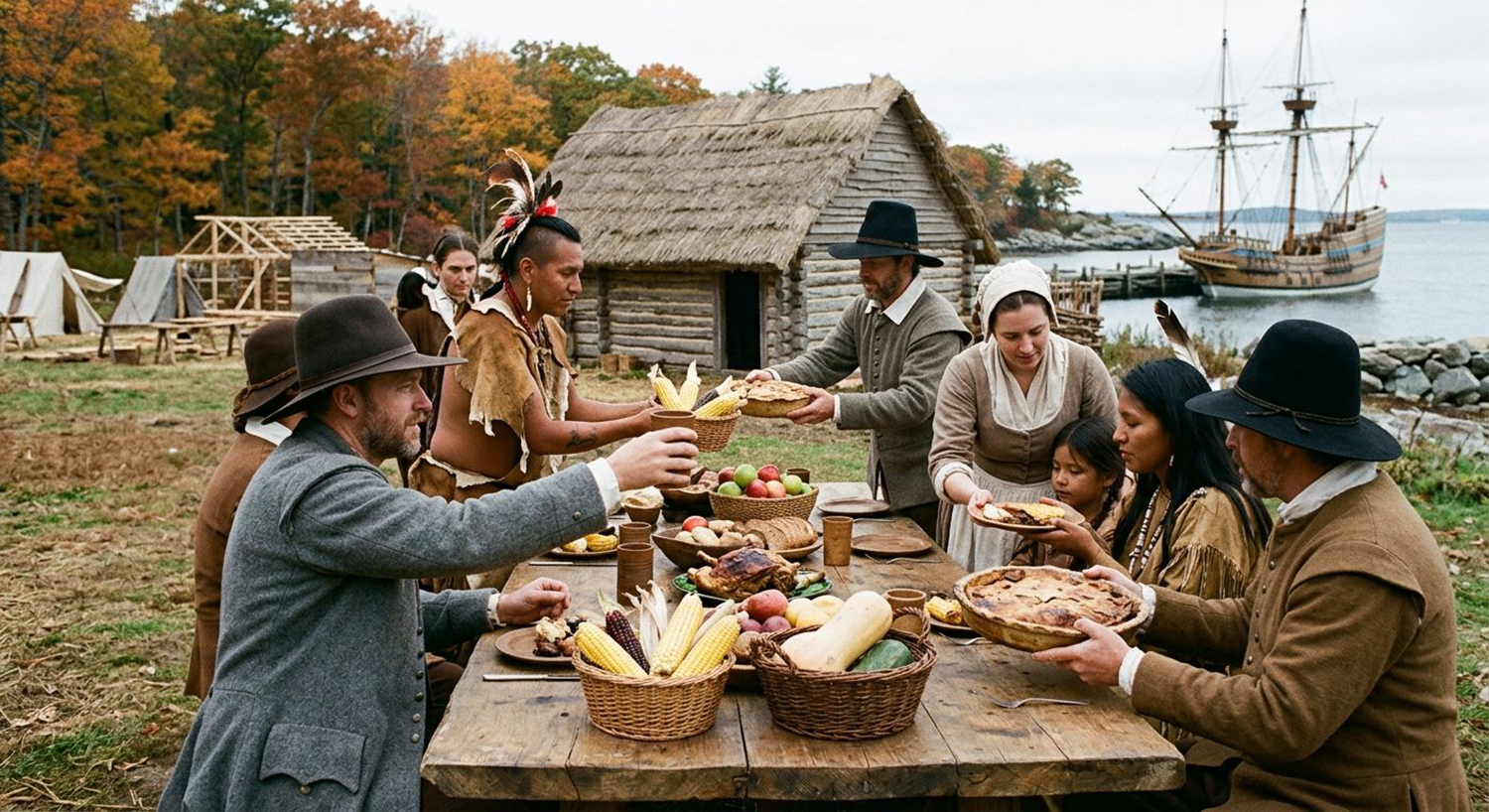
Native Americans and Agriculture
Mayflower, Thanksgiving, and the Extraordinary Contributions of Native Americans to World Agriculture
In September 1620, 102 passengers set sail from Plymouth, England, aboard a famous ship called the Mayflower, heading toward America. Among them was a large group known as the Pilgrims, who were seeking a new land to escape religious persecution in England and to practice their faith freely. After a long and extremely dangerous two-month sea voyage, the ship arrived at the coast of Plymouth in present-day Massachusetts in late November 1620. This historic journey marked the beginning of a new chapter in American history.
The first winter that the Pilgrims faced in this unfamiliar land was harsh and devastating. Severe cold, food shortages, and infectious diseases led to the death of nearly half of the passengers during that first year. However, with the arrival of spring, a glimmer of hope emerged in their lives. The local Native American tribe, the Wampanoag, especially an individual named Squanto, came forward to help the Pilgrims. He taught them how to grow corn, how to fish, and how to adapt to the local environment.
With the help of the Native Americans, the Pilgrims were able to harvest their first successful crops in the autumn of 1621. To celebrate this success and express gratitude for their survival, the Pilgrims organized a feast. They invited the Wampanoag chief Massasoit and around 90 members of his community to join them. This three-day gathering is considered the first Thanksgiving in American history, which is still celebrated annually with great respect. Although Native Americans extended such cooperation to others, their history has always been marked by struggle and deprivation alongside it.
The history of Native Americans is not only a story of struggle and oppression but also one of the greatest and richest chapters of human civilization. Their contributions to global agriculture, in particular, are unparalleled. Many of the foods that appear in our kitchens, restaurants, and on the plates of millions around the world today are the result of thousands of years of effort, innovation, and agricultural practice by these indigenous people. Just as they once saved the hungry Pilgrims in 1620, their cultivated crops continue to feed millions across the globe. Their unique contributions to agriculture have permanently transformed the course of human civilization.
The historical “Columbian Exchange,” which began after Columbus discovered America, completely changed global food culture. Before this exchange, people in Asia, Europe, or Africa had no knowledge of potatoes or chili peppers. Today, it is almost impossible to imagine Bengali or Indian cuisine without potatoes or green chilies—both originally domesticated by Native Americans. If they had not transformed wild plants into cultivable crops over thousands of years in regions like the Andes and Mesoamerica, the modern world’s food landscape would have been vastly poorer. Through their efforts, a silent yet transformative agricultural revolution spread across the globe.
Potatoes and maize (corn), two of the most essential pillars of global food security, are gifts from Native Americans. Indigenous people of the Andes developed hundreds of varieties of potatoes, adapting them to harsh climates. Today, potatoes serve as a highly nutritious and affordable food source for billions of people worldwide. Similarly, Native Mexicans transformed a wild grass called teosinte into modern maize through years of selective cultivation. Maize serves not only as human food but also as animal feed and a primary raw material in various industries, making it a key driver of the global economy.
Sweet potatoes and cassava have played a crucial role in food security in tropical regions. In many parts of sub-Saharan Africa and Asia, where other crops fail to grow, cassava and sweet potatoes—originally developed by Native Americans—are staple foods. Rich in nutrients, these crops can survive drought and poor soil conditions, helping to combat malnutrition and famine for centuries in the world’s poorest regions.
Native Americans have also enriched the diversity and vibrancy of global cuisine through their contributions to fruits and vegetables. Tomatoes, pumpkins, squash, various types of beans (such as kidney beans and lima beans), and peanuts were cultivated successfully long before the Columbian era. Today, Italian pasta and pizza are unimaginable without tomatoes, while beans remain a major source of protein worldwide. Additionally, fruits such as papaya, pineapple, avocado, and guava, rich in flavor and vitamins, were introduced globally through Native Americans and now play a major role in the international fruit market.
In the realms of taste and enjoyment, Native Americans also made remarkable contributions. Chocolate (cocoa) and vanilla—two of the most beloved flavors in the world—originated from them. Indigenous civilizations like the Maya and Aztecs prepared beverages from cocoa beans and used vanilla as a fragrance. Today’s billion-dollar chocolate and ice cream industries rely entirely on these discoveries. Moreover, tobacco, a major commercial crop with significant economic impact, was also cultivated by Native Americans and used in their religious and social rituals.
The agricultural revolution led by Native Americans was not limited to crop domestication; their farming methods were also highly advanced and sustainable. One notable example is the “Three Sisters” technique, where corn, beans, and squash were grown together in the same field. Corn provided a structure for bean vines to climb, beans enriched the soil with nitrogen, and squash leaves covered the ground, retaining moisture and preventing weeds. This environmentally friendly and scientifically sound method demonstrates how harmoniously they lived with nature.
Therefore, it can be said that the prosperity of the modern world, its diverse food culture, and the food security of billions of people owe an irreparable debt to Native Americans.
Related Posts

Why do Islamist clerics consider Bengali cultural festivals their enemy?
This year, unlike many previous years, the major Hindu religious festival Durga Puja in BangladeshRead More
ইসলামিস্ট মোল্লারা কেন বাঙালিদের আনন্দ উৎসবকে তাদের শত্রু মনে করে?
এবার বাংলাদেশে অন্যবারের তুলনায় বেশ শান্তিপূর্ণ, উৎসবমুখর পরিবেশে হিন্দু ধর্মের বড় ধর্মীয় উৎসব দূর্গাপূজা হয়েRead More

Why do Islamist cyber‑jihadis insult, threaten, and file false reports against people with different opinions?
Maulana Azhari once advised Islamists that sharing his Facebook posts is also an Islamic act;Read More
Comments are Closed