
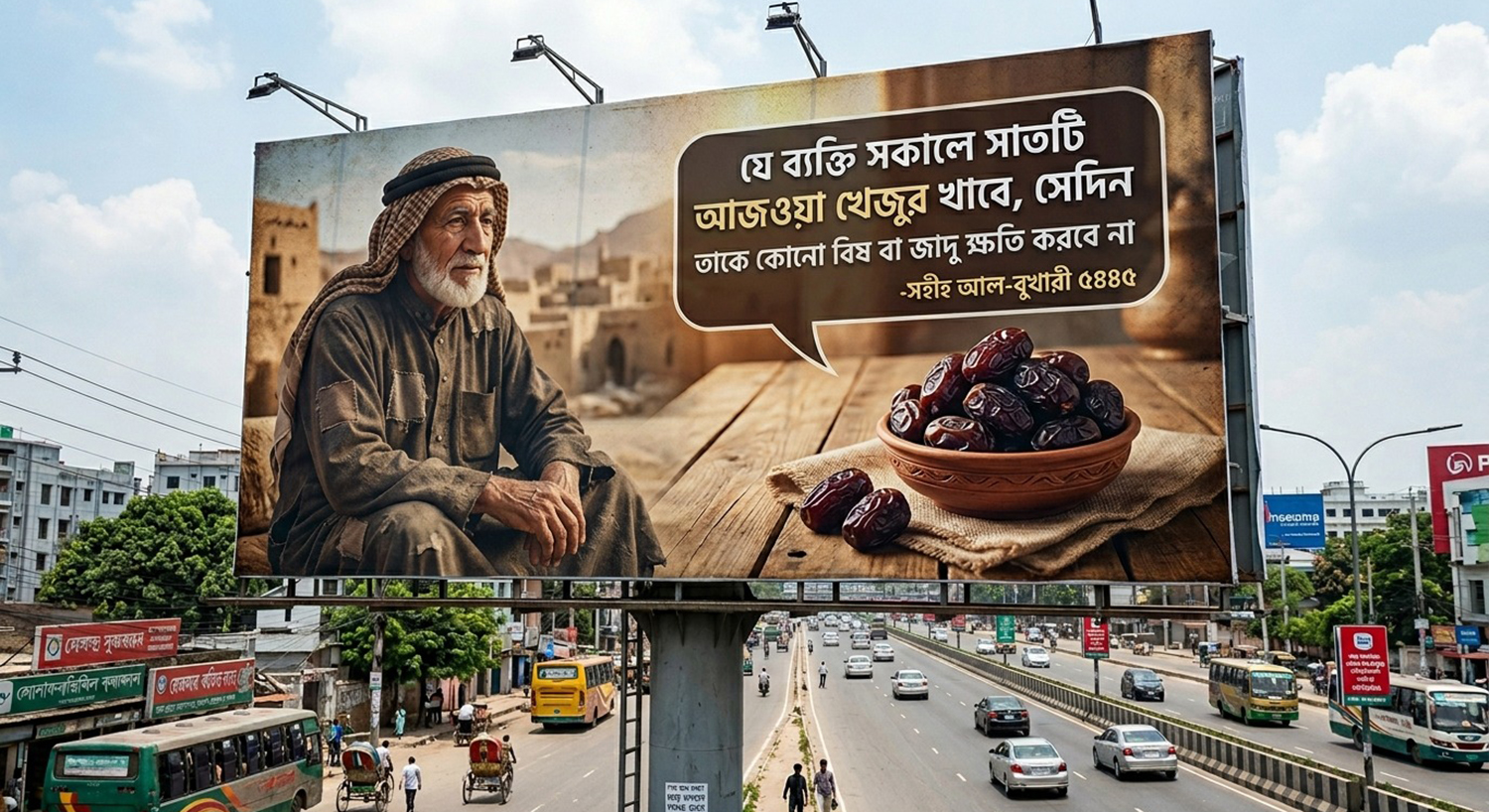
Is Muhammad a Prophet?
Prophet Muhammad died after suffering intense pain and agony toward the end of his life
In Sahih al-Bukhari Hadith 5445, Prophet Muhammad said that whoever eats seven Ajwa dates in the morning will not be harmed by poison or magic that day.
In Surah Al-Ma’idah (verse 67), Allah — presented as Muhammad’s divine identity — states: “…and Allah will protect you from the people (harm/attack).”
In Surah Al-Haqqah (verses 44–46), Allah — again presented as Muhammad’s divine identity — says: “If he had fabricated anything in My name, We would have seized him by the right hand, and then cut off his aorta.”
It is observed that in Muhammad’s life, events such as poisoning, being affected by magic, being attacked, and suffering pain like the severing of the aorta all occurred. What do you call being trapped in one’s own trap like this? Does that mean Muhammad was a false prophet? If he was false, then his claimed divine source (Allah) is also false, and Islam itself is false. Even after all this, Islam still has something to say. Your clock says it is 12 noon, the sun is overhead, but if Islam says it is afternoon, it will still have something to say. Islam always has something to say. You will surely find those arguments in the comments. We are ordinary people; we think simply using common sense.
According to Sahih al-Bukhari 4228 and other reliable sources, after the conquest of Khaybar (628 CE / 7 AH), a Jewish woman named Zaynab bint al-Harith offered Prophet Muhammad roasted goat meat mixed with strong poison with the intention of killing him. She knew that the Prophet favored the shoulder portion of the goat, so she applied the most poison there.
Prophet Muhammad took a piece of the meat into his mouth and chewed it, but realized the poison before swallowing and spat it out. However, his companion Bishr ibn al-Bara swallowed the meat and later died due to the severity of the poison.
Although the Prophet did not swallow it, some of the poison entered his bloodstream through saliva while chewing. According to historical and hadith accounts, he lived for about three more years after the incident, but the effects of the poison did not fully disappear. At certain times each year, he felt severe pain from it and used cupping therapy (hijama) for relief. (This is why cupping became so popular among Muslims as a kind of upgraded version of traditional horn therapy — Islam has created many such business opportunities!)
Toward the end of his life, especially in 11 AH (632 CE), during his final illness, the pain from the poison intensified greatly. He described the severity of this suffering to his young wife Aisha.
According to Sahih al-Bukhari 4438, Aisha reported that during his final illness, the Prophet said: “O Aisha! I still feel the pain from the food I ate at Khaybar, and now I feel as if my aorta is being cut because of that poison.”
In Surah Al-Haqqah (44–46), Allah had said that if Muhammad were false, his aorta would be cut.
Sahih al-Bukhari 3175 states that Muhammad was affected by magic. Due to that magic, he would say incorrect things and suffered short-term memory issues. Surah Al-Furqan (verses 8–9) also mentions Muhammad as being affected by magic.
What someone claims and what they actually demonstrate can be very different.
How do you reconcile all this? You figure it out — and enjoy the insults and sarcasm from believers in the comments. What else can you do? Islam will always have something to say.
Related Posts

Operation Entebbe – the story of one night, and the Islamic execution suffered by Nazrul Islam and Sweety Akter
What can a state do to save the lives of its citizens abroad? Are thereRead More
অপারেশান এন্টেবে – এক রাতের গল্প এবং নজরুল ইসলাম ও সুইটি আক্তারের ইসলামি হত্যার শিকার হওয়া!
একটি রাষ্ট্র বিদেশে তার নাগরিকদের জীবন বাঁচাতে কী করতে পারে? এর কোন টেক্সটবুক উদাহরণ আছে?Read More
A random page from Muhammad’s self‑made book Qur’an and its unscientific statements
Sometimes I flip through random pages of Muhammad’s self‑made book Qur’an, and today this pageRead More
Comments are Closed