
ICT and Bangladesh
How ICT Development Empowers Vulnerable Communities in Bangladesh
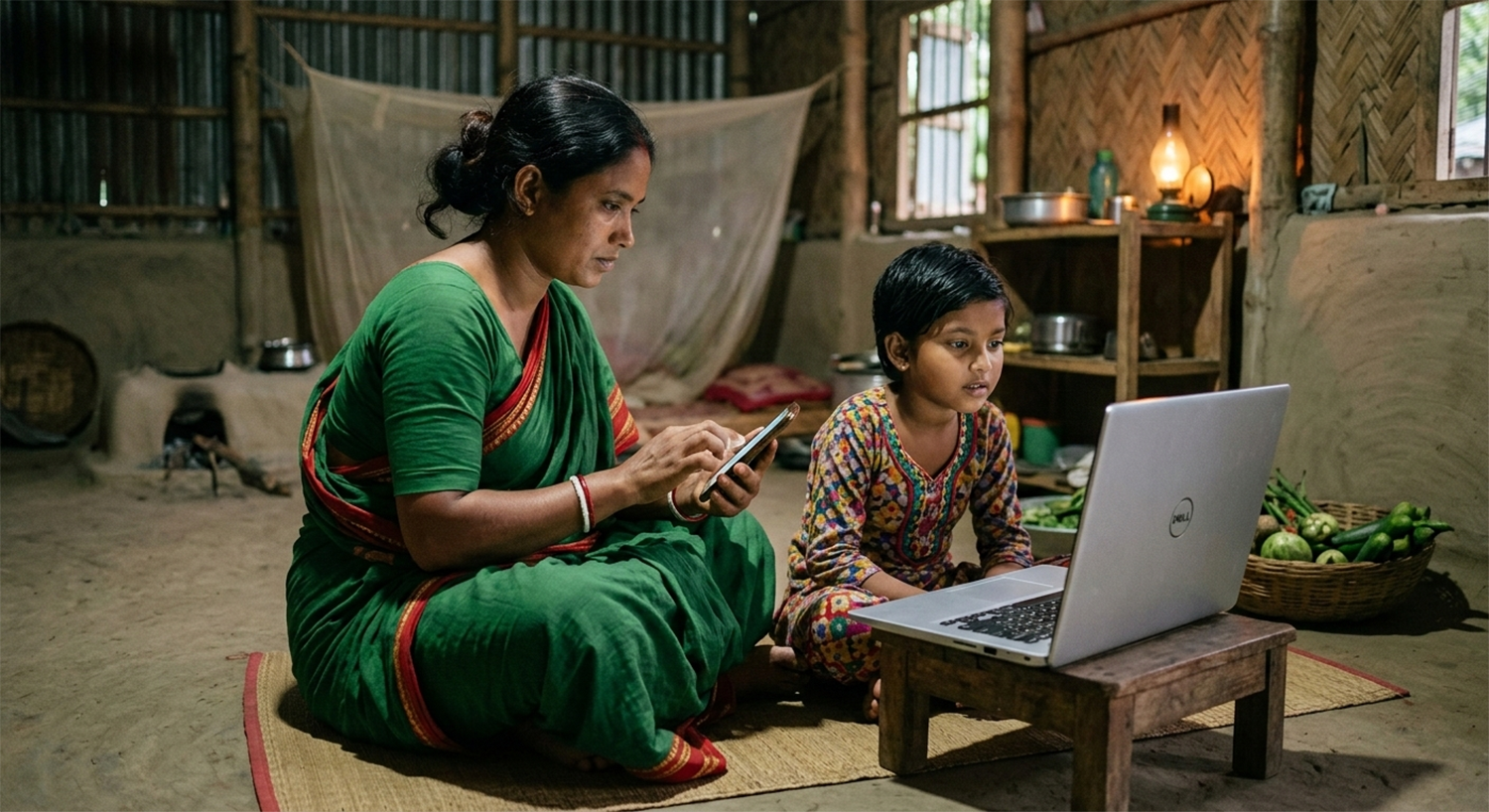
The rapid advancement of Information and Communication Technology (ICT) in Bangladesh is not only accelerating economic growth but also playing a vital role in improving the lives of vulnerable communities – such as women, the rural poor, persons with disabilities, small entrepreneurs, and marginalized groups. Through the Digital Bangladesh initiative, expanded internet access, mobile technology, and the growth of public and private digital services, millions of people across the country are gaining access to new opportunities, information, education, and essential services. ICT development is no longer just technological progress; it has become a powerful tool for social justice, inclusion, and empowerment.
This article discusses how ICT development is empowering vulnerable communities in Bangladesh and bringing real changes to their lives.
1. Social Inclusion Through Access to Digital Services
Union Digital Centers (UDC), digital health services, e-filing, e-tax, birth and death registration, and various online government services have made service access easier for rural and marginalized communities in Bangladesh. Services that once required traveling long distances to urban centers are now available locally.
- Women can access government services from home
- Persons with disabilities can reduce hardship by using online services
- Rural communities save both time and money
As a result, digital services are strengthening social inclusion.
2. Online Education and Skill Development
ICT development has opened new doors of opportunity for vulnerable communities in Bangladesh through online education. Especially after COVID‑19, online classes, YouTube learning, e‑learning platforms, and mobile apps have made education more accessible.
- Rural students can participate in online classes
- Women can take skill development courses from home
- Students with disabilities can learn using assistive technologies
This is increasing opportunities for employment and self‑reliance.
3. Mobile Banking and Financial Inclusion
Mobile financial services (MFS) such as bKash, Nagad, and Rocket have revolutionized financial inclusion in Bangladesh. Even people without traditional bank accounts can now conduct financial transactions using mobile phones.
- Women entrepreneurs can easily access capital
- Remittances can be sent safely and quickly
- The rural poor can save and transact money conveniently
Thus, financial services are becoming accessible to all.
4. The Role of ICT in Healthcare
Telemedicine, online doctor appointments, health information apps, and digital hospital management systems have made healthcare more accessible in Bangladesh.
- People in remote areas can consult specialist doctors
- Health information for pregnant women and children is easily available
- Persons with disabilities and the elderly can receive medical support from home
This plays a crucial role in reducing healthcare inequality.
5. Entrepreneurship Development for Women and Marginalized Groups
Facebook Marketplace, e‑commerce, online shops, and digital marketing – these ICT‑based opportunities are helping women and marginalized groups in Bangladesh become entrepreneurs.
- Rural women are running online businesses from home
- The market for handicrafts, agricultural products, and local goods is expanding
- Digital marketing is helping reach new customers
This is strengthening economic empowerment.
6. Freedom of Information and Increased Awareness
The internet and social media have expanded access to information. Vulnerable communities can now easily learn about their rights, government benefits, laws, health, education, and employment opportunities.
- Increased awareness of human rights
- Digital literacy helps prevent misinformation
- Public opinion is being mobilized against social problems
This contributes to establishing social justice.
Conclusion: ICT Development Is Making Bangladesh’s Future More Inclusive
ICT development has created new opportunities, freedom, and pathways to empowerment for vulnerable communities in Bangladesh. In education, healthcare, financial services, entrepreneurship, and access to information – ICT is building a bridge toward equality. With proper and inclusive use of digital technology, Bangladesh can build a more just, inclusive, and humane society.
Digital progress is truly successful only when it reaches everyone equally.
Related Posts

Operation Entebbe – the story of one night, and the Islamic execution suffered by Nazrul Islam and Sweety Akter
What can a state do to save the lives of its citizens abroad? Are thereRead More
অপারেশান এন্টেবে – এক রাতের গল্প এবং নজরুল ইসলাম ও সুইটি আক্তারের ইসলামি হত্যার শিকার হওয়া!
একটি রাষ্ট্র বিদেশে তার নাগরিকদের জীবন বাঁচাতে কী করতে পারে? এর কোন টেক্সটবুক উদাহরণ আছে?Read More

A random page from Muhammad’s self‑made book Qur’an and its unscientific statements
Sometimes I flip through random pages of Muhammad’s self‑made book Qur’an, and today this pageRead More
Comments are Closed