
For Humans
In Search of Humans
Today, when I open YouTube, scroll through Facebook, or get lost in TikTok’s endless feed, a strange emptiness grips me. Videos play, images float by, music plays, but the mind no longer holds on. Once upon a time, I could sit for hours watching a single video; now even three minutes feels unbearable. Shorts, reels, TikTok—these fleeting mediums have shrunk our attention span so much that we no longer have the patience to watch a one‑hour deep discussion or a three‑hour documentary. Yet amid this restlessness, one thing becomes clear—people still return in search of people. The voice of a flesh‑and‑blood human, their hesitation, their mistakes, their imperfections—within these lies a pull that cannot be found in the flawless constructions of artificial intelligence.
Today’s content world is a massive factory. Scripts written by AI, copy‑paste ideas taken from others’ videos, strategies to provoke religious sentiment for engagement—everything together creates a kind of mechanical production. Views will rise, likes will rise, the algorithm will be pleased. But does anything remain in the viewer’s mind? Often, it does not. As soon as one video ends, the next one starts, leaving no trace of the previous one. It is like an endless river whose water never stands still, never becomes deep. People standing on the banks of this river have grown tired. They want something that makes them stop, think, and feel shaken.
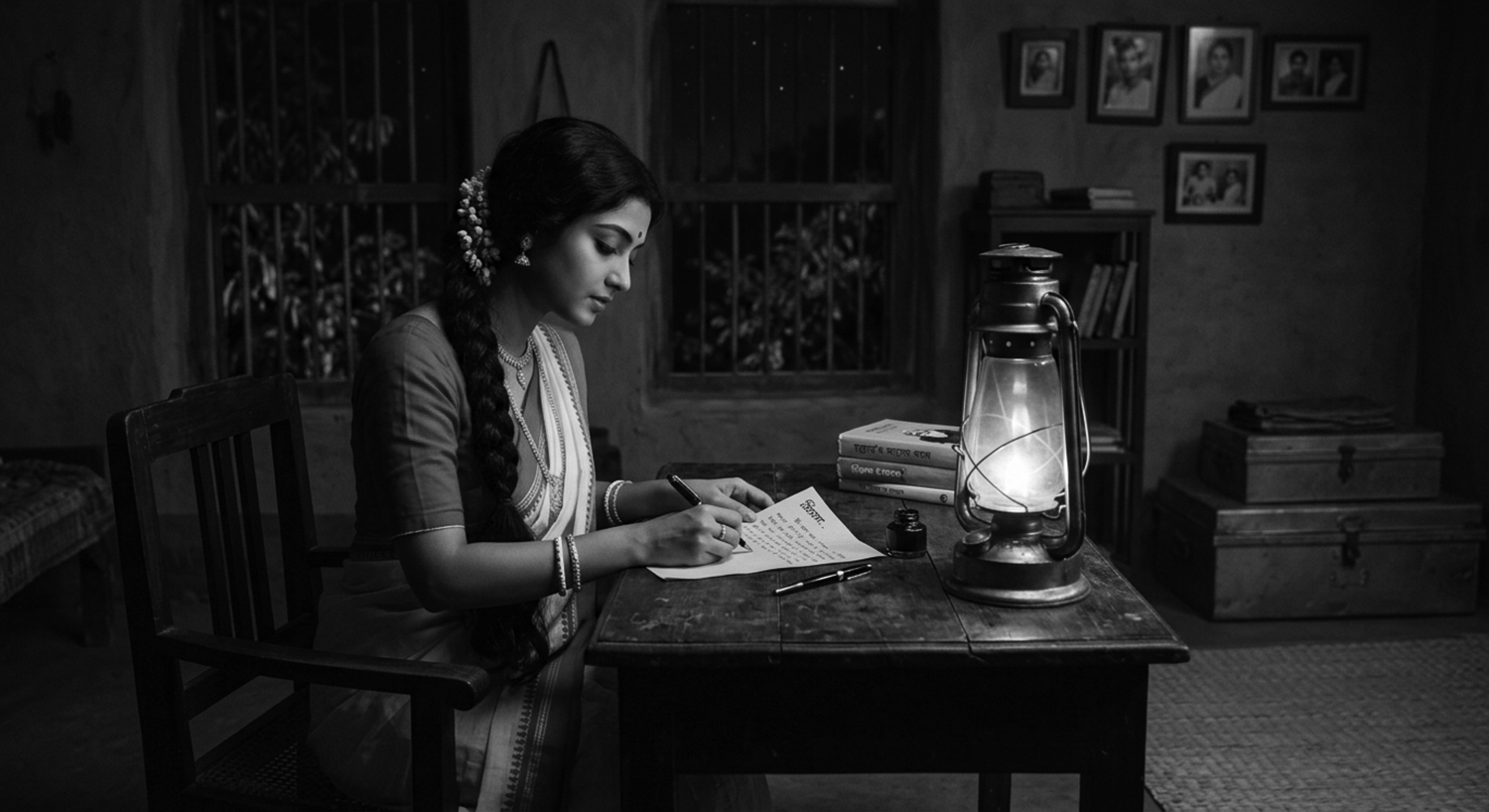
Only human‑made things have this power to shake. Think of a handwritten letter. Today, the practice of writing letters is almost extinct. Yet if a piece of paper with two lines written by a loved one comes into your hands—even if it arrives digitally—even if it is extremely simple, full of grammatical mistakes, not literary—it still carries a different weight. That ink, that tremble, those imperfect letters seem to come alive. A letter is permanent—this remains true even today. Because a letter carries not just information, but presence. The writer’s breath, their momentary feeling, their loneliness or joy—all remain folded within that paper. Digital messages disappear, but two handwritten lines stay in a drawer for years, and every time you see them, your heart fills up.
Human content is just like that. When an ordinary person shares an experience from their life—their failures, their hesitation, their small joys—it becomes a mirror inside the listener. AI‑generated perfect speeches do not have this mirror. Because AI does not know what failure is, does not know the pain of staying awake at night thinking, does not know the taste of the emptiness that comes after a relationship breaks. The tremble in a human voice, the pauses, the sudden rise of emotion—these are the real things. These are what bind the audience.
In the age of shorts and reels, creating this bond has become difficult. Because the attention market is now fleeting. If you cannot grab the viewer in three seconds, they leave. As a result, content creators are forced to create excitement, provoke religious or nationalist sentiment, or craft some drama that is not true but increases clicks. In this process, the human voice disappears. What remains is a kind of artificial excitement that becomes empty as soon as it ends. Yet people know that inside them still exists a hunger—for something deep, something slow, something imperfect but true.
The history of literature bears witness to this hunger. Letter literature, diaries, memoirs—these are all records of human experience. Rabindranath’s letters, Bibhutibhushan’s memories, Jibanananda’s diaries—reading them feels like the writer is sitting beside you, speaking. No AI can create this feeling, because AI has no life. It has no memory, no wounds, no longing. The value of human‑made content lies exactly here—it carries the imprint of life.
In today’s digital age, finding this imprint is difficult, but not impossible. Some creators still exist who make slow, deep, personal content. They know that views may be low, but those who watch will remember. A good podcast, a video that is not perfectly edited but honest, an imperfect but sincere blog post—these are today’s letters. These bring people back to people.
Let me return again to the permanence of letters. A letter is not just paper; a letter is a human claim over time. When someone writes two lines to someone else, they stop time. They say—this moment is mine, this feeling is for you. Most digital content cannot make this claim. They try to surpass time, but cannot hold it. Human content holds time. It says—I am here, this is my experience, this is my thought. If you want, pause and listen.
This ability to pause and listen is today’s greatest crisis. We have become accustomed to constant motion. But the human mind is not a creature of speed. It wants pauses, silence, a voice that brings it back inside itself. The content of flesh‑and‑blood humans creates that pause. It says—I too am afraid, I too fail, I too rejoice. This acknowledgment is the greatest connection.
In the future, AI will become even more perfect, content will be produced even more, algorithms will control our attention even more precisely. But human hunger will remain unchanged. They will search for that voice where there are mistakes, where there is hesitation, where there is the imprint of life. They will search for those two lines someone wrote for them—even if they are very simple. Because within the ordinary lies the pull of the extraordinary.
In the end, the value of content is not determined by view count; it is determined by the stir it awakens inside the viewer or listener. Just as a handwritten letter creates that stir for years, sincere human‑made content also survives over time. AI may create perfect sentences, but it cannot create that imperfection which pulls humans toward humans. And that pull is eternal.
Related Posts
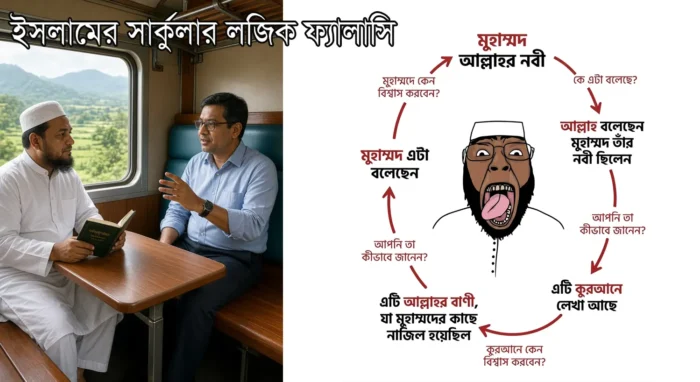
Islam’s Circular‑Logic Fallacy
Place: Cabin of a Dhaka–Sylhet-bound trainCharacters: Maulana Abdur Rahman (a responsible member of Tabligh Jamaat)Read More
ইসলামের সার্কুলার লজিক ফ্যালাসি
স্থান: ঢাকা থেকে সিলেটগামী ট্রেনের কেবিনচরিত্র: মাওলানা আব্দুর রহমান (তাবলিগ জামাতের একজন দায়িত্বশীল) ও অধ্যাপকRead More
Comments are Closed