

Bangali Girls
Behind that smile, countless oceans of sorrow are composed – yet they remain unseen by the world
Behind that smile, countless oceans of sorrow are composed – yet they remain unseen by the world.
Bengali girls possess a certain quiet magic.
In childhood, they tear small pieces of cloth to make dolls and tiny dresses. Laughing, they arrange marriages between their dolls and their friends’ dolls. And once the game is over, they sit quietly, their hearts somehow heavy.
As they grow a little older, the world becomes vast—but their movement within it is limited by family walls. That is when an inner world is born. Those solitary afternoon stories by the window never seem to end.
At school, if their eyes meet those of a boy they secretly like, they stare for a few breathless seconds without blinking. But once they pass him by, they cover their mouths, laughing as they walk away—while the boy is left utterly shattered by a thousand thoughts.
In the afternoons, they stand on rooftops watching the sky. On neighboring rooftops, boys secretly stand, watching them. While chatting with friends, they laugh a little louder on purpose, then steal sideways glances to see if the boys are still looking.
If there is a fuchka stall outside the school, everything else is forgotten. Plates after plates are devoured amid laughter and playful bets.
When college begins, they suddenly want to grow up—to dress like adults and step out into the world. At that time, a single tender gaze or a few kind words can melt them completely. And more often than not, mistakes are made.
If they know some boys like them, no matter how many, they walk past them now and then—just to make sure they are not forgotten. Later, while recounting these stories to friends, they dissolve into laughter.
At coaching centers or college, they keep brilliant students close with gentle smiles for help with notes, yet when it comes to outings, they choose the mischievous backbencher instead.
Though playful and mischievous, when they truly fall in love, their hands grow clammy in that person’s presence. Shyness overwhelms them. To catch attention, they laugh loudly, talk while stealing glances. When speaking directly, they hold eye contact for a while, their vision blurs, and they look away.
When the one they love takes their hand while talking, words get stuck, and language abandons them. Sitting beside that person, they almost ache with the desire to rest their head lightly on a shoulder.
When they dress for someone special, they carefully line their eyes with kohl. Sometimes they place a tiny bindi and gaze at themselves in fascination. On meeting their beloved, they wait impatiently for that moment of notice. When it finally comes, shame paints their cheeks red.
When it rains, they stretch a hand out the window to feel the drops. If allowed to get soaked, they spread their arms wide—finding a fleeting sense of freedom in the cool shiver of rain within a life bound by countless rules.
Married Bengali women, despite hunger, wait for their husbands to return. They endure, sulk, suffer—and even if he comes home late, they forget everything and sit down to eat with a smile.
Midway through life, they start anew in an unfamiliar family among strangers. They shoulder the terrifying responsibility of keeping everyone happy along with their own lives. Many kinds of sorrow dwell within, all hidden behind a smiling mask. With clenched jaws and tear-wet eyes, they sacrifice even their careers for the child in their arms.
And when someone asks how they are, they sigh softly and reply with a smile,
“I’m very happy.”
Behind that smile, so many oceans of sorrow are written—
yet they remain unseen.
I was speaking of Bengali girls of the 1990s.
After the year 2000, this narrative slowly began to change.
[Original text: Sanbir Khan Aranya]
Related Posts
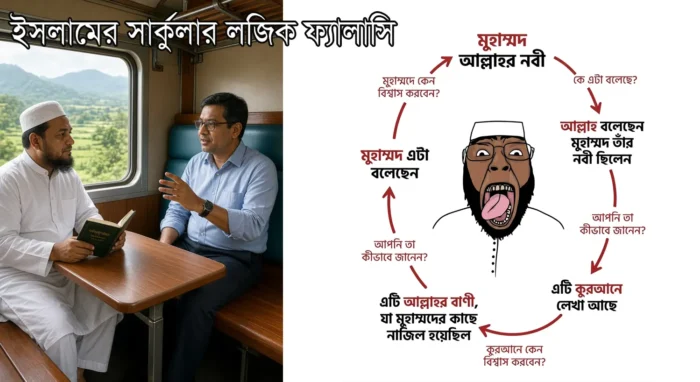
Islam’s Circular‑Logic Fallacy
Place: Cabin of a Dhaka–Sylhet-bound trainCharacters: Maulana Abdur Rahman (a responsible member of Tabligh Jamaat)Read More
ইসলামের সার্কুলার লজিক ফ্যালাসি
স্থান: ঢাকা থেকে সিলেটগামী ট্রেনের কেবিনচরিত্র: মাওলানা আব্দুর রহমান (তাবলিগ জামাতের একজন দায়িত্বশীল) ও অধ্যাপকRead More
Comments are Closed