

Pseudoscience in Islam and the Quran
Islamic Pseudoscience: The Fallacies of “Scientific Miracles,” Creationism, and Islamic Medical Claims
This article analyzes several pseudoscientific trends prevalent in the Muslim world: claims of “scientific miracles” in the Qur’an (i’jaz ‘ilmi), Islamic-branded anti-evolution creationism, and certain hadith-based medical beliefs. Applying common criteria used to distinguish science from pseudoscience (falsifiability, quality of evidence, post hoc reinterpretation, and selective use of data), it argues that many of these claims are methodologically flawed. At the same time, the article makes clear that the target of criticism is specific claims and methods, not believers as a group; and that many Muslim thinkers themselves are critics of these claims.
Keywords: pseudoscience, i’jaz ‘ilmi, Islamic creationism, falsifiability, hadith and medicine
1. Introduction and Methodology
There are several positions within the Muslim world regarding the relationship between Islam and science: the thesis of non-conflict, attempts at reconciliation, and efforts to subordinate science to scripture (Edis 2007; Bigliardi 2014; Guessoum 2011). Here, “pseudoscience” refers to claims that seek the status of science while failing to meet the standards of the scientific method. Four criteria are used in this analysis:
- Falsifiability: Whether it is clear what observation would prove the claim wrong (Popper 1959).
- Post hoc interpretation: Whether meaning is being discovered in an ancient text after a scientific finding, or whether a testable prediction was made in advance.
- Quality of evidence: Whether there are peer-reviewed studies, reproducibility, and clinical trials.
- Consistency: Whether the same standards of reasoning are applied in all cases, or changed opportunistically (Thagard 1978 discusses markers of pseudoscience).
2. Claims of “Scientific Miracles”
2.1 Origins of the Concept
The modern popular form of i’jaz ‘ilmi literature spread through Maurice Bucaille’s La Bible, le Coran et la science (1976) and editions of Keith Moore’s embryology textbook that included “Islamic additions” (Bucaille 1976; Moore 1986). The central argument is that a seventh-century text contains information humans could not have known, and therefore its source is divine. This argument rests on assumptions (“proving humans did not know” is difficult) and faces multiple methodological problems in practice.
2.2 Case Study: “The Two Seas” (Qur’an 25:53; 55:19–20)
The verses mention a “barzakh” (barrier/intermediate partition) and a “hijran mahjura” (forbidden boundary) between two bodies of water. Zakir Naik and others interpret this as describing the “non-mixing” of fresh and salt water in estuaries (Naik 2022). There are three problems with this claim:
- In estuaries, waters do mix; there are zones of gradually changing salinity (haloclines/brackish regions). The claim of an “insurmountable boundary” does not match observation, requiring a reinterpretation into a “transition zone.”
- If the phenomenon is visible to the naked eye, then seventh-century sailors and merchants could also have been familiar with it; no predictive value remains.
- The verses provide no numerical value, measurement, or testable prediction, leaving no opportunity for falsification.
2.3 Embryology (23:12–14; 86:6–7)
Terms such as “alaqah,” “mudghah,” and “bones clothed with flesh” are often matched to stages of modern embryology. However: (a) classical dictionaries themselves disagree about the meaning of “alaqah” (leech, hanging thing, blood clot), making selective preference possible; (b) bones and muscles begin developing at broadly overlapping times, so the sequence “bones first, then flesh” is biologically oversimplified; (c) 86:6–7 (“from between the backbone and the ribs”) is linked by apologists to the embryological origin of the testes, even though the verse refers to the emission of semen, and classical tafsir generally offers different explanations; (d) the Islamic sections were removed in later editions of Moore’s textbook, making claims that “a Western scientist endorsed this” dependent on a particular edition.
2.4 Methodological Evaluation
A common flaw in i’jaz ‘ilmi is assigning meanings to ambiguous words after discoveries have been made; ignoring verses that do not fit (see Section 3); and dismissing inconvenient scientific findings as “science changes,” while treating convenient findings as proof of divine origin. If science later changes, the alleged miracle collapses. In other words, the truth of religion becomes tied to the temporary status of scientific theories. For this reason, many Muslim writers, including Ziauddin Sardar, have criticized the method (Sardar 1985). Al-Ghazali likewise warned in Al-Munqidh min al-Dalal that denying established astronomical facts in defense of Islam ultimately harms Islam itself (al-Ghazali, al-Munqidh).
3. Literal Readings and Conflicts with Science
Those who argue that the Qur’an is scientifically accurate in every respect must also confront passages that, under a literal reading, do not align with modern science. The examples below illustrate literal interpretations; each has metaphorical or alternative readings within Muslim tafsir traditions, but the need for precisely such reinterpretation highlights the methodological weakness of i’jaz ‘ilmi.
- 18:86: Dhul-Qarnayn sees the sun setting in a “muddy spring.” The sun does not literally set into any body of water on Earth.
- 36:38; Hadith: The sun runs toward its destination; in Sahih al-Bukhari (3199, 4802), it prostrates beneath the Throne after sunset. A literal reading is inconsistent with modern understanding of the solar system.
- 78:6–7 and 13:3: Mountains are compared to pegs. Geology recognizes mountain “roots” (isostasy), but the claim that mountains stabilize the Earth is not supported by plate tectonics. Rather, mountains are a result of tectonic processes.
- 15:17–18; 67:5: Meteors/stars are used to drive away devils; astronomy provides natural explanations for meteors.
- 41:9–12; 2:29: The Earth is created before the heavens, in six “days.” This does not align with the scientific chronology and age of the universe.
- 71:15–16: Within the seven heavens, the moon is described as a light and the sun as a lamp. The moon reflects light rather than producing its own.
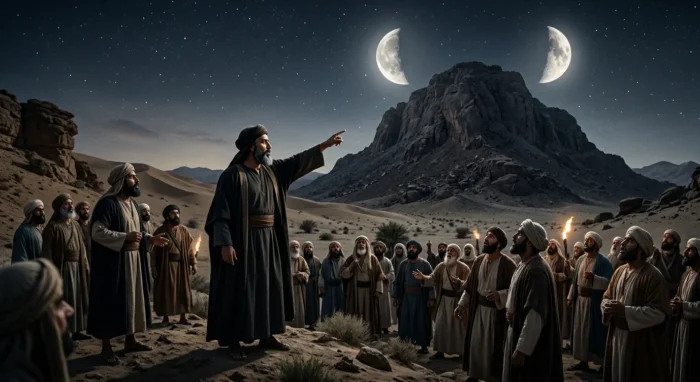
- 54:1 and Bukhari 3636: The splitting of the moon has no confirmed astronomical or contemporaneous historical corroboration. Claims that “NASA confirmed it” are an urban legend.
In every case there are two options:
(a) reinterpret the verse metaphorically to fit science (in which case the same principle should apply elsewhere as well), or
(b) retain the literal meaning and reject scientific conclusions. Neither option is consistent with the claim that “the Qur’an predicted modern science.”
4. Hadith and Medical Pseudoscience
The hadiths may be read as historical evidence of seventh-century medical practices; pseudoscience emerges when they are presented as proof of modern clinical effectiveness. (Hadith numbering may vary slightly across editions.)
- Wet cupping (hijama): Bukhari, Kitab al-Tibb (e.g., 5696 and following narrations). Systematic reviews have found the evidence for cupping to be weak and heavily dependent on biased studies (Lee, Kim & Ernst 2011). Its theoretical basis (“removing bad blood”) derives from ancient humoral medicine.
- Camel urine (Bukhari 233, 5686, the case of the ‘Uraynah tribe): Some preachers promote it as a medicine; there is no established clinical evidence of effectiveness. On the contrary, the World Health Organization advises avoiding unpasteurized camel milk and camel urine because of the risk of MERS-CoV infection (WHO MERS fact sheet).
- Fly wings (Bukhari 3320): The claim that one wing carries disease while the other carries its cure lacks supporting experimental evidence; immersing flies in beverages may increase health risks. Later “antimicrobial” explanations are post hoc rationalizations.
- Black seed (“a cure for every disease except death,” Bukhari 5687–5688): Some compounds in Nigella sativa may have biological activity, but the claim that it is a universal cure is not evidence-based. The key issue is the distinction between limited therapeutic benefit and universal efficacy.
- Vaccines: Some religious preachers argue against vaccination. By contrast, many Muslim leaders and juristic bodies have endorsed vaccines (e.g., the Sultan of Sokoto’s support for polio vaccination in Nigeria, Vanguard 2017).
An important point: Some active compounds from traditional herbal remedies have proven useful in modern pharmacology. But there is a difference between a historical medical tradition and a treatment being accepted today as mandatory or infallible without modern standards of evidence.
5. Islamic Creationism and Opposition to Evolution
The arguments used in the publications of Harun Yahya (Adnan Oktar) and preachers such as Iyad Qunaybi (junkyard-tornado analogies, irreducible complexity, “no transitional fossils”) are largely borrowed from Christian young-earth and intelligent design literature (Hameed 2008; Riexinger 2008). Thus, this is not intrinsically Islamic in substance but rather an Islamic adaptation of imported pseudoscience.
The Question of Falsifiability
Some critics claim that evolution is not falsifiable, citing Popper. Yet evolutionary theory makes numerous testable predictions regarding fossil sequences, molecular phylogenies, and geological chronology. For example, the discovery of modern mammalian fossils in Precambrian strata would create a profound challenge for the theory. In contrast, creationist readings are often structured in ways that no conceivable evidence could refute them.
Misuse of Hume
Hume’s skepticism about induction is sometimes invoked to portray evolution as unscientific. Yet in Dialogues Concerning Natural Religion (1779), Hume offered one of the most influential critiques of the design argument itself. Applying skepticism only to one side represents a double standard.
Survey Data
A 2013 Pew Research survey found wide variation in acceptance of evolution across Muslim-majority countries; for example, around 30 percent in Pakistan (Pew 2013). This suggests that religion alone does not determine outcomes; education, advocacy, and political context also play significant roles.
The Question of Adam and Eve
A literal reading of Adam’s direct creation from clay (e.g., 2:30–38; 38:71–72) conflicts with modern genetics and paleontology; acknowledging this tension is the starting point for an honest discussion. Muslim scientists such as Rana Dajani have attempted to reconcile the narrative with evolution, though theological questions remain (for example, concerning divine benevolence and the suffering inherent in evolutionary processes).
6. Inconsistencies and Sophistical Strategies
- One Text, Multiple Standards: When a verse appears to agree with science, science becomes “evidence”; when it does not, science becomes “changeable.”
- Misuse of Scientific Disagreement: Debates among scientists about mechanisms of evolution are portrayed as evidence that the entire theory is collapsing, while theological disagreements are quietly ignored.
- Leading Questions: Moving directly from intuitive moral feelings to belief in a specific revealed God, despite the existence of evolutionary and social explanations of morality.
- The Softer Version: Retreating from strong claims by saying, “It is not proof, only an invitation to reflect.” At that point, however, the claim is no longer science-supported but merely a source of spiritual inspiration.
7. Limitations and Opposing Perspectives
This analysis cannot determine the existence of God or the moral and spiritual value of the Qur’an; such questions lie beyond the jurisdiction of science. From Ibn Rushd’s Fasl al-Maqal to some contemporary exegetes, many Muslim traditions view the Qur’an not as a science textbook but as a guide. Conversely, supporters of i’jaz ‘ilmi argue that it is an effective method of religious outreach and helps reduce hostility toward science.
Critics’ response: Effectiveness is not evidence of truth, and belief built upon inaccurate claims becomes fragile when scientific understanding changes. Furthermore, whether a given claim counts as “pseudoscience” may itself be disputed among specialists, making it important to evaluate each claim individually.
8. Conclusion
Much of i’jaz ‘ilmi, Islamic creationism, and hadith-based clinical claims fail to meet standards of falsifiability, evidence, and consistency. However, pseudoscience is not an inherent feature of Islam: many of its components are imported, and there are strong critiques of them from within the Muslim scholarly and scientific community itself. The constructive path forward is to present all positions openly, along with their weaknesses, so that readers can reach their own conclusions.
References
- Khattab, M. (Trans.). The Clear Quran. https://clearquran.com/
- al-Bukhari. Sahih al-Bukhari (Kitab al-Tibb, Bad’ al-Khalq, Tafsir, Manaqib). Hadith numbering may vary across editions.
- al-Ghazali. al-Munqidh min al-Dalal (Deliverance from Error).
- Averroes (Ibn Rushd). Fasl al-Maqal (The Decisive Treatise).
- Bigliardi, S. (2014). Islam and the Quest for Modern Science. Swedish Research Institute in Istanbul.
- Bucaille, M. (1976). La Bible, le Coran et la science. Paris: Seghers.
- Edis, T. (2007). An Illusion of Harmony: Science and Religion in Islam. Prometheus Books.
- Guessoum, N. (2011). Islam’s Quantum Question. I.B. Tauris.
- Guessoum, N. (2011, April 4). Muslims and Herbal Medicine. Irtiqa. https://web.archive.org/web/20250720003136/http://www.irtiqa-blog.com/2011/04/muslims-and-herbal-medicine.html
- Hameed, S. (2008). Bracing for Islamic creationism. Science, 322(5908), 1637–1638.
- Hume, D. (1779). Dialogues Concerning Natural Religion.
- Lee, M.S., Kim, J.I., & Ernst, E. (2011). Is cupping an effective treatment? An overview of systematic reviews. Journal of Acupuncture and Meridian Studies, 4(1), 1–4.
- Moore, K.L. (1986). A scientist’s interpretation of references to embryology in the Qur’an. Journal of the Islamic Medical Association of North America, 18, 15–17.
- Naik, Z. (2022). Oceanology in the Qur’an [Video]. YouTube. https://www.youtube.com/watch?v=WUoqwA2Iqws
- Pew Research Center. (2013, April 30). The World’s Muslims: Religion, Politics and Society – Science and Popular Culture. https://www.pewresearch.org/religion/2013/04/30/the-worlds-muslims-religion-politics-society-science-and-popular-culture/
- Popper, K. (1959). The Logic of Scientific Discovery. London: Hutchinson.
- Riexinger, M. (2008). Propagating Islamic creationism on the internet. Masaryk University Journal of Law and Technology, 2(2), 99–112.
- Sardar, Z. (1985). Between Two Masters, Qur’an or Science? Inquiry, 2(8), 37–41.
- Thagard, P. (1978). Why astrology is a pseudoscience. PSA 1978, 1, 223–234.
- Vanguard News. (2017, July 8). Polio Vaccines Is [sic] Safe, Islamic, Says Sultan. https://www.vanguardngr.com/2017/07/polio-vaccines-safe-islamic-says-sultan/
- World Health Organization. Middle East respiratory syndrome coronavirus (MERS-CoV): Fact sheet.
- Katme, A.M. (2016, August 19). Islam, Vaccines, and Health. Novax.org. https://novax.org/?p=1920 (as an example of anti-vaccine arguments).
Related Posts

ইসলামি অপবিজ্ঞানঃ “বৈজ্ঞানিক অলৌকিকতা”, সৃষ্টিবাদ ও চিকিৎসা-বিষয়ক ইসলামী দাবির ভ্রান্তি
এই নিবন্ধে মুসলিম বিশ্বে প্রচলিত কয়েকটি অপবিজ্ঞানী প্রবণতা বিশ্লেষণ করা হয়েছেঃ কুরআনের “বৈজ্ঞানিক অলৌকিকতা” (ইজাজRead More
People knew that the Moon has no light of its own more than 1,150 years before the births of Muhammad and Allah; the story of the Moon splitting in two is a fanciful myth
Islam’s interest in the Moon seems endless. Months, days, dates, acts of worship, Eid, andRead More
মুহাম্মদ ও আল্লাহর জন্মেরও ১১৫০ বছর আগেই মানুষ জানতো চাঁদের নিজস্ব আলো নেই, চাঁদ দ্বিখণ্ডিত হওয়ার কেচ্ছা গাঁজাখোরি
চাঁদ নিয়ে ইসলামের আগ্রহের শেষ নেই। মাস, দিন, তারিখ, ইবাদত-বন্দেগী, ঈদ, রোজা সব চাঁদ কেন্দ্রিক।Read More
Comments are Closed