
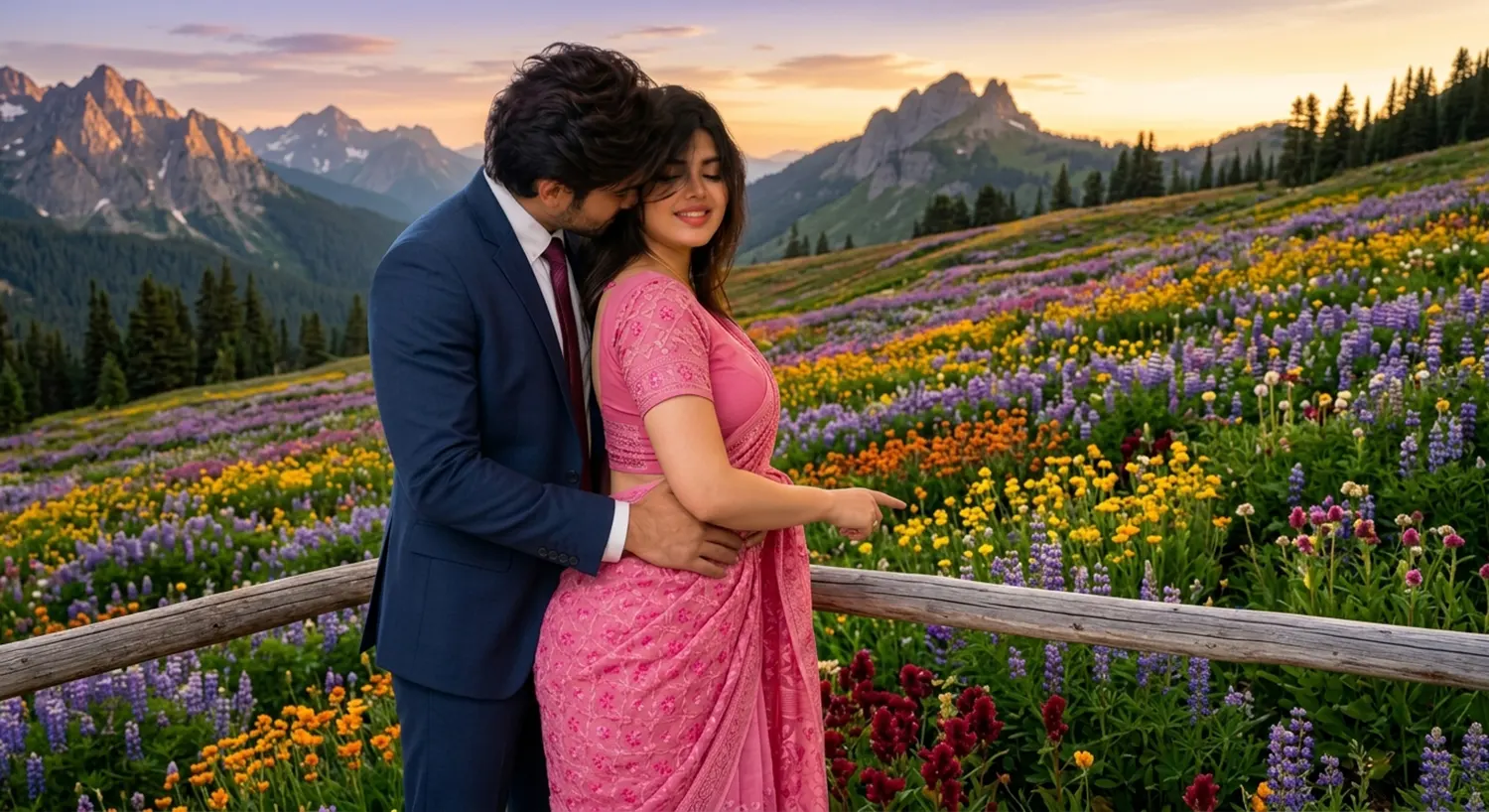
Pink and the Women
Do women like the color pink? What is the psychology behind it?
Last winter my friend Lamia went to buy a birthday present for her niece. The shopkeeper spread the dresses out in front of her and said, “It’s for a girl, right? Take the pink one, you women all love pink.” Lamia froze. Her niece’s favorite color is dark green; she loves trees and fields of crops. Yet the shopkeeper said it in such a confident tone, as if it were a law of nature. On the way back Lamia called me and asked, “Tell me, is pink really a girls’ color? Or do we girls wear it because boys want to see us that way?”
The question isn’t simple. To look for an answer, you have to go to history—and history surprises you right at the start.
When pink was a man’s color
In eighteenth-century Europe, pink was the color of the aristocracy, for both men and women. In the French royal court, grand men would stroll around in satin pink coats. King Louis XV’s favorite companion, Madame de Pompadour, made the color so popular that a particular pink shade of porcelain became known by her name. At that time the color was a symbol of power and luxury, not of weakness.
Even more surprising, in 1918 an American trade magazine for children’s products wrote that pink was for boys and blue for girls. The reasoning was that pink is a “strong and decided” color, suitable for boys. Blue is “soft and delicate,” right for girls. In other words, the very logic by which pink is now called a woman’s color was once used in the exact opposite way to call it a man’s color. This alone shows that colors themselves have no gender. We assign meaning to them, then forget that we were the ones who did it.
When the market decided the color
So how did pink become a girls’ color? The answer lies mainly in the market. After the 1940s, in America, pink gradually shifted toward girls. In the 1950s, President Eisenhower’s wife, Mamie Eisenhower, wore pink so often that the term “Mamie Pink” became popular. Pink then became the color of the housewife—the soft, harmless, domestic woman’s color.
Then came the seventies. With the wave of the feminist movement, many mothers started dressing their daughters in dungarees and neutral colors instead of pink. But in the eighties, it became possible to know a baby’s sex early during pregnancy. This opened a golden opportunity for the market. If a younger sister wears her older brother’s old clothes, companies don’t sell more. But if there are separate things “for girls” and “for boys,” every family has to buy twice. Toys, notebooks, shoes, even razors and pens got “girls’ versions” in pink, often at a higher price. This is now called the “pink tax.”
A teacher I know, Srishti apa, once told me a story. Her son went to school with his sister’s pink water bottle when he was little. His friends laughed so much that from the next day he never touched it again. An eight-year-old boy learned that pink means “girly,” and girly means shame. This lesson didn’t come from any book; it came from the eyes around him.
So is it all just a trick of the male gaze?
Now let’s come to Lamia’s real question. Does a woman adorn herself only in the way men want to see her?
British writer John Berger wrote in 1972 that men act and women appear. That is, a woman learns that she is not just doing something; how she looks in others’ eyes is also part of her thinking. For centuries, a woman’s “value” has been judged by her beauty—in the marriage market, through the camera lens. If someone growing up under this pressure unconsciously chooses colors that are recognized as “feminine,” it is not surprising. Much of what we call “my own choice” is actually borrowed.

But it would be unfair to end the story here, because seeing women as mere dolls is also a kind of injustice. A Facebook friend of mine, Tithi, deliberately stopped wearing pink for a year. She said, “I wanted to prove that I’m a ‘different kind of girl’.” Later one day she stood in front of the mirror and realized that avoiding pink was the same game. First the message was “I am girly,” now the message is “I am not girly.” In both cases she was circling around other people’s gaze. Now she wears pink saris because she likes the color. For her, that alone is reason enough.
This is where pink becomes most interesting. The same color has at one time been a symbol of weakness, and at another time of strength. In Uttar Pradesh, the “Gulabi Gang” wore pink saris and stood up with sticks against violence toward women. In 2017, millions of women in America marched in protest wearing pink hats. The 2023 film “Barbie” both mocked and celebrated pink at the same time. And in Japan, pink sakura has often been seen as a symbol of the fleeting beauty of male warriors. The color is the same; its meaning changes in human hands.
What the real question should be
I think the question “Is pink men’s preference or women’s?” starts from the wrong place. History shows that the color has never belonged exclusively to one side. Sometimes men wore it, sometimes women, sometimes the market imposed it. And the statement “women dress according to men’s preferences” is also only half true. Social expectations do shape our choices, but those expectations don’t come only from men. Mothers, grandmothers, girlfriends, advertisements, shopkeepers—everyone has a hand in it. Many women dress for themselves, for their own joy, and to receive appreciation in other women’s eyes. To call all of this “the male gaze” is to deny women’s own agency.
The real question should be: do I have control over my choice? The girl who loves pink and wears it, and the girl who doesn’t love it and therefore doesn’t wear it—both are free, if the decision truly is their own. But the boy who gave up his pink bottle out of shame, or the girl who loves green but wears pink because “everyone else does,” their choices are blocked.
Lamia’s niece finally got the green dress. On her birthday she roamed around the house wearing that dress with pictures of trees. One day her little friend, a boy, said, “I have a pink shirt, want to see it?” The girl replied without hesitation, “Yes!” Neither of them felt there was anything strange about it.
Perhaps the freedom of colors will come like this. Not through some grand declaration, but on a day when no one looks at pink and asks, “Whose color is this?” Because everyone will know the answer: whoever wants to wear it.
Related Posts

Why does Allah show such preference for women with large breasts and large buttocks? Do men feel the same way? Does this give women any advantage?
If you leave Prophet Muhammad in Pattaya’s Walking Street and Beach Road after evening, inRead More
নারীর বড় বক্ষ ও নিতম্বের প্রতি আল্লাহর এতো পক্ষপাত কেন? পুরুষেরও কি তাই? এটা কি নারীকে সুবিধা দেয়?
আপনারা যদি পাতায়ার ওয়াকিং স্ট্রীটে ও বীচ রোডে সন্ধ্যার পর আলো আঁধারিতে নবী মুহাম্মদকে ছেড়েRead More
নারী কি গোলাপী বা পিংক রঙ পছন্দ করে? এর পিছনে মনস্তত্ত্ব কী?
গত শীতে আমার বন্ধু লামিয়া ভাগ্নির জন্মদিনের উপহার কিনতে গিয়েছিল। দোকানি জামাগুলো সামনে ছড়িয়ে দিয়েRead More
Comments are Closed