
The Ceaseless Wait of Humankind
From ‘Waiting… Nazir’, ‘Aijuddin is in pain’ to waiting on Facebook Messenger — the waiting of humans
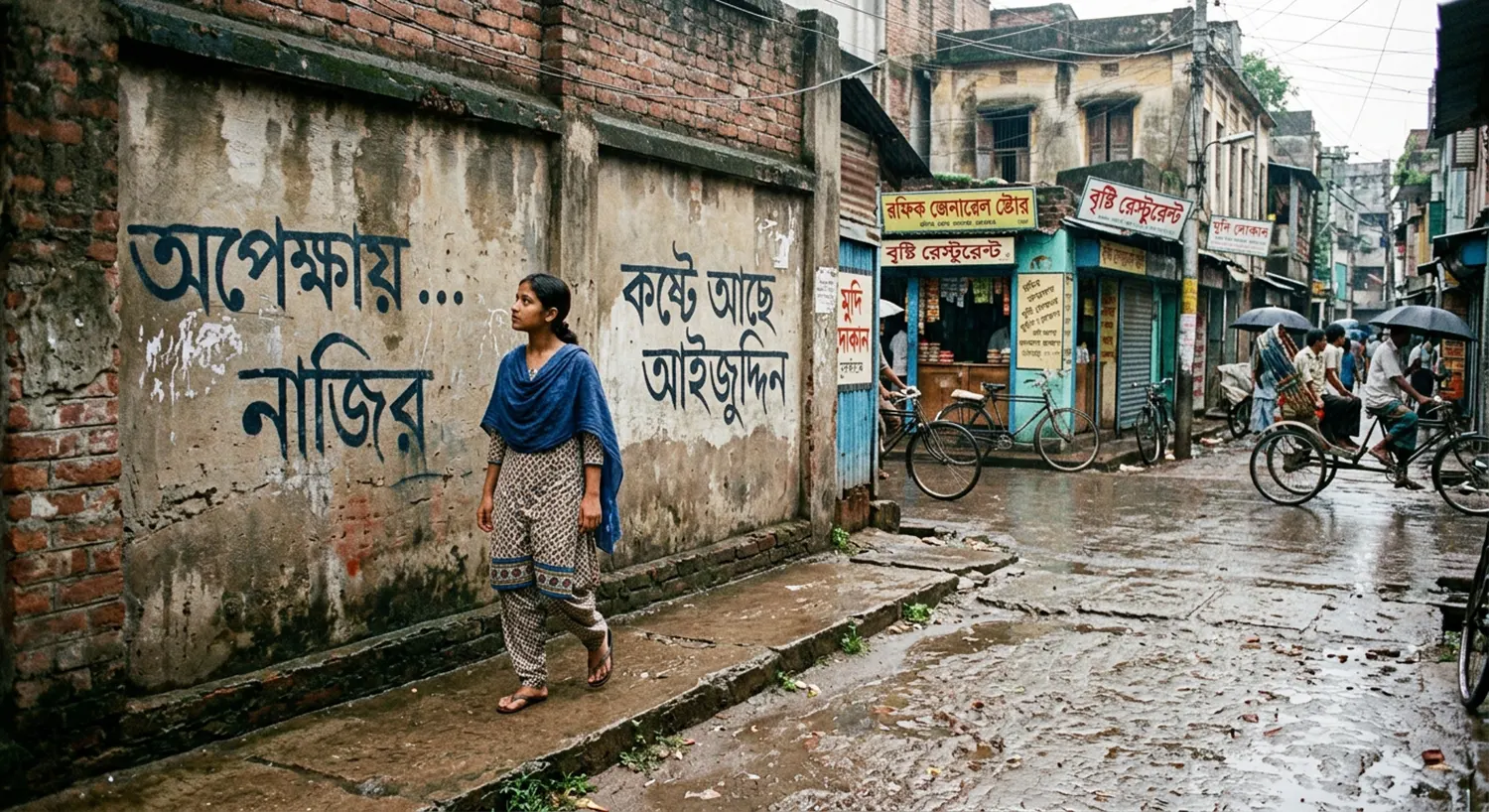
About two and a half decades ago, one could see some emotional lines written on the walls of Dhaka city—wall writings like “Waiting… Nazir,” “Aijuddin is in pain,” “In anticipation… Nazir,” and such. Those who saw Dhaka in the nineties and the half decade after that must have noticed these writings. These were not letters written on paper, yet they were essentially people’s letters written on walls. That cry painted on the lime-coated bricks of the city had no specific recipient, yet as if keeping the entire city as witness, a person would leave behind a message about their waiting. Who knows what ultimately happened to the waiting of Nazir or Aijuddin! Perhaps they themselves didn’t know whose eyes would fall upon their plea, whose heart would melt. But writing it down was necessary—so that through the act of writing, the waiting became a little more bearable.
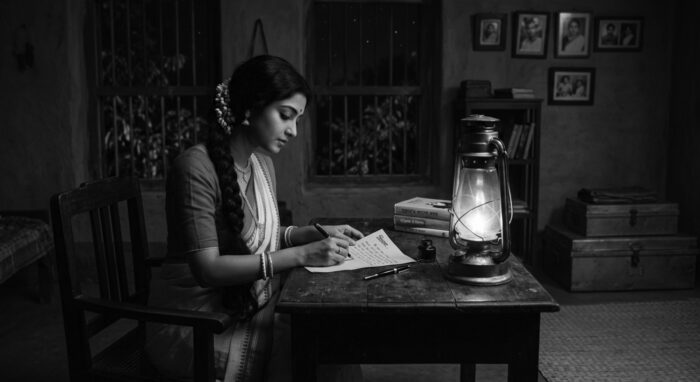
Today, they say, is Handwritten Letter Day. This one day reminds us how once people—loved ones, parents, siblings, relatives, friends, lovers—waited for a single letter. Their unspoken lines would bloom through their handwriting—the words that could not be said aloud, the ones that made the voice tremble or lowered the head in shyness, those very words would safely drip onto white paper from the tip of a pen. Buddhadeb Guha even wrote a whole novel Sabinoy Nibedan about letters. There, Riti and Rajarshi communicate through letters. But that was an era of waiting day after day, looking down the road for the postman. When the postman’s bicycle bell rang, the heart would skip—would the letter come today? There was a kind of sweetness in that waiting, something almost unimaginable in today’s age of instant communication. The popular film Hothat Brishti was also about a letter. There, two young people waited for a letter like “One day, a day of dreams…”
Once, people even printed their addresses in newspapers for pen-pal connections, even advertised them. Entire magazines and books were published solely for pen-pal listings—names, addresses, age, hobbies—and from that tiny introduction, friendships would blossom across distant places. Two of my relatives wrote letters this way and even traveled across Bangladesh to visit their pen pals’ homes. It feels astonishing to think that such relationships could grow between two unseen, unknown people through handwriting and the smell of paper, eventually leading to real-life meetings. In today’s world, where trusting strangers feels difficult, that simplicity of the past seems like a story from another world.
But sending letters also brought fraud. Suddenly two unknown men would appear at a rural household with a letter supposedly written by the daughter married off to a distant village, saying her husband had fallen into trouble and her father should send ten thousand taka with the letter-bearers. In truth, those two visitors were frauds. One of my relatives once fell victim to such deception; in rural language it was called hundi.
A village teacher would send a letter to his student living in Dhaka, asking him to shelter a young man from the village and arrange a job for him. You must have seen such scenes in dramas and films. My father also wrote many such letters to his former students. Some responded to the call, some perhaps ignored it. That time no longer exists.
Then letters were replaced by mobile phone voice calls—7 taka per minute. Grameenphone’s Djuice, Aktel’s Aces, Citycell’s something-or-other—various services with various names. Free talk time from midnight to 6 a.m., free text messaging. Young people began staying up all night talking; studies and sleep went haywire. The glow of a phone screen hidden under a pillow lit up countless nights for teenagers, unknown to their parents. The government eventually shut down all these services. As technology accelerated, the long stretch of waiting shrank—no more waiting for days; one could hear a voice directly by staying awake at night.
Then came Yahoo Messenger, BD Chat, and various personal and group chat platforms. At that time, a police officer friend of mine would join a group chat and play songs for everyone. Some foreign friends from that era are still connected with me. One Indonesian senior friend even visited my home in Dhaka with her colleague. That virtual friendship managed to step onto real ground—something hard to imagine today. Despite having so many followers and “friends,” how many do we truly meet, how many become trustworthy companions?
That era passed, and the age of social media arrived. Hi5, Orkut faded away, leaving Facebook! Now people think communication means Messenger! And there are so many reactions, super reactions! Not giving a love reaction leads to hurt feelings; a message being “seen” but unanswered causes restlessness. Now people come to Facebook and wait for the person they long for to knock, to talk. The green dot of the “online” status has become the modern equivalent of those wall writings—a silent announcement: “I am waiting.”
But after all this, has the appeal of letters truly vanished? Technology has changed, mediums have changed, but that fundamental human urge—to wait for someone, to tell someone something, to long for a response—has that changed at all? Perhaps because the medium has changed, emojis have replaced letters, video calls have replaced voice notes. But the human instinct to wait remains the same; only its expression has changed.
Humans wait even knowing many things will never return. Once there was a drama called Amader Golpo, where a song said—“From some numbers, no phone will ever come again.” In that single line lies the deep sorrow of endless waiting. Mehazabien acted in a drama where she returned home, no one waited for her, yet she returned. This human waiting never ends. Even when there is no one left to return to, the habit of returning remains; even when there is no one left to wait for, the instinct to wait remains. Perhaps this is the most tragic yet the most human aspect of us.
Once people waited days for a letter, and now if five minutes of waiting becomes too long, relationships fall apart. This contrast is perhaps the most striking. The patience of an era where people waited months for a reply, and today’s restlessness at seeing a “blue tick” without a response—there is a vast gulf between them. Perhaps we have become faster, but with that speed our tolerance has diminished. As communication has become easier, the depth of relationships seems to have become more fragile.
Yet, like those fading wall writings, perhaps the appeal of letters has not truly disappeared—only changed form. Today no one writes “Waiting… Nazir” on a wall, but someone somewhere still stares at a phone screen, waiting for a message. The language of waiting has changed; the waiting itself has not. And as long as humans exist, as long as love exists, this waiting will remain—sometimes on paper, sometimes on walls, sometimes in the silent glow of a screen.
Related Posts
“অপেক্ষায় …নাজির”, “কষ্টে আছে আইজুদ্দিন” থেকে ফেসবুক ম্যাসেঞ্জারে প্রতীক্ষা মানুষের
এখান থেকে প্রায় আড়াই দশক আগে ঢাকা শহরের দেয়ালে দেখা যেতো কিছু আবেগীয় পংতির দেয়ালRead More
In Search of Humans
Today, when I open YouTube, scroll through Facebook, or get lost in TikTok’s endless feed,Read More
মানুষের খোঁজে মানুষ
আজকের দিনে যখন ইউটিউব খুলি, ফেসবুক স্ক্রল করি, বা টিকটকের অন্তহীন ফিডে হারিয়ে যাই, তখনRead More
Comments are Closed