
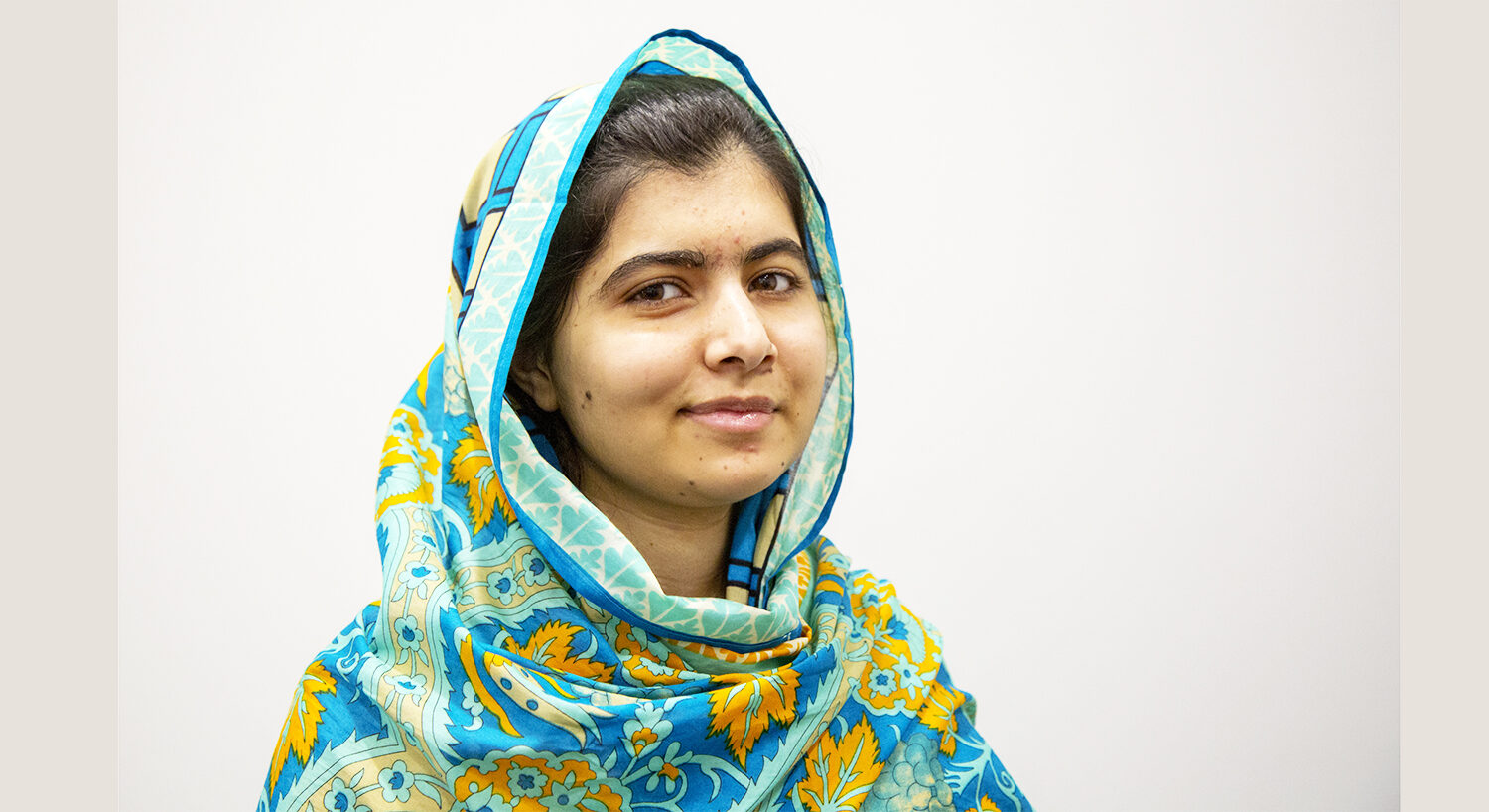
Malala’s Nobel Prize
Malala’s Nobel Prize and the Bengali Facebook Intellectual Community
First of all, let me say, the Nobel Peace Prize has gone to the truly deserving recipients. Congratulations to Malala Yousafzai! Congratulations to Kailash Satyarthi.
One is a 17-year-old Pakistani girl, the other an Indian man. Among Bangladesh’s Facebook pundits, there is far more criticism of Malala than discussion about Kailash Satyarthi. Everyone’s complaint is that Malala does not deserve the Nobel Peace Prize. But why? There were many contenders for the Nobel. The Bengali Facebook scholars did not know the names of any of them except Malala. How many knew Kailash Satyarthi’s name before he received the Nobel?
The Nobel Peace Prize has always been political. And since it is awarded on a global scale, global issues and political leadership naturally play a role. Our weakness is that when we cannot achieve something ourselves, we become jealous if someone around us does. Those who were contenders for the Nobel or still are—do they not have the merit to win in the coming years? Of course they do. But does that mean we must belittle someone who has won?
“One who spends all day digging through filth cannot smell the fragrance of flowers.” Was it Gandhi who said this? Whoever said it, the way Bengali Facebook intellectuals are behaving about Malala keeps bringing this line back to my mind.
Without knowing a single thing about Malala, without knowing anything about her work or contributions, Facebook’s foul‑mouthed crowd is hurling insults day and night — “She got shot once and got a Nobel?” Someone says, “Malala got a Nobel for taking one bullet, shoot me with a cannon then.” Another says, “What contribution to peace does Malala have besides getting shot?”
Poor Malala. At just 17, she became the youngest Nobel laureate, yet she is being insulted by the Taliban, by fundamentalists, by communists — by everyone. It’s obvious why Taliban‑aligned extremists hate her; their organization is responsible for severe violence and oppression. But the others? That’s the interesting part! It means they too have a hidden Taliban-like mindset.
Those who are unhappy about Malala receiving the Nobel — tell me, who would have been a better choice? What contribution do they have to peace? Do you know why Malala received it? If you don’t know, then why pretend to be intellectuals on Facebook?
Those who think Malala has no contribution beyond being shot probably don’t even know that three years before being shot — at just 11 years old — she began blogging on the BBC website about the importance of girls’ education and against Taliban propaganda. She received countless death threats even then. Her writing angered Taliban militants so much that they attacked the bus she used to return from school. They boarded the bus, pointed rifles, and forced her classmates to identify which one was Malala. When one frightened classmate pointed her out, Malala was shot immediately.
Even after being taken to the hospital, Malala remained unconscious for three days. She regained consciousness only after being taken to England. There, surgeons removed the bullet from near her neck, and to stop brain hemorrhaging, they even had to remove part of her skull.
Those who insult Malala today — can any of them comprehend the kind of childhood trauma she endured at just 11? Even for that alone, Malala deserves respect. Let’s not even mention her earlier and later work and awards — forming the Malala Fund for girls’ education, opposing extremism, her historic 2013 UN speech, Desmond Tutu nominating her for the International Children’s Peace Prize, being selected by Time Magazine as one of the most influential people of 2013.
Some may ask, “Where has Malala established peace?” They think peace must be visible as a dramatic transformation. In some cases that may be true. But the invisible, qualitative impact of a person’s small or large actions cannot always be seen with the eyes — it must be understood with the mind.
That is exactly what Malala Yousafzai has done. Her struggle for girls’ education cannot be understood even by working in a backward region like Bhurungamari in Bangladesh. It cannot be understood by sitting in a five‑star hotel in Dhaka at an anti‑extremism workshop. To understand her struggle, one must go to the “barbaric” Swat Valley of “barbaric” Pakistan. To understand how much courage a little girl must have to challenge the Taliban and work for girls’ education there, the critics should be sent to that very place. Or under the knives of ISIS — the so‑called Islamic State — another extremist group responsible for horrific violence.
In the videos ISIS sends of their killings, Malala lived under that same invisible knife throughout her struggle. And it was not just a threat — the bullet wound in her head proves that. Imagine the kind of extremists she challenged — extremists who can shoot a 15‑year‑old girl in the head. Those questioning her Nobel surely won’t claim that Malala survived because she had some magical American “holy water” on her head.
Malala showed the courage to challenge the Taliban from within their own stronghold. And she didn’t stop there. With incredible resilience, she returned to life and continued her new struggle. Her courage and commitment have become universal — where education, especially girls’ education, has become a new weapon against extremism. Not just for “barbaric” Pakistan — but for the whole world.
The “context” of the pundits’ criticism seems to be this: even those who work for American or British companies foam at the mouth claiming the Nobel Prize is a Western conspiracy. Brother, calm down. I agree with you — the Nobel is a big Western farce. So then, whether Malala got it or Vidya Balan got it while dancing to “Ooh la la,” why are we so tense? Whether Malala gets it or someone else — what’s the big deal? Why argue so much? Stay quiet with your scholarship.
Those who want to tear apart the Nobel Committee or Malala herself with their warlike attitude — many of them claim Malala’s Nobel is an example of “the West biting like a snake and then acting as the healer.”
Then listen to this boy’s story. He scored 100 out of 100 in math. When he told his mother, she said, “But three others also scored 100.” The boy replied, “Mom, I did my work and scored 100. If others also score 100, I cannot stop them.”
Many who deserve the Nobel Peace Prize may never receive it. But how can you belittle the work of the one who did?
Do you have Malala’s courage? To kick back at extremists while sitting under their knives?
P.S.: So far, three people from Pakistan have won the Nobel. Professor Mohammad Abdus Salam won the Nobel in Physics in 1979. But because he was an Ahmadi, ordinary Pakistanis feel shame instead of pride. A few years ago, I saw in the Dawn newspaper that villagers had broken the epitaph on Dr. Salam’s grave. After his death in 1996, he was buried in his village according to his wishes. His epitaph read first muslim nobel laureate — the villagers removed it on his death anniversary. Later, by court order, it was restored — but with one word erased: “first ______ nobel laureate”
I vaguely remember that Dr. Salam visited Bangladesh once in the 1990s. Ironically, shortly after his visit, fundamentalists created chaos at Baitul Mukarram demanding that Ahmadis be declared non‑Muslim.
Also, Pakistani biochemist Dr. Har Gobind Khorana won the Nobel in the 1970s. He is not included in Pakistan’s list of pride because of his religious identity. Pakistanis always prioritize religious identity above everything else.
In such countries, being born a scientist or social worker seems like a sin. The barbaric Pakistanis may not accept them — but what does it say about the mindset of Bangladesh’s new Facebook scholars?
[Pic, CC BY 2.0]
Related Posts
Actresses Shabana, Moushumi, Popy – Religious Sentiment and the Politics of the Public Sphere
In the history of Bangladeshi cinema, names like Shabana, Moushumi and Popy mark important chapters.Read More
নায়িকা শাবানা, মৌসুমী, পপি – ধর্মানুভূতি এবং জনপরিসরের রাজনীতি
বাংলাদেশের চলচ্চিত্র ইতিহাসে শাবানা, মৌসুমী কিংবা পপির মতো নাম গুরুত্বপূর্ণ অধ্যায়। তারা আশি, নব্বই ওRead More
In Bangladesh, the very meaning of the “blasphemy” law is to find a new pretext for persecuting minorities
The attack on the house, shop, and temple of Deepto Roy in Tahirpur, Sunamganj isRead More
Comments are Closed