
Human Rights and Technology
Innovative Ways to Promote Human Rights Through Technology
In a rapidly digitizing world, technology has become one of the most powerful tools for advancing human rights. From amplifying marginalized voices to documenting abuses in real time, digital innovation is reshaping how activists, organizations, and everyday citizens defend dignity and justice. For a country like Bangladesh – and indeed the global community – technology offers new pathways to protect freedoms, promote equality, and build more humane societies.
This article explores innovative, practical, and impactful ways technology is being used to promote human rights today.
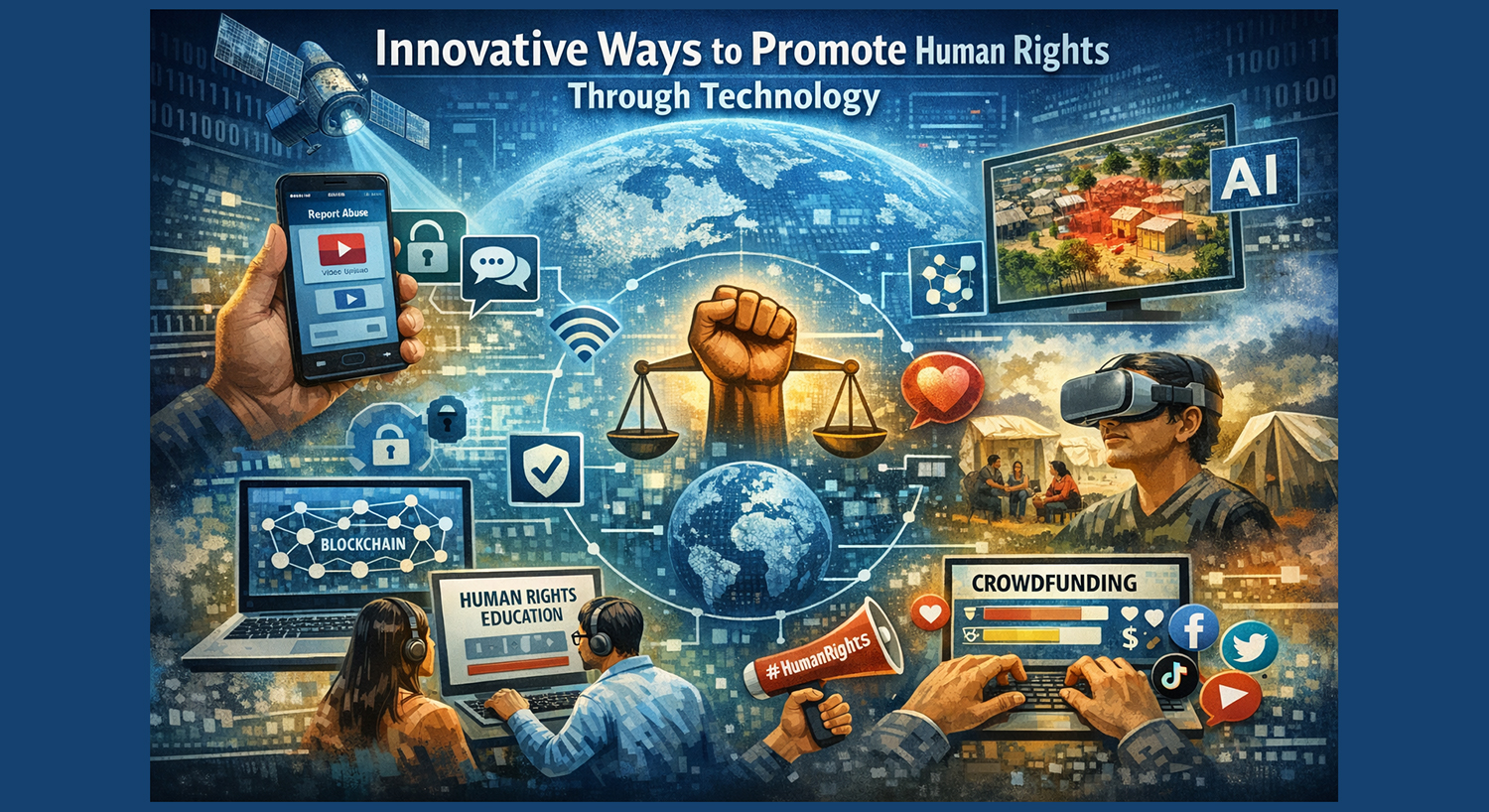
10 Innovative Ways to Promote Human Rights Through Technology
1. Digital Platforms Amplifying Voices
Social media platforms such as Facebook, X (Twitter), YouTube, and TikTok have become modern public squares. They allow activists, journalists, and human rights defenders to:
- Share stories that mainstream media may ignore
- Mobilize communities quickly
- Raise awareness about injustice
- Build global solidarity
Hashtags like #MeToo, #BlackLivesMatter, and #SaveRohingya show how digital movements can influence real-world policy and public opinion.
2. Mobile Apps for Reporting Human Rights Violations
Mobile technology has transformed how abuses are documented. Apps now allow individuals to safely report incidents with photos, videos, and geolocation data.
Examples include:
- Amnesty International’s “Panic Button” for emergency alerts
- Ushahidi, a crowdsourcing platform used during crises
- EyeWitness to Atrocities, which verifies evidence for legal use
These tools help ensure that violations cannot be easily hidden or denied.
3. Encryption and Secure Communication Tools
Human rights defenders often face surveillance, harassment, or threats. Secure communication tools protect their privacy and safety.
Widely used technologies include:
- Signal for encrypted messaging
- Tor Browser for anonymous browsing
- ProtonMail for secure email communication
These tools empower activists to organize safely, even under oppressive conditions.
4. Satellite Imagery and AI for Monitoring Abuses
Artificial intelligence and satellite technology are now used to detect and analyze human rights violations from afar.
They help monitor:
- Destruction of villages
- Movement of refugees
- Illegal deforestation
- Mass detention facilities
Organizations like Human Rights Watch and Amnesty International use AI to verify evidence and expose abuses that would otherwise remain hidden.
5. AI-Powered Advocacy and Awareness Campaigns
AI tools can analyze large datasets, identify patterns of discrimination, and help organizations craft more effective advocacy strategies.
AI is used to:
- Detect hate speech
- Track misinformation
- Personalize awareness campaigns
- Predict areas at risk of violence
This allows human rights groups to respond faster and more strategically.
6. Online Education and Digital Literacy
Promoting human rights begins with awareness. Online platforms make education accessible to millions.
Digital learning tools include:
- Free human rights courses (Coursera, edX, UN platforms)
- YouTube educational channels
- Interactive e-learning modules
- Virtual workshops and webinars
Digital literacy empowers people to recognize their rights and defend them.
7. Blockchain for Transparency and Accountability
Blockchain technology offers tamper-proof recordkeeping, which is crucial for human rights work.
It can be used to:
- Securely store evidence
- Track supply chains to prevent forced labor
- Ensure transparent distribution of aid
- Protect identity documents of refugees
Blockchain’s decentralized nature makes it resistant to manipulation.
8. Virtual Reality (VR) for Empathy and Awareness
VR experiences allow people to “step into the shoes” of others, creating powerful emotional connections.
Human rights organizations use VR to simulate:
- Life in refugee camps
- Effects of climate change
- Experiences of marginalized communities
This immersive storytelling increases empathy and motivates action.
9. Technology for Protecting Freedom of Expression
Digital tools help safeguard free speech by:
- Providing anonymous publishing platforms
- Offering censorship-resistant websites
- Using mirror sites to bypass blocks
- Supporting whistleblowers with secure dropboxes
These innovations ensure that truth can still reach the world, even under censorship.
10. Crowdfunding Platforms Supporting Human Rights Work
Technology has democratized fundraising. Activists and organizations can now raise money globally through:
- GoFundMe
- Patreon
- GlobalGiving
- Local crowdfunding platforms
This reduces dependence on traditional donors and empowers grassroots movements.
Conclusion: Technology as a Force for Human Dignity
Technology alone cannot solve human rights challenges – but it can amplify courage, expose injustice, and connect people across borders. When used responsibly, digital innovation becomes a powerful ally in the fight for dignity, equality, and freedom.
As we move deeper into the digital age, the challenge is clear:
Use technology not just for convenience, but for compassion. Not just for progress, but for justice.
Related Posts

Why do Islamist clerics consider Bengali cultural festivals their enemy?
This year, unlike many previous years, the major Hindu religious festival Durga Puja in BangladeshRead More
ইসলামিস্ট মোল্লারা কেন বাঙালিদের আনন্দ উৎসবকে তাদের শত্রু মনে করে?
এবার বাংলাদেশে অন্যবারের তুলনায় বেশ শান্তিপূর্ণ, উৎসবমুখর পরিবেশে হিন্দু ধর্মের বড় ধর্মীয় উৎসব দূর্গাপূজা হয়েRead More
Why do Islamist cyber‑jihadis insult, threaten, and file false reports against people with different opinions?
Maulana Azhari once advised Islamists that sharing his Facebook posts is also an Islamic act;Read More
Comments are Closed