

Knowing Your own Boundaries is Important
It is very important to learn or develop the sense of how far one can go when asking someone personal questions
From time to time I run into a few Bangladeshis in various public places. They greet me with salam and then ask my name, background, home district in Bangladesh. Then gradually they move on to what I do, whether I am married, if not married then why I haven’t married, if married what my wife does, how many children I have, if I have children what they do, if I don’t then why I don’t have children, how much I earn — it goes on like this. In the middle of the conversation they bring in politics of Bangladesh, then topics like why America–Israel–India are bad come up.
It’s not just Bangladeshis who do this. Sometimes at the fuel pump, while refueling the car, I run into a few Egyptians. They are quite friendly, and when they hear the name of Bangladesh they ask if I am Muslim! I find it quite embarrassing to have to state a religious identity. When I say that I am a humanist, they don’t understand. I went to Kashmir twice, and back then many people would often ask — whether I am Muslim. The first time, one gentleman asked if I was Muslim and then followed me for almost an hour to get me into a hotel from which he would get commission, in a rather shameless way; perhaps his livelihood depended on that. Later I actually felt a bit of pity for him. To be honest, many Muslims have this obsession with asking about religious identity. In the comment section of my Facebook you will see many people asking what my religion is, whether I am Muslim; many conclude that I am Hindu. They are mentally situated within Islam and feel very superior, they think they will reside in heaven. And they also think that no one can exist without religion, that if someone is not Muslim then he must be Hindu, that one must have some religion, that if someone is not Muslim then he is a lowly kind of person, and hellfire will be his destination. Even though I was born into a Muslim family with religious parents, I cannot make them understand that I am a humanist.
Many people in our country don’t have a sense of how far one can go with personal questions. For some people, even asking their name can be rude if you don’t have the proper context, while with someone else you might even ask about their sex life if your relationship is that close. In every case you have to maintain limits. If your mindset is to belittle someone by comparing their profession with yours, then you don’t even have the right to ask what they do. Even if there is a possibility of someone being discriminated against in society, then asking about their country, village, language can also be indecent. Asking what someone’s religion is, whether they believe in any religion, whether they eat beef, whether they eat pork, whether they are married, why they are not getting married, whether they have children, why they are not having children, what their relationship with another person is like, how much their salary is, how much they spend, etc. — asking these things is very rude. You really have no particular need to know these things about others. Their identity or situation will not affect your life, livelihood, or beliefs in any meaningful way. If there is an absolute need to know, then you have to find out tactfully, or by explaining an appropriate reason and only if they give you permission to ask, then you may ask.
Let me give you some free advice that educated, aware people in many developed and civilized countries — even children — generally apply. If you want to know someone’s personal information, you first have to create the context. Then you have to use some techniques to find out. You can practice these yourself and teach them to children; they will serve as lifelong lessons.
1. Sharing about yourself first (Self-Disclosure First)
When you share your own information first, the other person gets the opportunity to voluntarily share theirs.
To know religion: “I go to church with my family at Christmas, how do you spend that time?”
To know age: “I grew up in the 90s, you?”
Marital status: “My wife/husband was saying that…” — then wait
2. Raising open-ended context (Open-ended Context Setting)
Instead of asking direct questions, create a situation where the answer comes naturally.
To know profession: “Have you been in this city for a long time?” → the topic of work will naturally come up
To know income: never directly, rather “Do you find living in this area convenient?”
3. Bringing in the topic through a third party (Third-party Reference)
Example:
- “A friend of mine just got married recently, do you think it’s right to marry at this age?”
- “Someone I know has become vegan, do you have any restrictions in what you eat?”
This way the other person may choose to talk about themselves, or may choose not to.
4. The “I might be wrong” technique (Tentative Assumption)
Make an assumption that can easily be corrected.
- “It seems like you grew up in this city?” (to know place)
- “I’m guessing you work in something creative?” (to know profession)
If you are wrong, they will correct you themselves and give you the real information.
5. Asking about likes and dislikes (Preference-based Approach)
Trying to understand a person without knowing their personal identity.
To know religion/belief: “Do you believe in spirituality?” — you can understand the nature of belief without asking the name of the religion
Food habits: “Do you eat all kinds of food or do you have any likes and dislikes?”
6. Knowing by coincidence (Incidental Discovery)
As the conversation continues, information comes out on its own. In Western culture this is considered the most respectful — waiting patiently.
- When a partner is mentioned, the nature of the relationship can be understood
- From weekend plans, you can infer family situation
7. Asking for permission (Asking Permission)
If it’s really necessary to know:
- “If you don’t mind me asking…” — “যদি কিছু মনে না কর…”
- “Feel free not to answer, but…” — “না বললেও চলবে, তবে…”
- “It’s totally okay if this is personal, but…” — “এটা একটু ব্যক্তিগত জানি, কিন্তু…”
These phrases are said before asking the question and they keep the door open for the other person to say ‘no’.
8. Reading situational cues (Reading Contextual Cues)
A lot of information can be obtained without asking:
| Signal | What can be inferred |
|---|---|
| Ring on the finger | May be married |
| Saying “we” | In a relationship |
| Accent and word choice | Regional identity |
| Food order | Food habits |
Core principle that people in Western culture follow
“Need to know basis” — only trying to know what is absolutely necessary to know.
1. Listening without questioning — people will say what they want to say themselves
2. Recognizing topic changes — if someone avoids it, that itself is the answer
3. Respecting silence — “not disclosing” is also a valid decision
At the root of these techniques lies a single idea — respecting the other person’s autonomy and right to privacy. Getting information is not a right; it is a gift received in exchange for trust, a return you get in exchange for confidence.
Related Posts
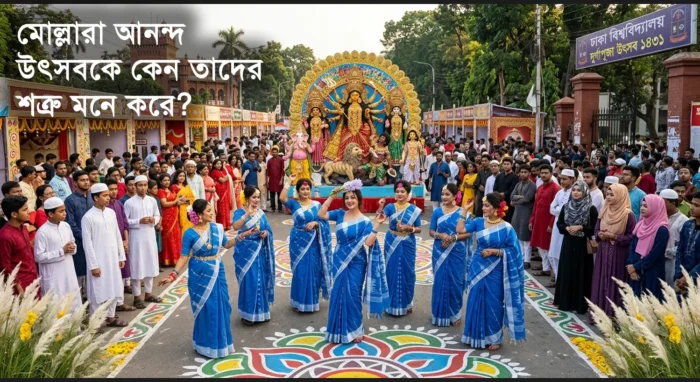
Why do Islamist clerics consider Bengali cultural festivals their enemy?
This year, unlike many previous years, the major Hindu religious festival Durga Puja in BangladeshRead More
ইসলামিস্ট মোল্লারা কেন বাঙালিদের আনন্দ উৎসবকে তাদের শত্রু মনে করে?
এবার বাংলাদেশে অন্যবারের তুলনায় বেশ শান্তিপূর্ণ, উৎসবমুখর পরিবেশে হিন্দু ধর্মের বড় ধর্মীয় উৎসব দূর্গাপূজা হয়েRead More
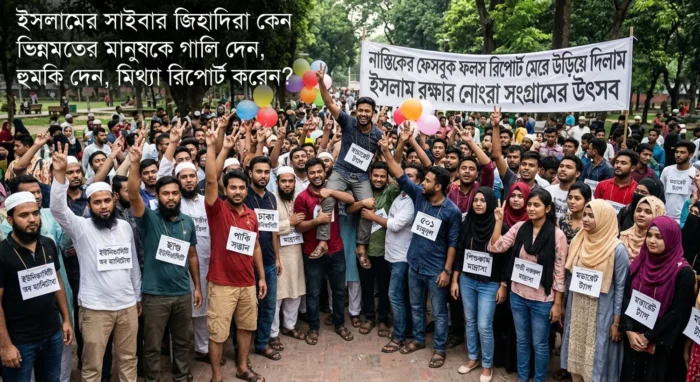
Why do Islamist cyber‑jihadis insult, threaten, and file false reports against people with different opinions?
Maulana Azhari once advised Islamists that sharing his Facebook posts is also an Islamic act;Read More
Comments are Closed